
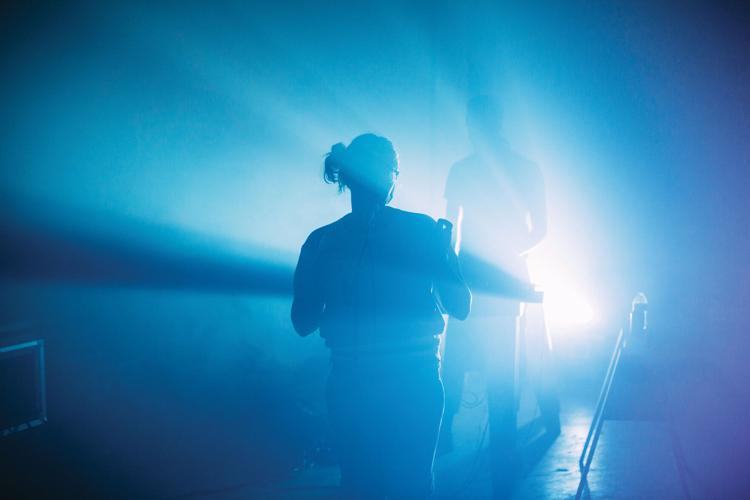
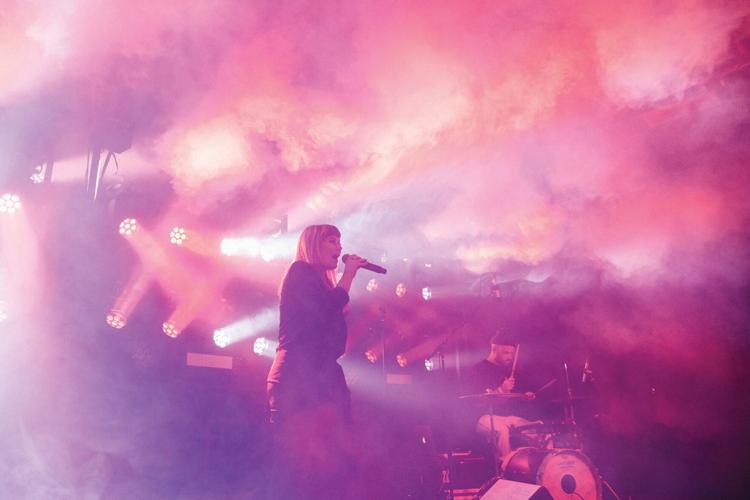

On a warm summer night, cars stream into the makeshift parking lot behind a graffiti-adorned warehouse in an otherwise residential neighborhood. Passing through the entrance’s ID checkpoint and down a shadowy hallway, you emerge through a door into a new world — covered by fog, lit by lasers and thumping with four-on-the-floor dance jams.
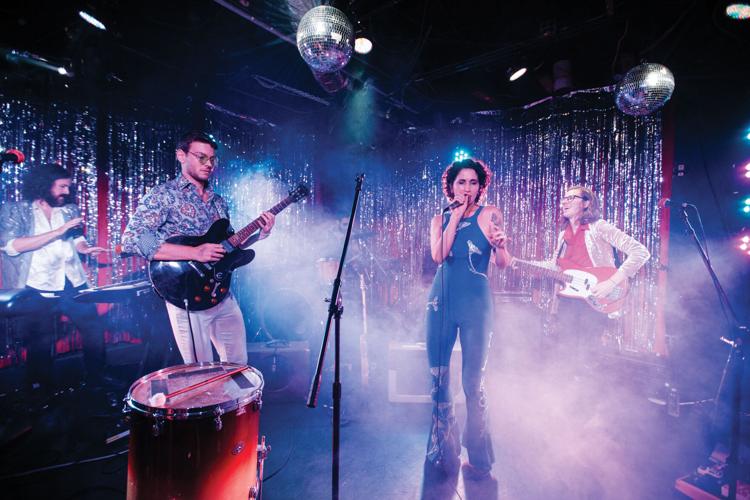
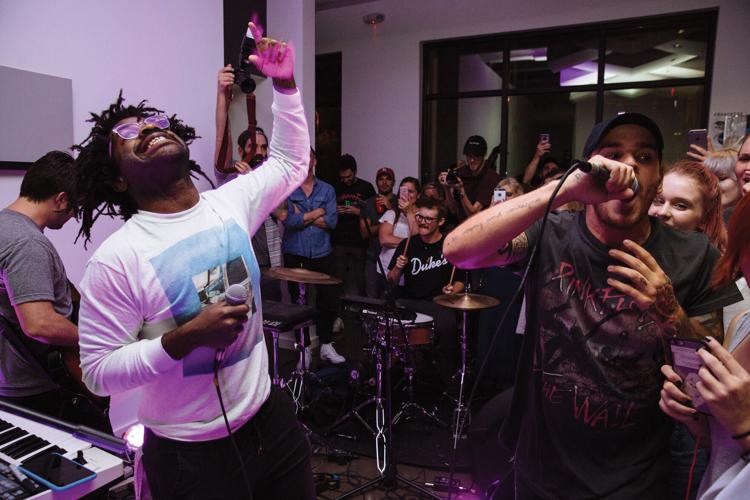
You’d be forgiven if you thought this was a scene from Los Angeles, New York or Chicago. But it isn’t. It’s Nashville, and this is just one of the dance parties at the center of Music City’s emerging pop music scene. This particular event is the Aug. 18 installment of a recurring dance party called CLØVER, featuring performances from Whissell, Remmi and Bryant Taylorr. But it’s just one of many such events that celebrate the burgeoning local pop scene.
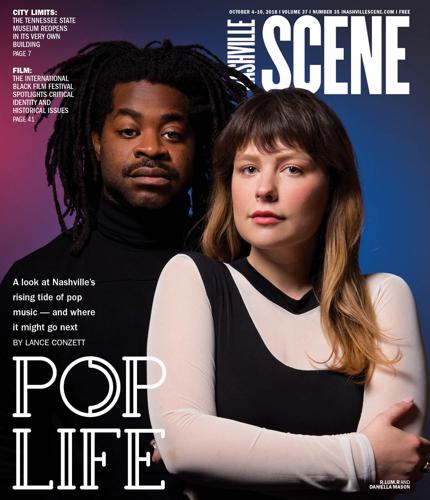
Over the past several years, the country music capital of the world has established itself as a credible source of electronic-inflected bops and bangers, taking Spotify playlists and tastemaker blogs by storm. In 2018, the artists issuing those songs — artists like R.LUM.R. — are poised to break through into the mainstream, having picked up late-night TV appearances and festival gigs.
But Nashville hasn’t always been welcoming toward pop and electronic music. In the early 2000s, now-defunct record sellers Cat’s Music made a killing off “Drum Machines Have No Soul” bumper stickers, a rallying cry for Volvo-driving rockists across the Midstate. In 2008, when a particularly rowdy Girl Talk show at Cannery Ballroom ended with a busted stage and flooded offices below, the venue’s owners stepped away from booking non-rock gigs. “We are a rock ’n’ roll venue, and we are going to play rock ’n’ roll shows from here on out,” Todd Ohlhauser told the since-folded local entertainment weekly All the Rage at the time.
But even as the city continued to link its identity to music made on guitars, artists tinkered with electronic sounds and programmed beats in the local music scene. In 2010, singer Mikky Ekko released his debut EP Reds. He parlayed its standout track, a moody ballad with surprising turns called “Who Are You, Really?” into mainstream pop success. Within two years, he’d sign a major label deal, link up with cutting-edge producers like Clams Casino, and co-write a song for Rihanna (“Stay,” a song the pair would later perform as a duet at the Grammys in 2013).
Ekko was one of a handful of artists who toiled in Nashville’s pop underground, alongside folks like electro duo Jensen Sportag, genre-bending singer Erin McCarley and disco-funk artist Space Capone. Later came pop-oriented rock bands like Paper Route and Vinyl Thief. But despite these artists’ individual successes, a scene never coalesced around them.

Remmi and DJ Gridley Bear at CLØVER
“It was 2013 when [Ekko] came out with [Tracks], which is incredible, and I still listen to it, but I don’t think we had built something for him yet,” former Mercy Lounge marketing director Wes Davenport tells the Scene. “I don’t want to repeat that. I want the next person who has some success to have their place, to have their home, to have their community.”
Alongside collaborator Joe Clemons, Davenport co-founded community group PØPSQUAD in late 2014 as a hub for local pop artists, industry players and fans to connect with one another. Pop music has taken hold in Nashville, and that has a great deal to do with the creation of this community — a community specifically dedicated to supporting that music. Davenport describes PØPSQUAD as “the social fabric of our pop scene,” where anyone with any level of interest can get plugged in via an active Facebook group, shows, newsletters, and parties like CLØVER — the occasional dance party that features DJs, surprise performances and fog machines, held in various locations across the city.
And it doesn’t hurt that people are actually attending these shows and parties now. Davenport points to a half-full Betty Who show at The High Watt in 2014 that spurred him to do something about the disconnect between pop shows and their fans. “It got me thinking — where are my people?” he says. “Where is my community? Because this is the stuff I like, and I know people like me are here in Nashville.”
The PØPSQUAD gamble has paid off. More and more people are moving to Nashville with a taste for pop and electronic music, and they crave these shows. At this point, Betty Who doesn’t just sell out venues like Exit/In, as she did last year — she headlines music festivals, like this year’s inaugural Outloud, which took place last month on Church Street. The audience for pop music has clearly grown, thanks in part to the scores of people moving to the area each day, bringing their tastes with them. As more and more transplants from cities like New York, San Francisco and Chicago settle in Nashville, the demand for pop and electronic music increases. With more fan demand comes more viability for pop artists, and more reason for the industry to take notice of Nashville as a source of that music.

Whoa Dakota at The 5 Spot
What hasn’t changed since Nashville pop’s early days is that the artists are still very much individuals. Daniella Mason has been at it long enough to be seen as, to use her words, “one of the old ones.” Originally from Dallas, Mason moved to Nashville to study musical theater at Belmont University in 2007 before switching to commercial voice. As a solo artist cutting her teeth in Nashville, Mason was more closely aligned with piano-based singer-songwriters like Sara Bareilles than the modern electro-pop that she now works in. It wasn’t until 2012 that she, along with others in the music scene, started openly dabbling with pop sounds.
“I had a feeling something was brewing here, and I really wanted to be a part of creating something here,” Mason tells the Scene. “To me, I wondered if it was kind of how Seattle in the ’90s felt, like in the early moments of that movement, and who knows if that’s what it’ll turn into. But it kind of felt like that.”
Part of what makes Nashville pop so elusive is that there is no single sound that defines it. The scene is a hodgepodge of genre fusions and schisms, with artists who represent everything from R&B (R.LUM.R, Saaneah) to guitar-friendly pop rock (Biyo, Bantug) to bops with hallmarks of ’80s pop (Phangs, Myzica). Nashville pop is a big tent, offering diverse sounds and perspectives. If you were an outsider, you might not necessarily peg Whissell and Brasko as coming from the same place. For some artists, that’s what’s appealing about Nashville.

R.LUM.R and Phangs at ROOTED
“I moved to Nashville because L.A. and New York and Atlanta and Chicago, all those places, have sort of a tradition of a sound,” R.LUM.R told the Scene last year. “I did not see that in Nashville, and I saw that as an opportunity to try to create my own lane.”
So what does link these artists? What makes Nashville pop … well, Nashville pop? It’s less about the sounds that artists are creating, and more about the critical mass of creative people attempting to move in similar directions.
“To me, Nashville pop is a location — it’s not a sound,” says Davenport. “For example, you’ve got R.LUM.R, who makes incredible R&B, and you’ve got Phangs, who makes emotional, pristine pop, and they both guest on a track and they’re friends, but their music isn’t super similar. They’re bound by friendship and location rather than a common sound.”
There’s definitely truth to that. HOUSEQUAKE, a monthly show run by Mercy Lounge’s resident pop aficionado Tyler Martinez, presents a stacked bill of artists with similar vibes who often sound completely different. At a recent HOUSEQUAKE-produced show, Martinez presented Miss Audrey, an energetic Katy Perry-esque 19-year-old, alongside Stasney Mav, who thrives in emotional electro pop, and Houston Kendrick, a dude who might have been genetically engineered to sing slow jams.
These artists aren’t joined by their particular styles of music. Instead, what connects all three is that they’re all songwriters. You’d be hard-pressed to find a pop artist in Nashville who doesn’t write their own music. That travels up the chain to stars with significant pop cred who got their start here. Even though Kesha, Taylor Swift and Kacey Musgraves, for instance, are all known for co-writing with others, their personal writing chops are often what makes their work stand out and earn praise.
“When I’m pitching any artist that’s from Nashville, we automatically get credit for authenticity, no matter what genre it is I’m pitching,” publicist Elizabeth Meade tells the Scene. “We’re a songwriting, storytelling city.”
When Meade founded her company Threebrand Media in 2011, she primarily worked with country artists like Joey + Rory before switching entirely to servicing pop in 2014. She’s seen the reaction from national publications change from bemusement to understanding — folks seeing pop as yet another genre that Nashville happens to be good at producing. For Meade, what sets these artists apart is that they have stories and they know how to tell them. Others in the scene agree.
“I think the beautiful thing that ties all of Nashville music together is the dedication to songwriting,” Davenport says. “One thing I keep hearing from national pop artists is they know they can’t walk into a room and skimp on songwriting, because this town’s reputation is unparalleled.”
Mason agrees. “Every great pop song that’s coming out of Nashville, is like they are actually saying something. I think that is uniquely Nashville. Story pop, if you will.”
Beyond the songwriting focus, though, another element that connects these artists is a spirit of camaraderie that isn’t always felt in other parts of the country. Even beyond the institutions like PØPSQUAD and HOUSEQUAKE, artists and producers take it upon themselves to support each other. It’s a spirit that isn’t too far removed from the days of the so-called Nashville Curse, when local rock bands struggled to break out of Middle Tennessee but bent over backwards to help each other.
“I feel like the support here, it’s one of the reasons I live here,” says Mason. “It’s like, I feel like … there is a camaraderie that’s so much higher than competition. And we all view this as being in this together. I really look at the space and I think in this day and age with Spotify, with everything we have at our fingertips, like there really is a place for all of us. Like we’re not fighting for the same spots.”
Though Nashville continues to gain credibility as a pop locale, the siren song of New York and Los Angeles continues to peel artists away to the coasts. Carla Cappa, who performed at the first CLØVER, moved to Los Angeles earlier this year. Messyah, who played Mercy Lounge’s Popnite 15th anniversary party, packed up for the West Coast during the reporting of this story.
In the past year, publishers like Prescription Songs and labels like Warner have set up pop-friendly offices in Nashville. But the reality is that the industry arms that primarily deal with pop and electronic music are still entrenched in other major music cities.
“Honestly, it’s songwriting,” Meade says. “If you want to work with the heavy hitters and the major players, they’re all based in L.A., and they don’t travel to Nashville quite often. I think we need more publishing for pop here, because that’s a huge monetary value to our artists.”
Industry infrastructure — like pop publishers and big labels — is always the missing element when it comes to independent artists. Though the local scene has made big moves over the past few years, there’s only so high that an independent artist can go in a genre as commercial as pop. So the question remains: Can the DIY pop scene in Nashville sustain itself? Or will it fizzle, like other emerging local scenes before it?
“I think we’ll absolutely start retaining more people, because we are already — compared to like 2011 when I started,” says Meade. “We’re retaining so many more people. But I think there’s definitely still that pull to go to New York and L.A., because we’re not fully there yet.”
“I think one of the issues we have right now is that the industry has not caught up to us,” says Mason. “I think press is catching on, Spotify is catching on. The talent’s there. So really it’s, ‘OK labels and publishers: Do you want to be a part of this or not? If you don’t, we’ll figure out a way to do it without you.’ ”




Post a comment as anonymous
Report
Watch this discussion.
(0) comments
Welcome to the discussion.
Log In
Welcome to the discussion.
Keep it clean. Please avoid obscene, vulgar, lewd, racist or otherwise abusive language. Comments featuring hate speech or threatening or violent content will not be tolerated.
PLEASE TURN OFF YOUR CAPS LOCK.
Be truthful. Don't knowingly lie or mislead.
Be proactive. Use the “report” link on any comment that violates our comment policy.
Share with us. We'd love to hear your feedback.