
Amid the recent kerfuffle over the legacy of President Woodrow Wilson — whose background as quite a nasty racist, even for his era, resurfaced recently after protesters at Princeton University demanded the removal of his name and likeness from campus — a couple of Nashville connections may cast a clarifying light.
Tennessee History for Kids publisher Bill Carey has pointed out that the new Wilson administration in 1913 drove from office one of the most prominent African-Americans in the federal government, Nashville business leader James C. Napier, whom President William Howard Taft had appointed as register of the U.S. Treasury in 1911. Napier resigned rather than resegregate the black clerks in his department, as Wilson's administration and its Southern Democratic allies on Capitol Hill demanded.
And then there was Wilson's family connection to Nashville. His brother Joseph R. Wilson Jr. served as city editor of the Nashville Banner from roughly 1902 until 1912 (exact dates are not easily confirmed). The brother's presence in town helps explain nuggets of telling background that turn up in a column by the Houston Chronicle's "Savoyard" in February 1911, as speculation about the 1912 race was heating up.
"A native of old Virginia, of that indomitable Scotch-Irish race that has wrought so potentially to make our government the best and our republic the greatest of nations, Wilson is the son of a beloved Presbyterian clergyman," the columnist wrote of the candidate. "He lived in Georgia and South Carolina, where he was a pupil in school, a teacher of youth and a lawyer at the bar."
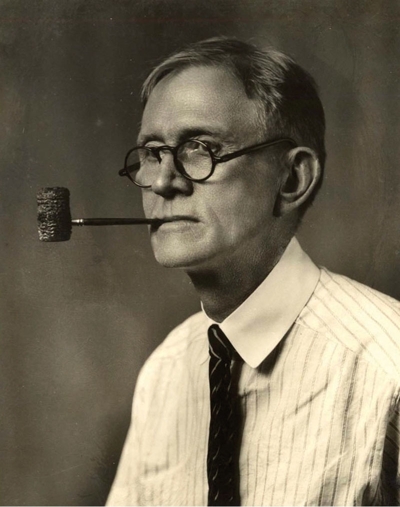
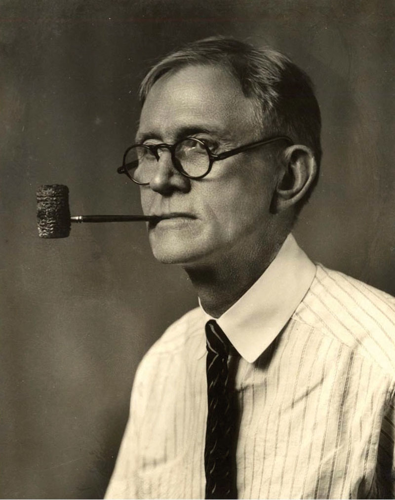
The column goes on to quote the unforgettably named Marmaduke Beckwith Morton, who progressed from a cub reporter in Nashville to a Banner senior editor between the 1880s and 1930s. Savoyard introduces Morton as "one of the shrewdest observers of the newspaper press."
Morton reports: "Wilson's capacity for looking after details is enormous — to me almost beyond conception. He never seems to spare himself, and yet he seems to come out always with steady nerves and a smile upon his countenance."
The veteran newspaperman writes that Woodrow Wilson "comes here frequently" and "is one of the most popular visitors to the Banner gang. He is a genuine democrat and sits around the office and talks snakes with the snake editor, horses with the horse editor, sports with the sporting editor, borrows any vacant desk on which to write, and makes himself generally at home."
The Banner of 1911 was not the consciously hard-right Banner of the 1960s and later, but it goes without saying that in the white-run media of the times, no Southern newspaperman voiced even remotely progressive views on race — not even Morton, a mentor to future liberal crusader Ralph McGill. That visitor Woodrow Wilson felt "generally at home" dropping in on his brother's paper may tell us all we need to know.



