
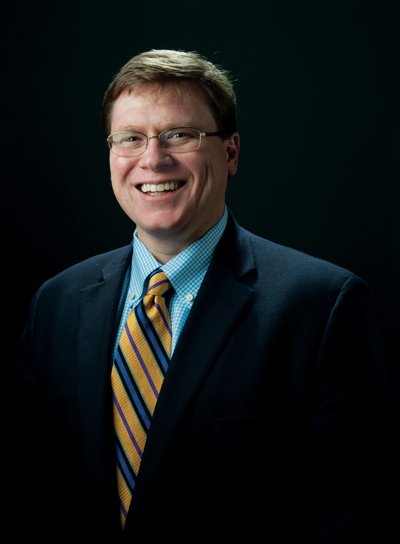

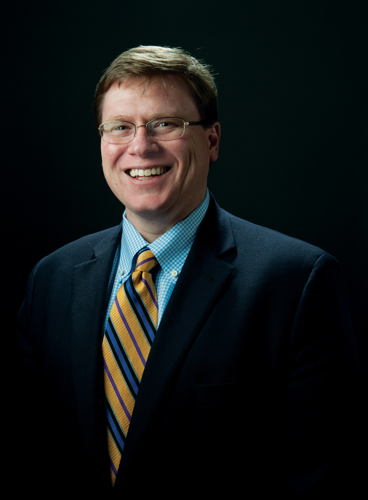
Editor's note: The coming mayoral election in August promises to be one of the most decisive in Metro Nashville's history, in determining the future health and managed growth of a city at a crossroads. In this seven-part series, we profile the people competing to maintain Music City's newfound success, to represent those in danger of being shoved aside, and to steer the city past the shoals of bubble and bust. Read the rest of our profiles: Megan Barry, David Fox, Bill Freeman, Howard Gentry, Jeremy Kane and Linda Rebrovick.
Name: Charles Robert Bone
Birthdate: March 15, 1974
Birthplace: Madison, Tenn.
High School: Goodpasture
College: Rhodes College, B.A.
Post-Grad: Vanderbilt University Law School, J.D.
Jobs: Member and Treasurer, Bone McAllester Norton, Founder and Member, Healthcare Compliance and Consulting Resources (2001-2009), President Obama, National Finance Committee, Finance Chair, Harold Ford Jr. for Senate
Memberships: Entrepreneur's Organization: Member, Center for Nonprofit Management: Board Member; Executive Committee Member (2008-2014), Best Buddies: Board Member, March of Dimes March for Babies Walk: Chair, West End Community Church
Family: Sacha (wife), Margaret (13), Anne Carlen (11), Simmons (7), Henry (5)
Pets: Lucky (rescue dog), Andy (crazy dachshund)
Website: BoneforMayor.com
At Big Al's Deli in Salemtown, a beloved hole-in-the-wall with a handful of shaky tables and some of the city's best fried chicken, Charles Robert Bone steps out of a custom van that has his face on the back. He's still getting used to being the candidate, and the vehicle has him a little sheepish.
"I'm not extremely comfortable with it yet," he says, smiling and looking at his likeness, which holds up a cutout of Davidson County next to the slogan "FOR ALL OF NASHVILLE."
The van couldn't be more conspicuous on this block a couple miles north of his downtown office at Bone McAllester Norton, a 40-attorney firm that has a reputation as being one of the state's more diverse. This section of Salemtown is the epitome of changing Nashville. Little brick shotgun houses line up next to new Craftsmen as the neighborhood slowly gentrifies.
On this late October day, the mayor's race is still months away from heating up. Campaigning at this point is retail: one group at a time. Campaign aide John Little has assembled a group of influential African-American men — businessmen, civic staffers, after-school leaders representing communities across the county — to meet Bone over breakfast. Two of the three tables are taken by Bone and the group, and the candidate begins his basic pitch.
We should all be proud of Nashville, Bone tells the men, but not everyone has shared in the city's success. There is a coming tourism dividend, a growth in sales tax that the ever-increasing millions of people coming to the city will provide. The city has gone from 11.8 million visitors in 2012, to 12.5 million in 2013, to even more in 2014. Tourism spending has mushroomed from $4.6 billion to well over $5 billion today.
"What I'd like to see as part of a budget of almost $1.9 billion, we're expected to collect about $325 million in sales tax this year," he says later. "That's up about $70 million from two or three years ago. I'd like to see us call the line and as $325 million becomes $350 million or $400 million or $500 million, let's very intentionally use that [amount above $325 million] as a way to reinvest in education, in transportation, in infrastructure and in affordable housing."
The room is receptive to the pitch. Bone leans in.
"It seems like the rich folks get it first and then the other people might get it," he says. "Well, nobody wants to be the 'mights.' "
And with that, you begin to see the subtle differences between Bone and the man he wants to replace, Karl Dean.
Of this year's crop of candidates, Bone's profile most closely aligns with the mayor's. Both graduated Vanderbilt Law and went on to serve the city in a legal capacity — Dean as law director, Bone as counsel for the Music City Center, Dean's signature achievement. Both live in affluent West Nashville. Both have been strong supporters of the Chamber, and both have a reputation as smart but reserved guys whose oratory will never set the world on fire.
Bone's message, however, has more than a little twinge of populism. There's a lot of talk about "other parts of the county" in his pitch — of areas like Joelton and Goodlettsville that rarely show up in B-roll when Nashville's Rayna Jaymes makes her rounds. Dean's economic development strategy, which Bone has supported, has largely focused on the city's center. What if it went further afield in the county?
"What would an economic development strategy look like in Donelson? In North Nashville? In Bellevue?" Bone says. "We have a couple of TIF districts and have not looked at something in other parts of the county, and that's something really intriguing — to say, 'Let's just be as concerted about recruiting businesses and jobs to Donelson as we are downtown.' Seventy percent of our businesses in the region have nine employees or less. I think there's a lot we can do to help businesses that are here grow and expand, and in the aggregate grow as many jobs with small businesses as we can with the big businesses.
"But in Nashville, I don't think we have to choose one path or the other. We get to choose both."
Where Dean is known as a charter-school booster, Bone takes a softer approach, supporting charters but emphasizing the sizable challenges that MNPS faces throughout its system.
"If everything goes right for the pro-charter movement, which I'm prepared to help them, that's gonna be 10 to 12 percent of our kids," he says. "What do we do, at the end of the day, about the other 75,000 kids, 60,000 of which qualify for free or reduced lunch, 45,000 of which are not reading at grade level and 20,000 of which do not speak English as their first language? I'm OK with charter schools, but that's just a small part of the answer, it's not the entire answer."
Those concerns go beyond education. He'd like to triple Dean's $3 million investment in Metro's Barnes Fund for Affordable Housing, noting that Nashville is behind its peer cities and even other cities in Tennessee.
"Even Knoxville has a housing fund with more that $10 million in it," he says. Bone would like to see "a substantial increase" along with what he calls "non-monetary approaches" — items like inclusionary zoning and density bonuses enticing developers to include affordable units.
These concerns may differentiate Bone from Dean. But there's still the matter of how he can distinguish himself from a crowded field of candidates — one that now includes real estate magnate Bill Freeman, who will likely outspend everyone.
It helps that fundraising is practically in Bone's DNA. As finance chair for Harold Ford's U.S. Senate run in 2006, his job was to raise enough money to get the Democrat within striking distance of millionaire Republican candidate Bob Corker. Emphasis: millionaire. That meant evening upon evening of dinners with donors, campaign events and cocktail receptions designed to rake in cash.
In the end, Ford raised almost $10 million, and Bone was responsible for a large chunk of it. Yet a month before Election Day, Corker dumped his campaign manager, brought in Lamar Alexander's chief of staff, Tom Ingram, to run things, and kicked in millions of dollars of his own money. The moves were meant to shake up the race, and they did. Today Corker is the one enjoying a second term, and vice presidential talk with it.
The lesson was not lost on Bone, but the experience was formative in other ways. At events with him, often in those days, were his wife Sacha and their oldest daughter Margaret, then closing in on her third birthday. It was family tradition. Growing up, Bone and his sister tagged along with their father, Charles W. Bone — founder and chairman of Bone McAllester, and a heavyweight fundraiser and flesh-presser — as he raised money for Tennessee Democratic royalty in the '70s and '80s: Albert Gore, Jim Sasser, Ned Ray McWherter.
"Life might have been a lot different if I had just taken him to play golf," the elder Bone says. "Rather than go to the club, we went to political gatherings. It was a natural part of our lives."
The son didn't fall far from the tree. He ran for state Senate in Hendersonville when he was only 24, losing to Diane Black. He's been a bundler for Obama and an influential Democratic party player for years.
It appears the granddaughter is headed down the same path. When asked by her parents what she wanted for that third birthday, Margaret's reply was quick: "Mama, I want a fundraiser."
No one blinked, then, when Margaret stepped up to the mic at his campaign's kickoff event in June, flanked by her three siblings, to introduce her dad as a mayoral candidate.
"I would like to share why I think my dad would be a great mayor. First and foremost, my dad is a math genius," said Margaret, 12, to laughter from the crowd. "There is no sixth-grade homework problem he can't solve, from algebra to geometry to fractions. And if he can balance the budget in the Bone household, he can balance the budget for Nashville."
The room roared.
"Now you know my secret weapon," Bone said.
He's got another. Enter Tom Ingram, the man whose presence turned the race against Bone and Harold Ford a decade ago. Ingram and his staff put together a team and a plan for Bone that they hope will pay off in August. Kim Sasser Hayden, a seasoned Democratic operative, is the campaign manager; Beecher Frazier, an Ingram Group staffer and veteran of the Ford campaign, will consult for Ingram. John Little, whose work in North Nashville was credited with turning out the African-American vote so pivotal in last year's municipal elections, consults on strategy and outreach.
Ask them about The Plan and they will say little, except that they will stick to The Plan — the campaign's bible, formulated over a weekend of Jimmy Kelly's steaks and honest assessments about Bone's strengths (his knowledge of the city's workings, deep ties and fundraising acumen) and weaknesses (whether he'll be upstaged by his father's Clintonian charisma when it comes to working rooms).
The Plan calls for about $2 million in spending, which means Bone and company will need to raise a lot of cash. He's put in $300,000 of his own, but that's starting to push the limits of his self-funding. Unlike Freeman, David Fox or Linda Rebrovick, Bone says he doesn't have the ability to write a seven-figure check. He's hoping that having to hustle for dollars will strengthen his base of support.
"Fundraising is about relationships and it's about building confidence that not only are you somebody worth investing in, but there's also a good chance that you could win and that would be worth doing. ... What we've tried to build is something that people would want to invest in," Bone says. "Because at the end of the day, that person that gives you $25 or $50 or $100 is invested in what you're doing."
With no great issue to easily divide the candidates — no English-only initiative or fairgrounds dispute, no Music City Center or downtown arena — this year's mayoral crop will have to work hard to separate themselves from each other when all are eager to continue Nashville's successes.
For Bone, that means a lot of small conversations like the ones at Big Al's, emphasizing his seven generations of family here and a profile he thinks matches the city's.
"I grew up in Hendersonville, overlapping with Goodlettsville," Bone says. "I went to school in Madison. My wife is from Donelson. When we got married, we moved to Nippers Corner. I think I've seen a lot of Davidson County and had a lot of similar experiences.
"But the one thing I do know is, I know Nashville. I'm relatable. I hope I'm likable. At the end of the day, I think I am Nashville."



