
Editor's note: The following is a guest post.
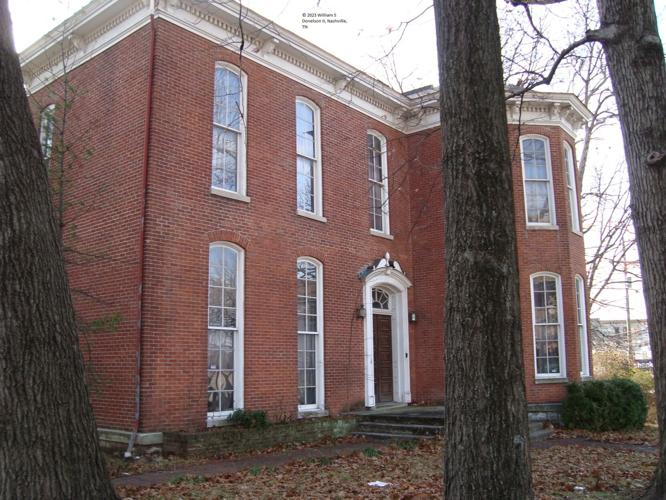
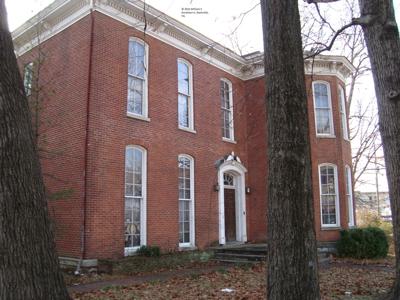
Imagine my surprise as I drove up to the Roundabout on Music Row about midnight, returning from an out-of-town trip, and as I approached the lovely and familiar Pilcher-Hamilton House, I saw a chain link fence. I thought, “I wonder what they are doing to Jim’s house.”
As my vision cleared, I realized there was no house … just a pile of bricks.
I yelled into the silence, “That’s horrible.” I had to talk to someone, so I called my daughter Anne in L.A., which being two hours earlier than Nashville, I figured she would be up. After patiently listening to my tale of woe, Anne said, “Now, mother, don’t go climbing over that fence to see if you can rescue some architectural detail or steal an old brick.” She knows me.
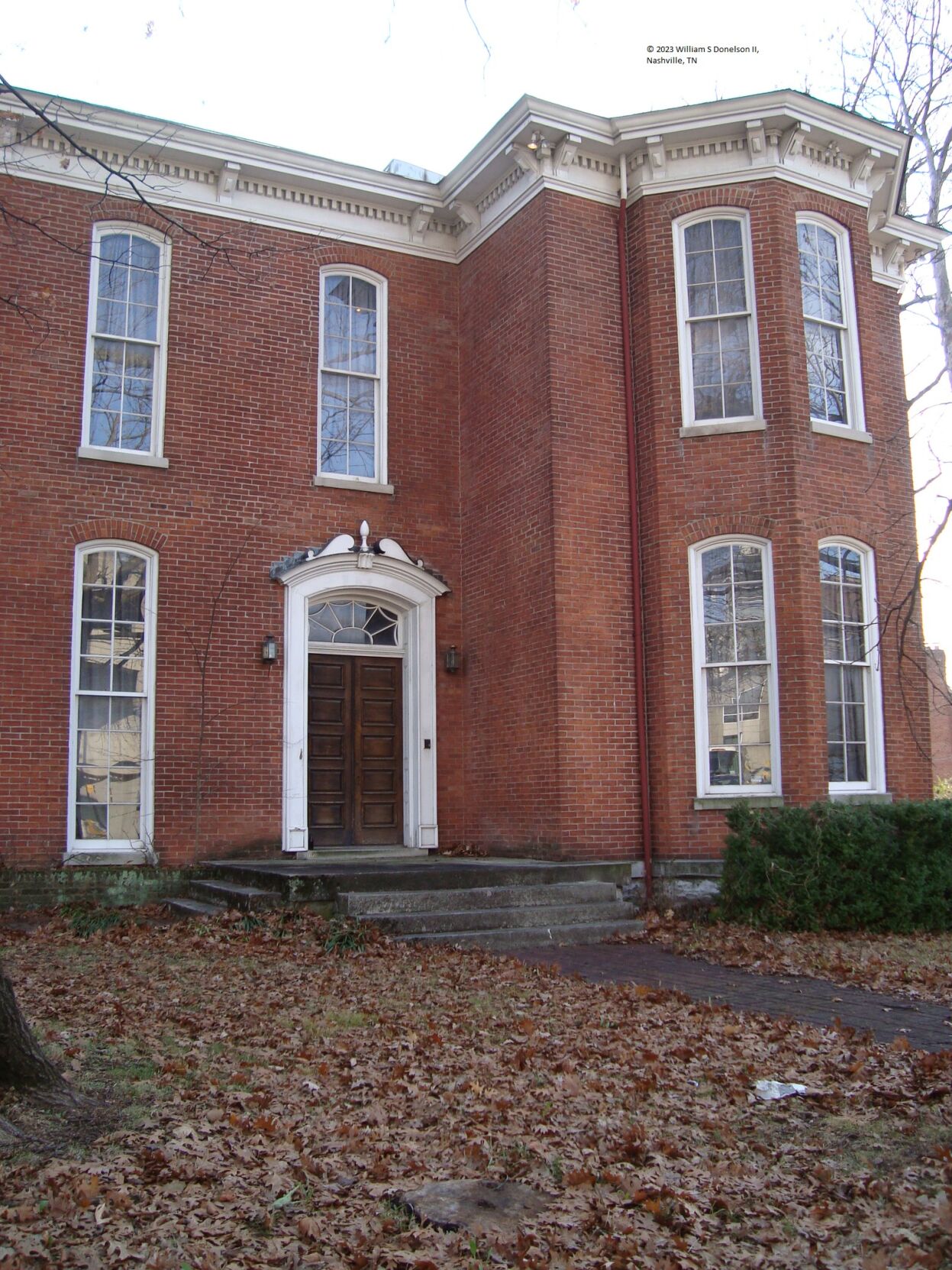
Pilcher-Hamilton House in 2010
When I reached my own 1927 house just a few blocks away, I poured myself a shot of bourbon and tried to think it out.
The last time I had a conversation about the house, it was in response to a call from the Metro Historic Commission looking for a way to contact one of the Hamilton children to discuss putting the house on the National Register of Historic Places. Unfortunately, that did not happen, primarily due to extensive changes inside the house.
I thought to myself, “How in the world could I have missed the public discussion of the demolition of the house?” I talked to a couple of people who share my view of preserving historic structures. They had no idea either. I had not missed the news. That discussion had just not happened … at least not in the public eye.
My first thought was, “What has gone wrong here?” I also wondered what former Councilman Jim Hamilton would have to say about the fate of his house. Although we had different political philosophies, Jim and I were friends and compatriots in our opposition to urban renewal. During those years I had many conversations with Jim about his views (or more accurately, I listened to Jim talk about his ideas).
In the urban renewal process, he re-zoned much of the area for office and commercial use. As I recall, he believed that his neighbors — mostly older residents of Music Row — should be able to reap the economic benefits of the redevelopment themselves. Investors should not get all of the benefit. He approached the problem by re-zoning Music Row properties for office and commercial use, in advance of the actual demand for those uses.
I agree that the rights of private property owners should always inform the discussion of how we deal with important historic properties. The Hamiltons owned the property at One Music Row for decades. Jim and his wife lived there and reared a big family while the residential trend was strongly toward the suburbs. In later years, the Hamilton children kept and maintained the property, and paid the taxes. Even when it was empty, it was never an eyesore. It was the queenly entrance to Music Row, a Nashville landmark.
A Virgin Hotel on Music Row will be a shiny notch in the belt of Nashville as “It City.” It will also produce a healthy hunk of property taxes, provided the project does not receive big tax breaks. What a new hotel will not do is define Nashville’s unique history.
This is the constant challenge of successful urban redevelopment. People of vision take the initial risk to save historic buildings and unique areas of the city. In the beginning stages of preservation, young people often borrow money from their parents that the banks refuse to lend in order to fix up old houses and storefronts. Barry Walker, for example, single-handedly saved Marathon Village.
Once development reaches critical mass, the big boys and girls want a piece of the action. Unfortunately, the piece they want all too often destroys the very character that made the area attractive in the first place. I know how difficult these decisions are. In my own tenure in the Council, I made some decisions I am proud of and some I would like to do over.
Historic preservation is a public-policy dilemma. Nashville has put important tools in place to address historic preservation, including historic districts, conservation overlays, and design guidelines. The National Register of Historic Places protects designated buildings. There are also examples where facades have been saved even when the interiors are completely rebuilt. Some of the structures on Second Avenue are examples.
In my vision, the old Pilcher-Hamilton House would have become a five-star restaurant or a fancy schmancy office for a high-end law firm or PR agency — even if the interior had to be completed altered for the new use — and perhaps supported by tax incentives. And the Hamilton family would still have received a fair market price for their property.
So I end my reflection by asking: What do we need to do differently to be sure that when a visitor wakes up and looks out the window of a Nashville hotel, he knows he is in Nashville, Tennessee, not in Cleveland or Indianapolis? Not in Memphis, but in Music City, USA? What place do unique historic structures play in this scenario? How do we preserve landmark buildings, and honor the economic interests of their private owners? Unless we address the issue with intent, we will continue to lose structures that define our history and our character.



