
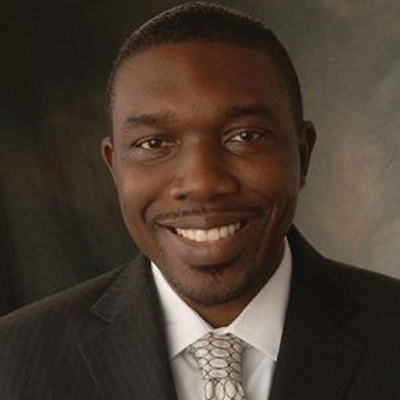

In some ways, Shawn Joseph, the new director of Metro Nashville Public Schools, faces a tough road: The number of Nashville schools falling in the lowest 5 percent in terms of performance is poised to grow to 15 when the state releases its annual list of low-performing schools in 2017. Joseph, a 41-year-old who most recently worked as a deputy superintendent for Prince George's County Schools in Maryland, also stands to serve a nine-headed boss that could soon transform when elections for the Metro Nashville Board of Education take place in August. Five of the nine seats on the school board are up for grabs this year.
The 87,000-student district has also struggled to keep teachers. A survey released by the district in November showed that most teachers who left were headed to teaching jobs in other counties. The report also outlined issues with negative workplace culture: Fifty percent of departing teachers left, in part, for personal reasons, and 28 percent said school culture played a role in their decision to leave.
Through another lens, any results are better than a rudderless year without a director. Reaching the point of hiring Joseph, the first black director of Metro schools, took two searches and a 17-person community advisory committee tasked with sketching out the perfect candidate. The Scene talked to Joseph, who will make $285,000 a year, about his plans for the district. He officially starts July 1.
What do you most want the Nashville community to know about you?
I want the Nashville community to know that I think that Nashville is in a wonderful position right now where we have all the stars aligned — with everybody coming together to be clear that we are going to work together to do great things on behalf of children. And I want the community to know that they have my commitment to making sure that our schools work hard to meet the needs of children in the city.
I've heard you say a few times that community input is going to be incredibly important in your transition. And I know you've already started doing some of that work. What will those meetings look like? What are you already hearing from the community?
I've not had an opportunity to really engage the community beyond the community forum that we had as a part of the interview process. The sentiment that I am getting in general is that, as a community, we want to work together to make sure that the students are getting their needs met, and we want that. I got a clear message that the community wants to be a part of the process to helping us improve our schools.
So how do you do that then? How do you bring them in and make them more of a part of the conversation?
I think we've got to be clear about what our goals are. We've got to be really clear about what our strategic plan is. And we've got to help. We've got to allow them to be a part of the process in defining what the goals and the agenda is going to be, and once we have that laid out, we've got to be clear about the entry point for them to help them understand how they can help. I think a lot of times school districts state that they don't have a lot of parent engagement, and I think a big part of the problem is the school system itself doesn't help parents understand how they can be engaged. So we're going to be intentional in thinking through how do we help parents: 1) understand the plan, and 2) show them things they can do to help us move the plan forward.
I know that you likely haven't had a lot of time yet to look over the strategic plan, but I know you mentioned during the interview process that it may take some significant revamping once you come around. Is that still your intention?
So I think the plan is an excellent start. The plan really talks a lot about the academic program. I'd like our plan to be more comprehensive in thinking about other areas where we want to focus, like community engagement, like organizational efficiency, like climate and safety issues. And I also think we have to be clear about communicating the measures that we're going to use to determine whether we are successful or not. So one of the first things that the board and I are going to do this year is really sit down and look at the plan as it is currently written and ask ourselves where we want to be in the next three to five years and what measures will we hold ourselves accountable to say, "Yes, we were successful," or, "No, we fell short."
I know you mentioned you'd like to bring in some external voices too. I think you mentioned Betty Morgan. Can you talk a little bit about what you think she would bring to the district?
Well, Betty Morgan was the American Association of School Administrators' [2010 National Superintendent of the Year]. Betty has been the chief academic officer involved in [Prince George's County Schools], and she was a superintendent for 12 years. She has a wide range and in-depth understanding of the complexities of urban, suburban and rural school districts, and in addition, she was executive director for America's Promise. So she has an extensive network of organizations [that] support ensuring that students get excellence by design in every classroom every day. So I think her insight will be invaluable when we think about where we want to be, and we'll have a couple of Nashville experts. I'm really going to heavily look at our local experts, because I think what makes this opportunity extremely promising is that we've got some local experts in the Nashville area who can really be additives — who can really help us think through the work that's ahead.
One thing I found really interesting is that during the interview process you were really the only candidate of the finalists who was willing to say something directly about the debate the board had about hiring a female candidate, or at least interviewing a female candidate. I think what you said was that it was commendable. Is it important for the board to talk and debate about equity? And is that the kind of debate that you hope to see in the future?
Yes.
Do you care to expand on that?
I think this board spent a lot of time looking for a strong candidate for director of schools. And if there's — there's no perfect process in anything that you do. So if there was a candidate who was exemplary that they thought was not adequately vetted, I think the right thing to do is to take the time and talk about it. You know I think our kids just deserve that, so that didn't bother me at all.
I think that piece of your contract about interacting with the board was also really interesting. Why did you want that added in? Why did you feel like that part of the contract was necessary?
I think if you look around the country, at the large, complex districts, that clause is not uncommon. It's important that the board and me as the director of schools just have a foundational understanding of how we best work together and a vision of how we work together right up front. People do better in terms of relationships when the expectations are laid out, discussed and understood. I think that language just supports the notion that we want to collaborate and we want to work well with one another, and to do that we've got to just help each other to do the work that we're charged to do. I have specific work that I'm charged to do as director, and they have specific work that they're charged to do as members of the board of education, and together we have to work as a team to fundamentally transform the educational experience for children.
You might not have specific plans for teacher retention yet, but it's a significant issue in Metro Schools. Can you talk generally about what you think works to keep teachers satisfied?
What I will say is that we've got to look at just issues of school culture. We've got to make sure teachers' voices are at the table. We've got to make sure that we're paying our teachers an adequate salary so they can live in this great city. We've got to make sure that teachers are getting the type of training that they need to handle the complexities that are associated with educating children. I think if we do all of that we can have higher job satisfaction, which ultimately will allow us to keep teachers for longer periods of time.
In another interview, you said that you were halting hiring in the central office until you were able to evaluate more. If that's true, what went into that decision?
I think that there's an opportunity to hire principals and hire other staff, and I think it would be beneficial for me to be a part of the process in hiring, because we want to talk with our new employees about our new vision, our hopes and dreams for the district — make sure they're just clear about the value system of our district, and it's important that it come directly from the director of schools, I believe.
You've also said you don't want your legacy as superintendent to only be that you were the first black director. Can you speak a little bit to the importance of children having leaders who look like them?
Yeah. You know, in America we say that all children can be anything they want to be, that this is the greatest place in the world to live because we are not bound to any caste-like system. So it's one thing to say it, it's another thing to see it — having people of different backgrounds in different roles within an organization, for people to see that multitude brings a reality to them that is tangible. I think that is a good thing that shows progress. And we know Nashville is a very progressive city, so having people with different races and backgrounds and different positions should be the norm, not the exception.
What's your background in education?
I've been an English teacher, a reading specialist, a team leader, a dean of students, an assistant principal, a principal. I was the Maryland state principal of the year. I was the director of school performance, so I oversaw 34 schools supervising principals and monitoring the school-improvement work. Then I was a superintendent in a rural district, and currently I'm deputy superintendent in the 17th largest district in America. So I've not taken any shortcuts in my career. There's not a position that I've not had in education to get to this point. I feel well-prepared to take on the challenges that are before me. I stand to maximize the opportunities that are before us here in Nashville.
Do you think your experience in all those roles will create a level of buy-in?
I don't know. I think when you've had those types of experiences, it gives you a level of wisdom that you would not have if you'd not had experience. Experience does matter. So hopefully, people will see me as a very pragmatic type of person — one who is reflective and thoughtful. When I'm dealing with a situation, I'm able to look at it from multiple lenses because I've lived a number of similar experiences that the people who are implementing [policies] are going through.



