
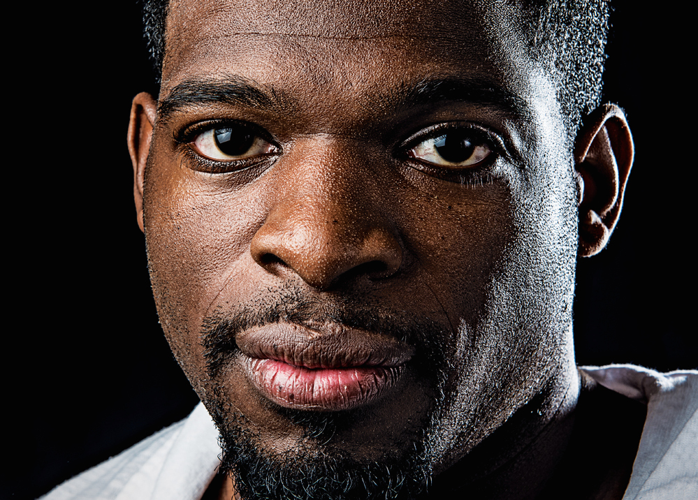
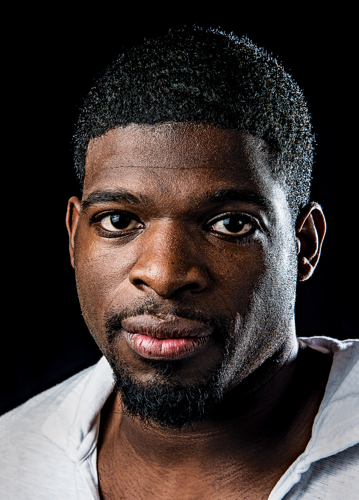
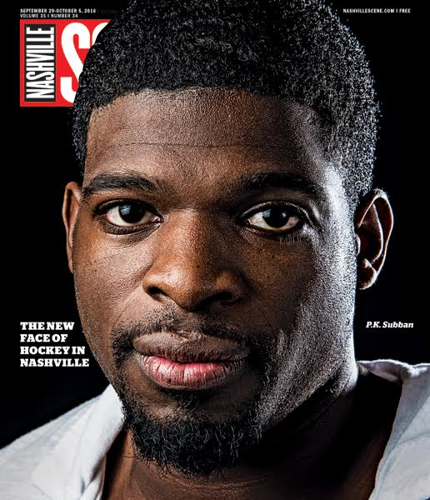
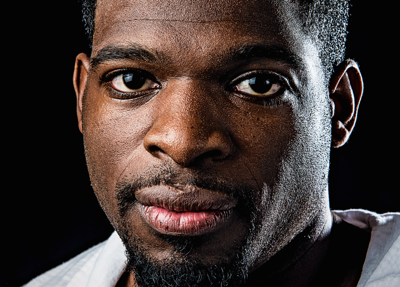
P.K. Subban has star quality.
A half-moon smile spreads wide across his face and remains in place a startlingly large percentage of the time. His energy is infectious, whether he’s in the locker room with teammates, in front of thousands of adoring fans or shaking the hand of a single sick child in a hospital. Even his name, P.K. (short for Pernell Karl), is unique, yet so fun to say that people seem to feel as though they’re on a first-name basis with him.
More than all of that, though, Subban innately understands the mystery and responsibility of stardom and navigates the trappings of his fame with a disarming ease.
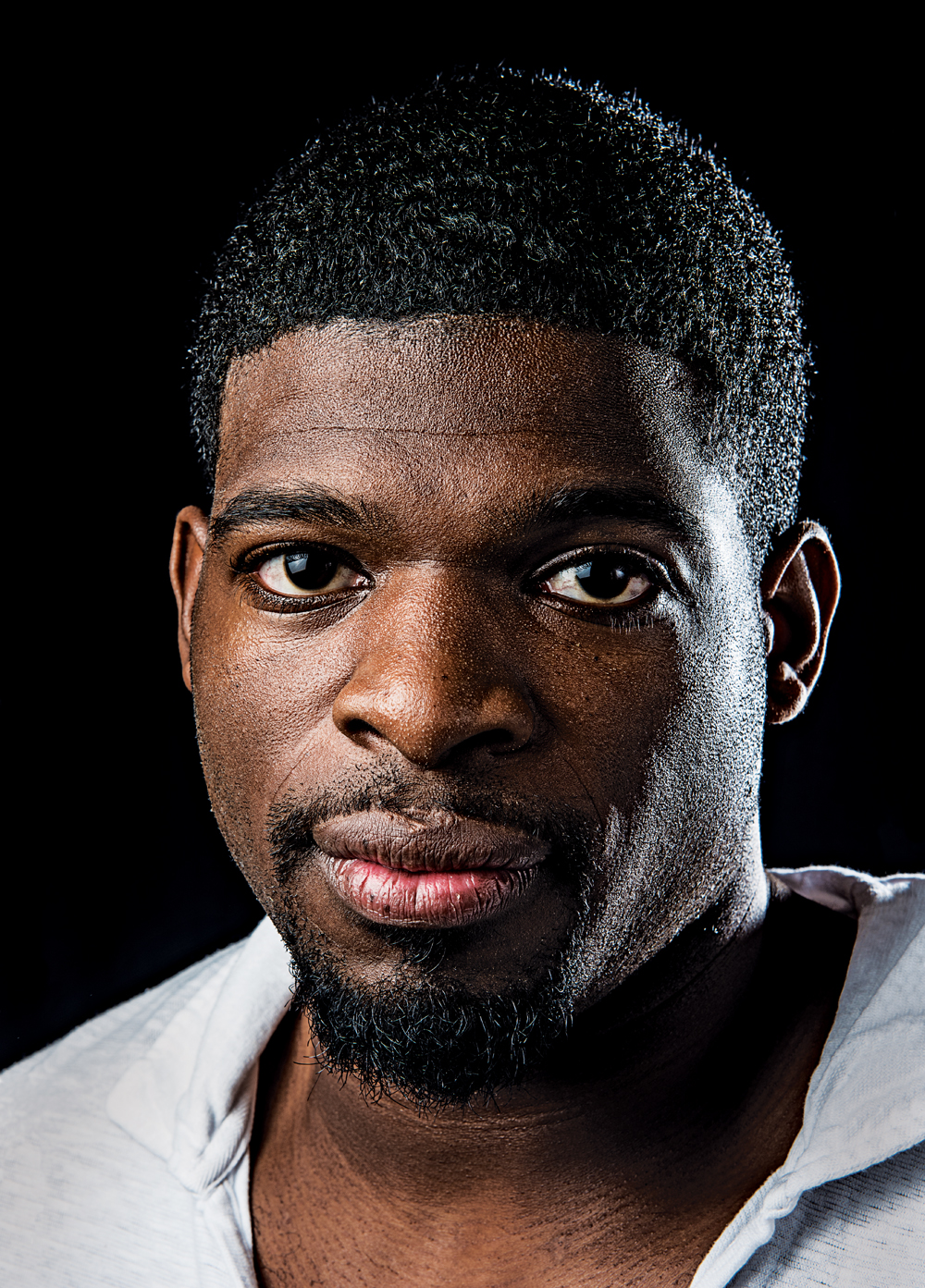
P.K. Subban
His identity carries a cachet that adds value to other endeavors. This summer he partnered with a clothing designer to create the P.K. Subban Suiting Collection, a line of suits and shirts for men. He also hosted P.K. Subban’s All-Star Comedy Gala as part of Montreal’s famed Just for Laughs festival. The event raised more than $130,000 for one of his favorite charities, the Montreal Children’s Hospital. Last fall, he announced that he would donate $10 million over seven years to the hospital. The money, which represents more than 15 percent of what he will earn from his current contract, will create P.K.’s Helping Hands, a fund that will provide assistance to patients’ families so they can focus on their children’s well-being.
Seemingly everything Subban does attracts an outsized amount of attention. Three years ago his coach with the Montreal Canadiens prohibited him and a teammate from engaging in the “triple low five” to celebrate victories. His goal celebrations prompted debate within his former team and in newspapers and on television programs across Canada.
So it was big news on June 29 when the Nashville Predators acquired the 27-year-old defenseman in a blockbuster deal that sent Shea Weber, the most accomplished player in Predators history, to Montreal. It was still news two weeks later when Subban returned from a European vacation and came to meet members of the front office and take a closer look at the city. It was still news last week, as evidenced by the fact that members of the Canadian sports media — both English- and French-speaking — were on hand for the start of Nashville’s training camp.
When the Predators acquired P.K. Subban, they got a star. He is a player who does not fit the traditional mold of his sport, now in a place that has relatively little tradition and is not necessarily looking to borrow anyone else’s. The local NHL franchise has strived to package and sell the game in a way that suits the city and region, an area renowned for delivering stars of the music industry.
Initial impressions among many are that Subban and Nashville are a perfect fit.
Less than a week into his first training camp with the Predators, Subban sat down with the Nashville Scene to discuss a number of topics that shed light on who he is, how he works and what he might mean to his new team and city.
As much was made about how much flair, style and personality the Nashville Predators acquired in the trade as about the quality of hockey player they got. Do you like that, or would you prefer people think more “hockey player” first when they hear your name? My play speaks for itself. People can talk about the personality and all that stuff all they want, but at the end of the day, people can look at the six years I’ve been in the league and look at any other defenseman and what they’ve accomplished in those six years. There’s very few who have done as much. So at the end of the day, my confidence comes in my ability to play the game I love and produce at a high level. And I’ve done that.
Do you think that confidence translates to designing clothes, in that you know who you are, what you are and what you want to project in this sort of venture? It’s pretty simple for me: Just be yourself. No matter what I’m doing, I’m going to do it the way that best represents me.
Have you seen anyone walking around in the items from the P.K. Subban Suiting Collection? If so, what is that feeling? I have seen a couple, and people told me that they visited the store to buy some stuff. So it’s quite flattering to hear that. At the end of the day, I leave that stuff for when it’s time to do that stuff, and the rest of the time I’m mostly focused on hockey or other things.
You do make time for children, obviously, through your work with the Montreal Children’s Hospital, and you already have visited Monroe Carell Jr. Children’s Hospital at Vanderbilt, here in Nashville. What drew you to that sort of outreach? It’s just my experiences. Everybody does things for a reason. So if someone does something, you’d have to think there’s a reason they’re doing it. Those are all based on my personal experiences.
Were you sick as a child? No, I’ve just had some personal experiences with children in the past. That’s why I’ve done it.
The children’s hospitals here and in Montreal have great reputations. Is the experience of visiting young patients the same wherever you go? It’s just like anywhere else on the planet. Everybody needs help. There’s a lot of kids there that need help. You have to be willing to give your time, and the kids appreciate that, for sure.
You were in Europe when the trade happened. Were you able to enjoy the rest of your vacation, or were you consumed by thoughts about the turn your career had just taken? I was definitely able to enjoy it. I had a great time. I think it was the best thing about the whole vacation, that I was there when it happened. So I had time to enjoy it, and I did that.
What cities did you visit? A bunch of places. I started in Paris and finished in Greece.
Was it a list of places you have been or places you wanted to see? Some places I have been, some I didn’t see before. So it was kind of bouncing around a little bit.
What was the most memorable moment of the trip? There were so many moments. I was there for a while, so there were a lot of different moments you remember. Really, the best part was just being there with great people.
You have talked about how nice people in Nashville have been to you already. Did you have any expectations or any sense of what it was like coming to the South to live and work? A lot of people act like it’s the first time I’ve ever been in Nashville. I’ve been here before many times. So I kind of knew what to expect. But visiting and living are two different things. So I guess I’ll have more to say about it at the end of the year.
Have you bought a home yet, or do you plan to rent while you decide where you want to be? I have a place down here.
Were you able to get moved in, get it decorated and make it feel like home before the start of training camp? Yes, exactly. I came in a little early to do that, and everything is good now.
Was there any sort of trepidation for you or those close to you about being a black man in the South? Did you hear any of that? Did you think any of that? Did you talk to anyone about such concerns? No. Not at all.
Have you followed the ongoing story about athletes’ pregame protests during the United States national anthem? Does any of that mean anything to you? Well, I’m not an American citizen, but I do hear a lot of things that go on. These things are not just American issues. Some of these things are global issues. So, I mean, everybody has an opinion on it. For me, I’m not an American citizen. I’m new to the United States. But I look forward to understanding more about this country.
Have you dealt with racism much personally? I’m sure everybody has dealt with racism or heard derogatory comments at some point in their life. I’d be lying if I didn’t say that. I mean, I’m not going to act like this is all of a sudden something that should be talked about now. These are things that have been going on for hundreds of years.
What is your response to racism? Do you laugh it off? Do you ignore it? I dealt with it the way I had to deal with it. I don’t need to talk about how I deal with things.
On a lighter note, this summer you hosted a comedy show as a fundraiser for Montreal Children’s Hospital. Actors always say comedy is the biggest risk. What was it like to get up in front of people and try to get a few laughs? I was definitely a little nervous not knowing what to expect and how things were going to kind of play out. It ended up being an extremely positive experience for me, and we raised a lot of money for charity.
What’s the feeling when you do get some laughs? It’s funny because you just start rolling once the crowd kind of takes to you. So it was a lot of fun.
Are we going to see the “low five” resurrected in Nashville or are you going to create a new goal celebration? [Laughing] I don’t know. Usually those things are spontaneous. I don’t think about it. When that happened in Montreal, that wasn’t something that was predetermined. It just kind of happened, and then it continued. I don’t know. We’ll have to see what happens here.
So talk about the moment you score a goal. It’s not an easy thing. Can you describe the emotions you typically feel in those moments? Anybody who has ever scored an NHL goal understands that it is not easy to score at this level. When you do, enjoy it.
Do you try to have fun playing hockey all the time? Is it still a game to you, or because it’s your profession, do you view it more as a business? For sure, I’ve been playing hockey for a long time. For sure, it’s a lot of fun for me. I enjoy it.
Did you play other sports as a kid or were you always drawn to, and good at hockey? It was mostly hockey.
When you were in Montreal, you were a member of teams that tried to win the franchise’s 25th Stanley Cup. With Nashville, you’ll be trying to win the organization’s first. Is the pursuit similar, regardless of those circumstances? And have you thought about how rewarding it would be to help deliver a championship to a city that has never had one? I have just thought about how rewarding it would be to win a Cup — period. To do it here would be special, and I believe we have a pretty special group in this room. But I’ll learn more and more about our group as we continue to move forward. Right now, I’m just getting to know people. I know these guys as hockey players, but I don’t know everybody or what type of person they are. So I’ll learn more as we go.
Finally, what do you want people in Nashville to learn about P.K. Subban as they watch you and cheer for you? I like to let people make their own judgments. They’ll get to know me more and more as the season goes on. Then it will be interesting to hear what people think of me.
Email editor@nashvillescene.com




Post a comment as anonymous
Report
Watch this discussion.
(0) comments
Welcome to the discussion.
Log In
Welcome to the discussion.
Keep it clean. Please avoid obscene, vulgar, lewd, racist or otherwise abusive language. Comments featuring hate speech or threatening or violent content will not be tolerated.
PLEASE TURN OFF YOUR CAPS LOCK.
Be truthful. Don't knowingly lie or mislead.
Be proactive. Use the “report” link on any comment that violates our comment policy.
Share with us. We'd love to hear your feedback.