


On Oct. 16, Paul McCartney made a plea to a capacity crowd of 14,498 at Bridgestone Arena. "You gotta save these old studios, man," Sir Paul said. "The history!"
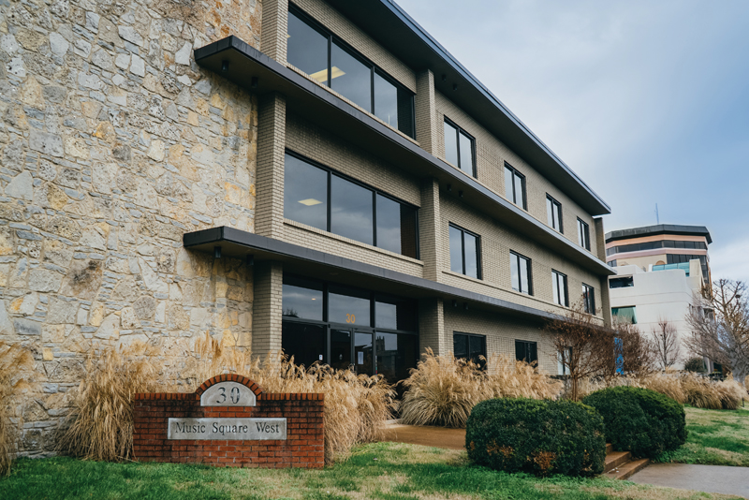
Thousands roared their approval. Since summer, they'd followed the ongoing flap over 30 Music Square West, the building that housed one of Music Row's most hallowed rooms, RCA Studio A. Just weeks earlier, on Sept. 28, the outcry over a Brentwood developer's plans to raze Studio A — a space where the voices of everyone from Waylon Jennings to Dolly Parton once reverberated — had made the front page of The New York Times.
But McCartney wasn't talking about Studio A. At least not directly.
Nor was he lamenting the loss of the 135-year-old Pilcher-Hamilton House, demolished as if overnight for a multimillion-dollar Virgin Hotel on the Music Row Roundabout. He wasn't specifically talking about the McGavock Street building where Elvis Presley cut "Heartbreak Hotel," razed in 2006.
Or the Hillsboro Village building that housed Bradley Studio, where Kitty Wells cut "It Wasn't God Who Made Honky Tonk Angels" in 1952, leveled earlier this year. Or the former home of Combine Music, which fell to the wrecking ball in June.
No, more than any of Nashville's endangered or rubble-reduced studios, McCartney was mostly talking about a comparatively obscure Music Row property: SoundShop Studio. Located at 1307 Division St., formerly owned and operated by the late Buddy Killen, the studio hosted the likes of Buck Owens, Neil Young, N'Sync and Reba McEntire.
It's also where, in the summer of 1974, Wings cut tracks like "Junior's Farm" and "Sally G" — a song that, as legend has it, Sir Paul penned in a Printer's Alley bar. Ernie Winfrey, the famed Nashville engineer who cut those sessions, met with McCartney the day of his Bridgestone show and mentioned the space was in danger.
But by then it was too late. In November, the studio, known in recent years as Destiny Nashville, hosted its final session. "Our facility has been sold to make room for more condos on Music Row," reads a Nov. 26 post on Destiny's Facebook page. "RIP Soundshop Recording Studios."
Its epitaph was a blink-and-you'll-miss-it real estate blurb on The Tennessean's website. The newspaper reported that Charlotte, N.C.-based Crescent Communities had purchased the 2.1-acre site for $8.1 million. Where the former Beatle laid down his Nashville sessions will stand Crescent Music Row — a mixed-use 275-unit luxury apartment complex.
All this went completely unnoticed by the local music press and the same supporters who fanned Studio A into an international news story. Two studios with rich histories. One prompts an uprising; the other dies in silence. What made the difference?
It's simple: Nobody marshaled the troops to save SoundShop — not publicly, anyway. SoundShop did not have a highly visible pop star and his management team take it up as a cause. It did not have a Music Row insider working his connections. It did not have a preservation-minded philanthropist who not only stepped in with a building-saving bid, but brought in two civic heavyweights who silenced any doubts about the building's future.
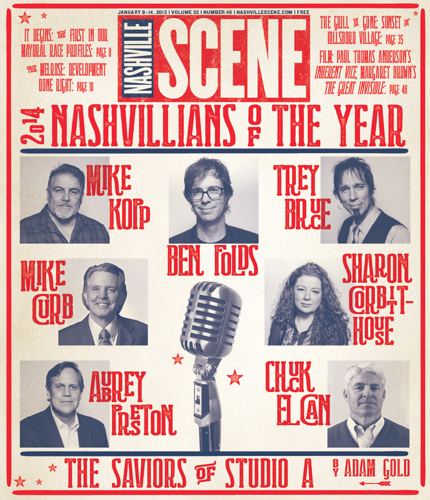
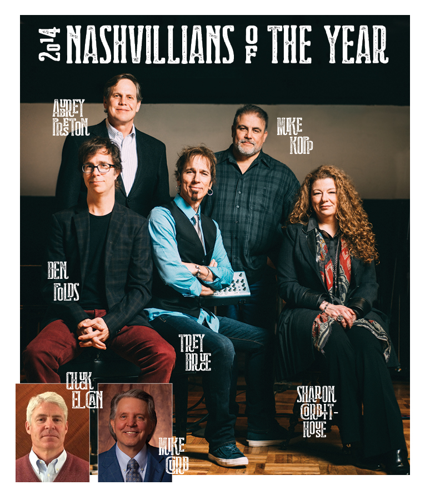
But RCA Studio A did. For shoring up a vital piece of Music City's history, at a time when the financial pressure to flip our past has never been greater, the Scene recognizes the people who made that happen — Ben Folds, Mike Kopp and Sharon Corbitt-House, Trey Bruce, Aubrey Preston, Mike Curb and Chuck Elcan — as our 2014 Nashvillians of the Year.
Their efforts created a flashpoint for protecting what remains of Nashville's music history. And for the first time, the behind-the-scenes story of the nail-biting deals, deadlines and last-minute rallies that saved Studio A can be told.
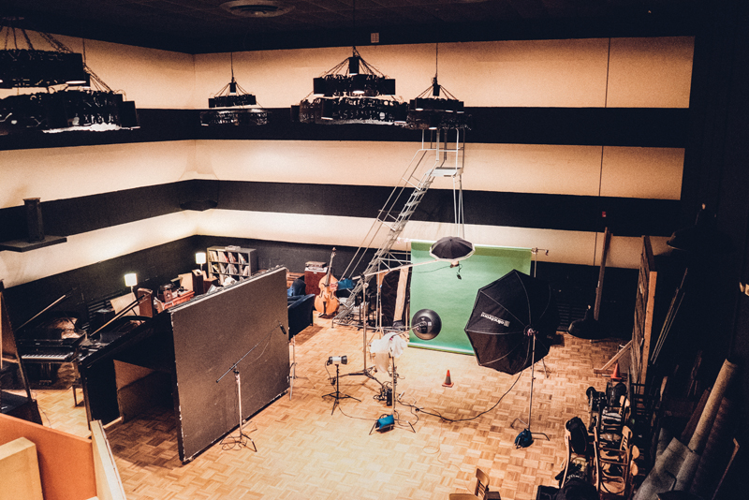
RCA Victor Nashville Sound Studios — colloquially known as RCA Studio A — opened in 1965. The 5,000-square-foot facility was one of six purpose-built studios in the world commissioned by RCA. It's the last that's still in use.
The studio comprises one quarter of the 20,000-square-foot 30 Music Square West, the former headquarters of RCA Nashville. It was built in 1963 by Music Row founders Owen Bradley and Chet Atkins, along with Bradley's brother Harold Bradley, a Country Music Hall of Famer said to be the world's most recorded session guitarist.
At the time, it operated in concert with the legendary RCA Studio B. The cavernous room was built big enough to record the live orchestras that Atkins used to help shape the countrypolitan sound.
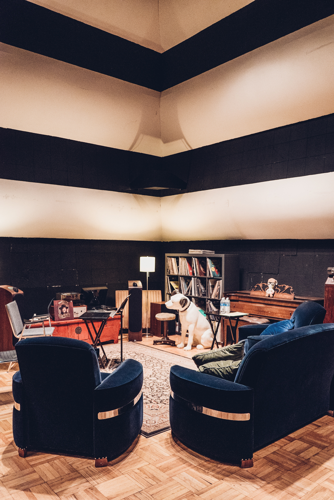
Walking into Studio A today feels like traveling back in time. With its black metal chandeliers, the three-story space decked out in Space Age decor is gasp-inducing. Ben Folds, the studio's tenant for the past 12 years, compares it to a Stradivarius violin — an exquisite sonic instrument.
If the studio yielded classics like Dolly Parton's "Jolene" and "I Will Always Love You," the adjacent office space is where a different kind of country music history was made. It's where industry icons like Atkins, Owen Bradley, his son Jerry Bradley, former RCA honcho Joe Galante and the maverick Cowboy Jack Clement wheeled, dealed and made decisions that shaped the trajectory of American music.
Today, brooding trad-country hero Jamey Johnson occupies Atkins' old office, with Folds' team just across the hall. On the day the Scene stops by, breakout star Kacey Musgraves is downstairs in Studio A, where she cut her Grammy-winning 2013 album Same Trailer Different Park.
RCA occupied Studio A and the offices in 30 Music Square West for 25 years, vacating the space in 1990. The Atkins and Bradley families have spent the years since trying to sell the building. In an open letter issued last summer, Harold Bradley, at 89 the only surviving founder, said it was built "as an inducement to keep [RCA] in Nashville" and a nest egg.
"One day we might not have anything," Harold recalls his brother saying, "but if we buy this property and build this office building, we can at least have something to sell."
As the building remained on the market, producer Warren Peterson took over the studio in the '90s, running it as Javelina Recording Studios. George Jones and Tammy Wynette, Garth Brooks, Alan Jackson and The Chieftains cut tracks there during the Javelina era. Shania Twain did overdubs for her multi-platinum 1995 breakthrough album The Woman in Me at Javelina. The studio's next tenant, fresh in 2002 from his solo debut Rockin' the Suburbs, was Ben Folds.
At first he used the space he called "Ben's Studio" to record his own material. But in 2009 he opened up to outside sessions under the name Grand Victor Sound. Through its doors have passed Tony Bennett, The Beach Boys, Blind Boys of Alabama, Miranda Lambert, Lyle Lovett, Pretty Lights, Willie Nelson, Lionel Richie, Carrie Underwood and Lee Ann Womack, to name a few. The studio has remained much in demand.
"We were booked 208 dates this year," says Sharon Corbitt-House, who manages Folds and his studio with Mike Kopp, "and what wasn't being used commercially, Ben was using."
"I can't get in there to pick up, like, an old pair of glasses or something I've got upstairs because there's always someone recording in it," Folds tells the Scene via phone, speaking from a tour stop in Australia.
Nevertheless, as property values on Music Row skyrocketed, Folds & Co. saw the writing on the poly-cylindrical walls. They'd been renting the space for 12 years from the Bradley and Atkins estates on an auto-renewing 90-day lease. They knew it was only a matter of time before the one-acre lot's value surpassed that of the 51-year-old building. Their lease situation put them in a vulnerable position — especially as old Music Row studios shuttered around them.
"We know that the value of a recording studio is not what it used to be," says Folds. "But the problem is that if you knock identity completely out from underneath the city, and you take what is the music industry and it goes elsewhere, I'd like to see how many people want condominiums in Nashville anymore."
"I've been on the Row for 30 years," Corbitt-House says, "and I've never seen it happen this fast. We've gone through so many evolutions and changes, but what has happened in the last six months to a year on Music Row — it's like the Wild West."
But the gunfight was just beginning.
On what would have been Chet Atkins' 90th birthday — June 20, 2014 — landlords gave Folds and other 30 Music Square West tenants news that was more surprise than shock. After nearly a quarter-century on the market, the building had a prospective buyer. The lone bidder was Tim Reynolds, a Brentwood-based commercial land developer.
Reynolds' Bravo Development LLC wasn't in the business of buying old buildings to refurbish them, or renting out studios to rock stars. Nevertheless, Folds — who has a condo in The Gulch's high-rise Icon and admits "it's awesome" — decided he'd try and persuade Reynolds, and Nashville developers in general, to keep Music City's musical heritage in mind as they built a new Nashville skyline.
With the sale set to close June 30 — the 13th anniversary of Chet Atkins' death — Folds posted an impassioned 1,450-word "Dear Nashville" open-letter plea June 24 on his Facebook page. He asked Reynolds "to take a moment to stand in silence between the grand walls of RCA Studio A and feel the history and the echoes of the Nashville that changed the world."
Folds gave readers a crash course in the studio's vast history and its role in what's made Music City attractive to so many new Nashvillians. At the same time, he made a case for why he'd "like to remain the tenant and caretaker of this amazing studio space."
"I don't know what impact my words here will have on anything," Folds wrote. "But I felt the need to share, and to encourage others who also care about preserving our music heritage to speak up as well."
The Scene posted Folds' letter the Tuesday the singer Facebooked it. By Friday it had racked up more than 92,000 views. The hashtag #SaveStudioA started trending. Word spread faster via Folds' Facebook and Twitter, where rock god Dave Grohl was among the first to retweet.
"I didn't expect everyone to read the long letter," Folds recalls, "but I kind of did [expect the response], because my experience out traveling all the time is that people are really concerned about their history being torn down without any thought. ... People see Nashville as a little bit of a treasure, and the idea that a tipping point may be passing, and the same thing may be happening in Nashville that's happening in their neighborhood."
Two people began watching the unrest with interest. One was Tim Reynolds. By the time the Scene reached him, three days after the letter, he'd started getting threatening calls from irate strangers. After first declining comment, in general puzzlement, he called back hours later with a statement telling hashtaggers exactly what they wanted to hear.
"We're glad to [say] that if Bravo Development consummates its sale, it is our full intention to preserve and incorporate the studio into our design," Reynolds told the Scene. Not only that, he continued, preservation "was always part of the plan." If he couldn't use the existing structure, he said, "I would certainly withdraw my contract, because it has always been our intention to incorporate [Studio A] somehow in our design."
The other person was Trey Bruce, a rail-thin Memphian with rock 'n' roll bedhead, Buddy Holly glasses and a cucumber-cool West Tennessee drawl. A hit songwriter and producer whose credits range from Randy Travis to Lynyrd Skynyrd, he looks more like a musician than a Music Row suit. Even so, he has friends on both sides of that aisle. His commitment to Studio A would ultimately test some of those relationships.
As the son of country singer-songwriter Ed Bruce, who wrote "Mammas Don't Let Your Babies Grow Up to Be Cowboys," Bruce has fond memories of visiting Studio A as a kid. When he read Folds' letter, he immediately called Corbitt-House and asked if there was a movement afoot.
"Of all the whales there are to save, I think this was the one I just needed to do," he tells the Scene. When Corbitt-House told him there wasn't, he started one.
Bruce started calling up music industry and preservation-minded friends to meet at the studio the Friday before the Bravo deal was to close. "I was calling two publicists, two attorneys, two producers, two publishers, everything I could think of," he says. Twenty-one people showed up, including Corbitt-House and Kopp.
Thus was born the Music Industry Coalition (MIC) — a group dedicated to advocating for Music Row's heritage. At roughly the same time Reynolds the misunderstood preservationist was talking to the Scene, the assembled brain trust set up a circle at studio center.
One person Bruce brought was Aubrey Preston. A Leiper's Fork philanthropist, preservationist, music historian and real estate mogul, he'd been integral in saving the Franklin Theatre. Preston was pensive during the meeting.
"Aubrey put his chair behind the circle — he wouldn't even put his chair in the circle," Bruce recalls. "It was just typical Aubrey. ... He had a clipboard in his hand and he was taking notes, a lot."
Preston listened as various speakers suggested ways to protect other Music Row sites. But they kept talking about Studio A like it was a done deal. Preston finally raised his hand.
"Can I say something? In the last 24 hours of any closing, everything goes haywire," he said. "If something's gonna go bad, it's going to happen then — and that's when all the deals stop."
Moments later, Kopp got an out-of-the-blue call from Reynolds.
"[Reynolds] called and said he was getting emails that were threatening and all this kind of stuff," Kopp recalls. The jittery buyer had other news as well. Kopp pulled Bruce and Preston aside into the Studio A control room. He said Reynolds had just told him he was going to put the close on hold for 30 days while he tried to integrate a preservation plan into his development.
"[Reynolds] did say that he's never dealt with a piece of property that was controversial, so he didn't understand all this negativity," Kopp recalls. "He did say early on that he had no idea about the history of the building and didn't know people were so passionate about it."
With Studio A given a stay of execution, MIC announced a public rally at the studio for the following Monday morning. Folds, who was on tour at the time, flew into town at the last minute. Some 453 people signed MIC's support page. Try getting that many musicians to show up somewhere at 9 a.m. on a Monday. Within days, Music Row property owners had taken notice of MIC.
Yet many were nervous about the coalition's intentions. Especially when rumors circulated about lobbying for a historic overlay over Music Row — something MIC never spoke of or sought.
"We [started] getting some resistance," Bruce recalls. "Even people that were in the first roundtable meeting at the studio that day, they were calling me the next day and saying, 'Trey, I appreciate this effort, but I can't be on the phone list. I can't have my email on the list. I need you to remove my name."
Bruce hazards that it has to do with those people's connections to either the real estate world, the Atkins and Bradley families — as close as Music Row has to royalty — or both. It strained his own relationship with the Bradleys, which went back decades, and for whom he has the highest respect.
"I've known the Bradleys since I was a child," Bruce explains. "I called one of them on the phone who I'm a good friend with, who I've done music projects with, and he picked up the phone and said, 'What. Do. You. Want?' ... I said, I think I went through that studio when I was 7 or 8 years old for the first time, I understand where you're coming from; my family has a heritage here, too. So we're on the same side.' And he goes, 'I have nothing to say to you.' This is a friend of mine.
"I'm here to polish [their] nameplate up, not get rid of it. The Bradleys got a black eye for selling it to be bulldozed. We thought, 'Well, this is our heritage.' But it was literally their family heritage, so we were all confused by that."
The historic-overlay rumor caused havoc on Music Row. Bruce's own relatives called him to ask him what the hell he thought he was doing. He shot back, "Unless you have a 50-year-old recording studio on your property, where most of the Elvis records, and Everly Brothers records, Willie Nelson and Waylon and Chet Atkins and all that, unless you have that on your property, we're not talking about it."
But Harold Bradley did have that on his property. On July 1, he dispatched an open letter to the Metro Council and Metro's head of planning, zoning and development outlining his problems with Folds' and MIC's position on Studio A.
Titled "Fact v. Fiction," it details how the Bradley brothers opened the fabled Quonset Hut studio that gave birth to Nashville's modern recording industry. That studio, Bradley writes, is the one that made history. Bradley also claimed that Folds & Co. were revising Studio A's past to exaggerate its significance, especially regarding Elvis Presley.
But that was beside the point, Bradley argued. Those sonically iconic moments exist on record, he wrote, not in the walls of an old building.
"What makes a place historic?" he asked in the letter's central paragraph. "The architecture of the Nashville sound was never of brick and mortar. Certainly, there are old studio spaces that, in our imaginations, ring with sonic magic; but in truth, it's not the room; it's the music."
Yet Studio A, a space built to record music, was still being used for precisely that purpose. In 2014 alone, Musgraves, Sturgill Simpson and Jamey Johnson — "artists that, to me, are the future of country music," Corbitt-House says — all recorded in Studio A. In September, famed Small Faces/Faces keyboardist and sideman Ian McLagan, who died of a stroke in December, had his final recording session in the studio. Does a building's past affect the music of the future? Bruce believes it does.
"One of the most harmful things that was said was that the building doesn't matter, only the music matters," Bruce muses. "If you're a musician, or a singer, or a producer, and you're making music in a building where you know a certain few records were made that mean something to you, then all you have to do is believe there's a ghost for it to be true."
"I remember Kellie Pickler, when she was here recording with us, she said, 'I wanna be buried in this studio,' " Corbitt-House recalls. "It's more than just the building, and I've had a lot of musicians say to me, the building just represents the culture and the music culture here and who we are as a community."
A standoff ensued as outsiders awaited the outcome of Studio A's fate. The owners had the right to sell and Folds & Co. had the right to speak up about it, but what's fair? With the threat of the property ending up on the Natonal Register of Historic Places, Bradley asked the council as much in his letter.
"When a tenant, with no ownership in the property, requests restrictions to a property without the owners' consent, he effectively hijacks the owners' original risk and the possibility of a good return on their investment," he wrote. "The Atkins and Bradley families have skin in the game as property owners, and Mr. Folds would ask them to just walk away."
Music Row's protected historic studios got that way because preservation-minded people and organizations bought them, not because the government designated them as such. Politician and music mogul Mike Curb, who's purchased and restored RCA Studio B and other Music Row landmarks, tends to agree with Bradley's position.
"People should [preserve] with their own money," Curb tells the Scene. "They shouldn't tell somebody else they have to do it, because we can't even get the major record companies to preserve their own heritage, much less tell a family that they can't sell their property. So I saw Harold Bradley's point."
The elephant-in-the-room question was: Why didn't Ben Folds buy Studio A?
"I didn't personally have the money to purchase the place," Folds says, frankly. In the months before the Bravo deal came to light, he, Corbitt-House and Kopp were exploring ways to engage a preservation-minded buyer or buyers in the building. Kopp says they even reached out to The Country Music Hall of Fame and Museum.
"We'd met with [Hall of Fame board chairman] Steve Turner," he says, adding that they brainstormed ways to integrate tourism into the studio's mission. "We could carve out a couple days a year where it would help them getting tourists to come through and connect the history between A and B. So we were in great talks with that until everything happened. And then everyone just got quiet."
Naturally, some wondered if Curb would step in and save Studio A. But like many people watching from the sidelines, Curb took Reynolds at his word when he said he'd cancel his contract if Studio A couldn't be preserved.
"When [Reynolds] bought it, it sounded like he was open to keeping RCA Studio A," Curb says. Soon, however, that narrative would change.
Bravo Development sealed its deal with the Atkins and Bradley estates on July 28, with Reynolds paying the famous families $4.1 million. Three days later, on July 31, the new landlord informed Folds and other 30 Music Square West tenants that their rents would rise 124 percent. That's not the only way Reynolds made life uncomfortable for tenants.
"We were paying for paper towels and toilet paper," Corbitt-House says, "and you're looking at the people who were hauling the garbage out." She says at one point Reynolds put a lock on the third-floor heater, where hers and Kopp's offices are.
But the stakes would raise even higher. On Aug. 29, through a high-powered Nashville PR firm, Reynolds issued a structural engineer's field report just before a three-day holiday weekend. The report depicted a building in a dire state of disrepair. Saving the studio was financially unfeasible, Reynolds concluded.
The only solution: Studio A would be demolished after all.
To observers, however, the issues addressed in the report — e.g., needing a replacement HVAC system, reinforcements to walls, reconfiguration of the bathrooms and handicap ramps to meet requirements of the Americans with Disabilities Act — were all fairly run of the mill. The report also noted that buildings of this age were "at a high risk for the [sic] Lead paint, Asbestos and possible other hazardous materials," yet offered no evidence those materials were discovered in the building.
Bruce commissioned and issued his own independent report. His projected a cost of less than $400,000 to fix up the wear and tear — to which Bravo responded by immediately serving him with a cease and desist order. The hand-wringing in Reynolds' report, meanwhile, amused at least one observer.
"When he said there's mold: What do you think RCA Studio B had?" Mike Curb says. "If you're going to say there's old pipes, then every antique home, every classic home, every classic building — do you think the Ryman might have needed new pipes?" This reminds the Curb Records founder of a distant memory.
"I remember when I moved to Nashville," Curb recalls, "and the first rally I attended was called Save the Ryman."
Nevertheless, the report had its desired effect. Many supporters gave up on the cause, while the historic-overlay panic continued to bedevil MIC. Bruce needed people to refocus on Studio A. He drafted Preston, who'd also been skeptical of Reynolds' report. If he could convince his tenacious friend to join the cause, Bruce thought, game on.
"[Aubrey] didn't have the deep relationships with some of those families to damage," Bruce explains. "[Then one day] he called me early in the morning and goes, 'I can't sleep. I literally am waking up before the sun.' He goes, 'This thing has bitten me.' And I go, 'He's in! I can't get rid of him. If this guy is bit by a bug, it's over.' "
"I do get pretty passionate about some of these places," Preston tells the Scene. "I just can't stand to see them go down."
The two broke off from MIC and started what Bruce calls "Studio A Fight Club." Soon after that, Bravo served the building's tenants with eviction notices — everybody out by Dec. 1. Folds booked himself a session for Oct. 31. Had the wrecking ball hit, it would have been the studio's last.
On Sept. 19, after applying for a demolition permit, Bravo unveiled its plan for a 70- to 80-unit condominium complex. Adding insult to injury, Bravo announced it was in talks with the Country Music Hall of Fame and Museum over ways to salvage Studio A's custom chandeliers.
As things were looking grim, Corbitt-House thought of the great producer Phil Ramone, who recorded Tony Bennett at Studio A — one of the final sessions he produced before his death in 2013.
"One of the last things he said to me before he had left the studio was that he fought to save RCA Studio A in New York," she recalls. "And he said, 'You can't let them ever tear this place down.' "
At this point, only one thing could stop Studio A's seemingly certain demise. To his credit, Reynolds set a hard price of $5.6 million. If a bidder came to the table by an arbitrary deadline of 5 p.m. Sept. 30, he'd sell.
One source privy to negotiations, who spoke on condiion of anonymity, tells the Scene the Ryman Entertainment Group toured the building twice. But the source says Reynolds' negotiating terms were too rigid — by design, they thought. According to the source, The Ryman and other parties were encouraged by Mayor Karl Dean's office to explore saving Studio A. Bruce confirms this, saying the mayor's office lobbied movers and shakers early on behind the scenes — but made it clear that would be the extent of their involvement.
"To me, that was the writing on the wall," Kopp recalls. As word reached the Folds camp that negotiations with Reynolds were going nowhere, Corbitt-House and Kopp started packing up the studio and lining up movers. They even found a buyer, in L.A., for Folds' coveted API recording console.
On the morning of Sept. 30, with the deadline looming at 5 p.m., Preston had breakfast with longtime friend Chuck Elcan, co-founder and president of Chinaco Healthcare Corp. He's also married to Trisha Frist Elcan, daughter of HCA and Chinaco co-founder Dr. Thomas Frist Jr., and a member of one of the most prominent families in Music City philanthropy. The Elcans previously purchased and preserved The Loveless Cafe in 2003.
After breakfast, the pair made an impromptu visit to Studio A. Upon seeing the space, Elcan, impressed, told Preston his compulsion to save the studio was spot on. Its loss would be a cultural catastrophe for Nashville.
"This is a problem," Elcan told his friend. "If you decide to do something, let me know."
Later that afternoon Preston talked to Bravo via attorneys. They told him there were no bidders. For all intents and purposes, the war was lost.
That's when Bruce got a call. It was Preston.
"Trey, I think I'm going to throw the longest Hail Mary ever," he said. He'd gamble his own money.
"It just got in my mind — if this day goes by, there's nothing that I've seen that looks like the developer is going to back down," Preston remembers.
Reynolds' attorney agreed to a 3 p.m. meeting — a mere two hours before the final grain of sand would fall through the hourglass. Preston quickly contacted the same attorney who brokered his similarly difficult deal to save The Franklin Theatre. By 2 p.m., he had a quick contract in hand. The price was left blank.
Reynolds didn't attend the meeting, opting to communicate though his legal counsel. There wasn't much to communicate. All his terms — an asking price of $5.6 million, with Preston paying all additional closing costs — were firm and final.
"I suppose he knew he was in a strong position to negotiate," Preston recalls, "because I cared enough to show up that day, against the deadline he'd made. It was not a place you ever want to be in as a buyer, where you care more than the seller cares whether the deal works. So he was in a strong position to negotiate."
Every instinct in Preston's body told him to get up and walk away. Every experience told him he was crazy to pay a million and a half dollars more than someone had just paid months earlier. As Preston puts it, "Pretty much every instinct in you says this is unreasonable, I need to get up and leave, which is what I think the same feeling that a lot of other buyers that approached him got."
But he stayed.
"It seemed very clear to me that [Reynolds] did not care, and actually would prefer I didn't buy it, which told me he's 100 percent serious he will tear this [building] down," he remembers. "I'm probably the only guy on the planet at this moment that can stop this. This is a lot of responsibility here. Either we've got to act in this moment, or this is going to be gone forever. That's quite a feeling."
After two hours of one-sided horse-trading, pen hit paper at 5 p.m.
House and Kopp tell of one recent conversation with Reynolds about something mundane and procedural that, out of the blue, took a dark turn. "He just lit into Sharon," Kopp says. "He said in so many words, 'I wanted to tear that building down. I was ready to tear that building down."
Reynolds did not return calls from the Scene for this article.
Aubrey Preston is uncomfortable with the photo-op element of philanthropy. "I think it just takes away from the project, when it becomes about people that did things," the 55-year-old tells the Scene one laid-back December day at Puckett's Grocery in Leiper's Fork, visibly tensing at the topic.
"I got into a pool of people who were really passionate about preserving downtown Franklin," he recalls of his move to Middle Tennessee in the early '90s. "That hit me pretty well. That inspired me. I had always been drawn to older things, and things with a story, and things with history.
"The big story," he says, "is Ben, and Trey, and the people there and the community that made enough noise and were resourceful enough to get the right attention and set an environment to where something like this could happen."
Preston's strategy was smart and simple — get the building out of harm's way, then find investors on the back end. It was a risky bet against a wild bluff, but one that paid off. Soon Elcan signed on as Preston's second partner. Then, at an event at Studio A in early December, Preston bumped into author Don Cusic. A professor at Belmont's Curb College of Entertainment and Music Business, Cusic was eager to introduce Preston to Mike Curb, who had him over for lunch the next day.
"We just hit it off really, really great," Preston says of his three-hour hang with Curb. "He was very interested in hearing about what we were doing." Soon after, Preston pitched Curb on partnering with him and Elcan. He agreed without hesitation.
"I've been in Nashville for 23 years and I've been waiting for somebody else to want to help preserve [Music Row]," Curb says. "And I was just so happy that Aubrey Preston and Chuck Elcan wanted to do this." The trio, operating as Studio A Preservation Partners, LLC., are in the early stages of brainstorming ways to grow 30 Music Square West and tell the story of Music City. Ben Folds will get to stay in the studio.
What makes this saga even more unusual is that, in the end, everyone seemingly got what they wanted. For Curb, the investment in Studio A completes a set of historic Nashville studios he has purchased and restored over the years, making him a veritable Bill Gates of music-minded philanthropy in Music City. Curb's previous efforts include purchasing Nashville's three most iconic studios: Columbia Studio A; the Owen Bradley-built birthplace of modern country music, The Quonset Hut (which Curb acquired in 2006); and Studio A's more famous sister studio, RCA Studio B, which he leases to the Country Music Hall of Fame.
"What we now have preserved is RCA Records, Columbia Records and Decca Records — the three record companies that accounted for virtually 99 percent of the growth of country music on record," Curb says. "What this does is it completes the cycle; it insures that the history of RCA Records, the history of Columbia Records and the history of Decca Records [is preserved]."
The Atkins/Bradley camp is thrilled by the news of the building's ultimate owners.
"We hope the plans for the future of the studio are successful and are glad this group of philanthropists, led by Aubrey Preston, stepped up to preserve a piece of Music Row history," Harold Bradley, The Owen Bradley Family and The Chet Atkins Family Trust said in a statement to the Scene. "Harold [Bradley] and Jerry [Bradley], who have a combined 100 years working in that building, have been meeting with Aubrey to make sure the accurate history is preserved."
And Folds? "I'm getting recognized more and more for the efforts to save the studio and promote growth on Music Row than I was for my career," he says. "After 20 years of pounding at my career, I was having people say, 'Are you that guy who's trying to save Music Row?' "
Email editor@nashvillescene.com.



