



Editor's note: This story was undertaken as a joint project of MTSU's Seigenthaler News Service. Dylan Aycock, Alex Beecher, Anais Briggs, Lindsay Buchanan, John Connor Coulston, Joshua Formosa, Cecilia Sinkala, Max Smith, David Taylor and Meagan White were the writers and reporters participating for class credit under the supervision of faculty editor and professor S.L. Alligood.
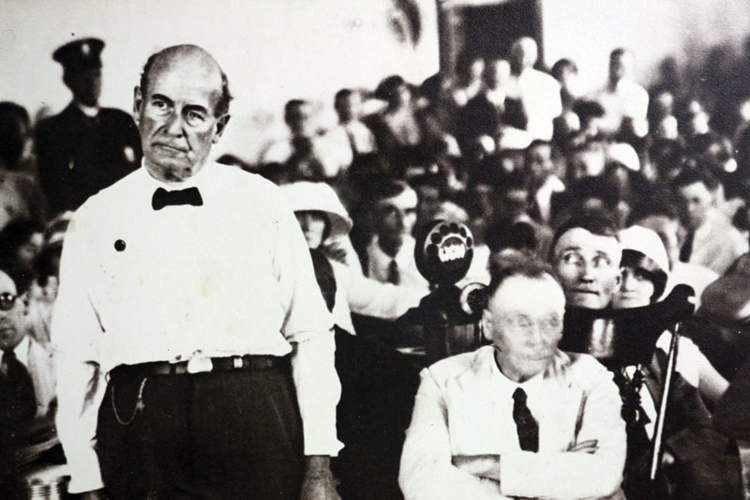
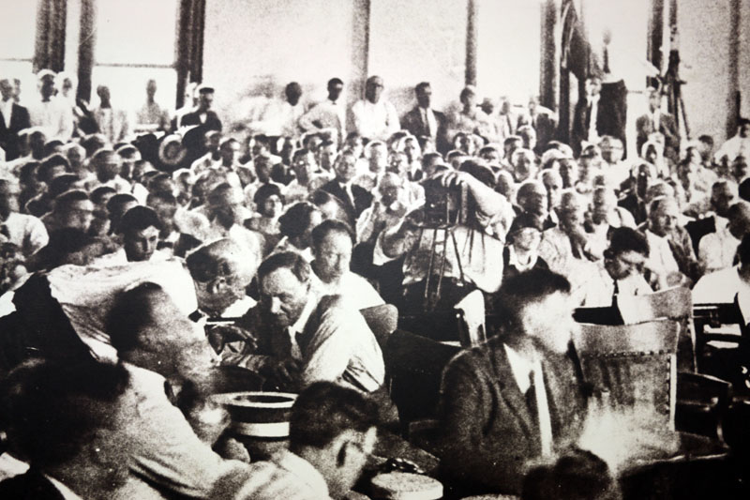
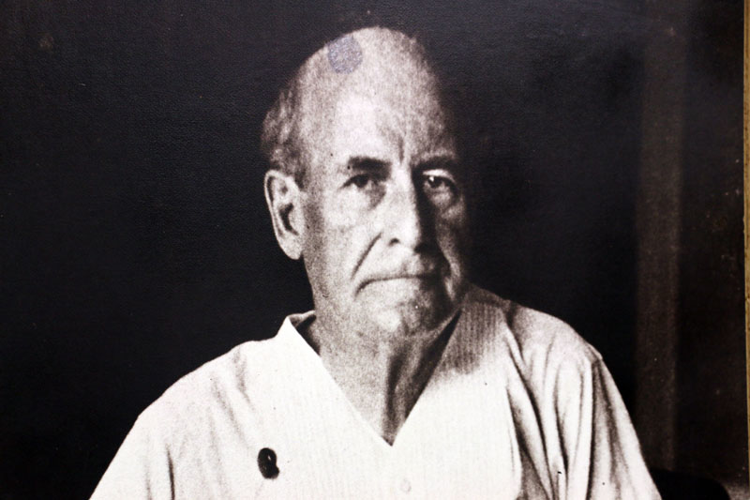
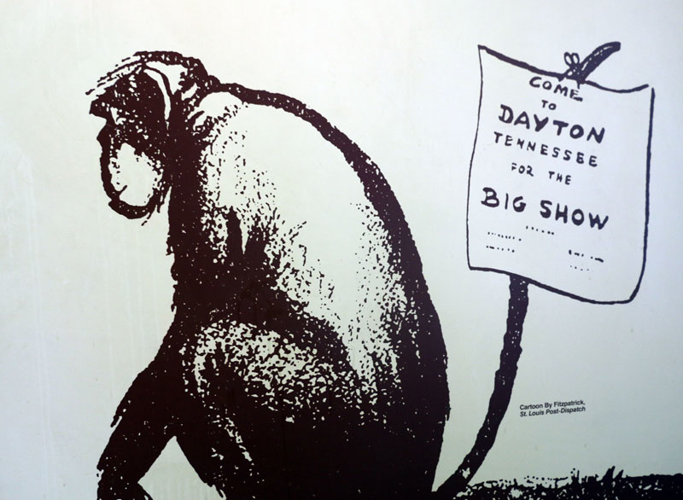
For one sweltering week in July 1925, the nation's newspapers and their sharp-edged pundits, including the sharpest of them, H.L. Mencken, focused on the small town of Dayton, Tenn. Ninety years ago come July 10, two of the 20th century's most famous lawyers — William Jennings Bryan and Clarence Darrow — squared off in the Rhea County Courthouse roughly two-and-a-half hours from Nashville in what is derisively remembered as the "Monkey Trial." In a week's span, evolution vaulted to front and center in the theological and biological debate of man's primordial connection to primates.
That debate persists today, as surely as the courthouse clock still chimes the hour in Dayton. Much else has changed. Trains still come through town on a daily basis, but these days the rattling boxcars only slow down.
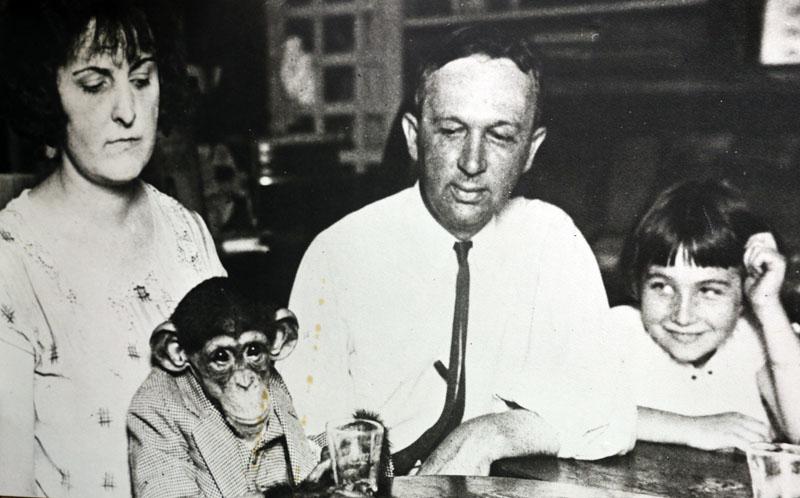
That was not the case in 1925, when passenger service to Chattanooga ferried hundreds of reporters and spectators to the trial. Placid Dayton became a three-ring circus of litigation. Outside the courtroom, Bible salesmen fanned at the heat amongst atheist protestors, sidewalk evangelists, prayer meetings — even a trained chimpanzee. At the center of this carnival was John Thomas Scopes, a first-year teacher and football coach at Rhea County High School.
Scopes was 24 when he was thrust into the spotlight by a publicity stunt gone viral, early 20th century style. The controversy began in 1924, when John Washington Butler, a state representative from Macon County, learned that some Tennessee schools were teaching Darwinism. Butler, a Primitive Baptist, proposed the Butler Act, which prohibited the teaching of evolution.
The act made it unlawful to "teach any theory that denies the story of the Divine Creation of man as taught in the Bible, and to teach instead that man has descended from a lower order of animals." Violation was a misdemeanor, punishable by a fine of $100 to $500.
Three months after the act was introduced in January 1925, Gov. Austin Peay signed it into law. Shortly thereafter, the American Civil Liberties Union sought a test case, according to Tom Davis, president of the Rhea County Historical and Genealogical Society and a 30-year county resident.
For Davis, a lean, affable man with wavy brown hair, the Scopes trial has played so much a part of his life that he's become an expert on the event. For 21 years he was director of public information for Bryan College, named for William Jennings Bryan. In 2013, Davis left the college to become the county's administrator of elections.
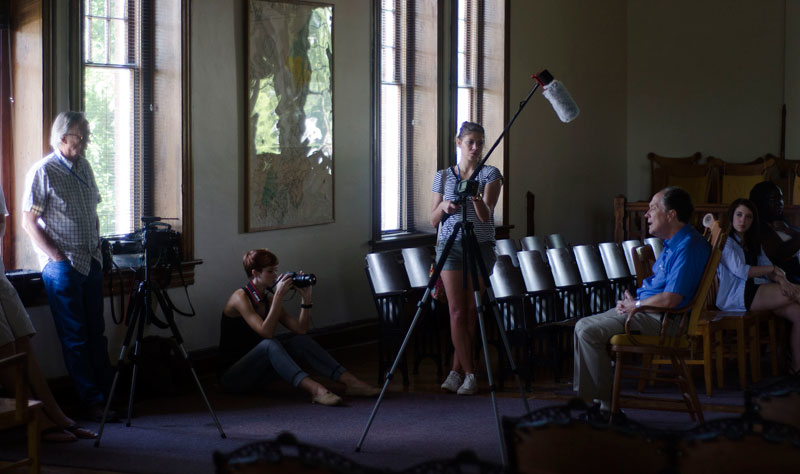
Today Davis sits in a chair positioned in front of the courtroom's jury box, where Bryan and Darrow strode almost a century ago across the creaking wood-plank floors. The trial was a contrivance at best, a travesty at worst, he says — a ploy to bolster the fading visibility of a once-dying town.
Eleven years earlier, Dayton's primary employer, the Dayton Coal and Iron Ore Co., had gone belly up. According to a 1959 master's thesis by University of Tennessee graduate student Warren Allem, Dayton fell on hard times when the mines closed. That was 1914. By 1920, 10 percent of the town's population had moved away.
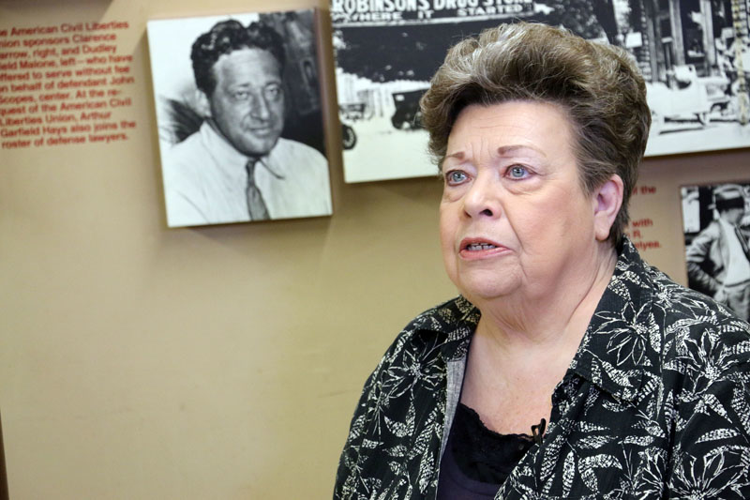
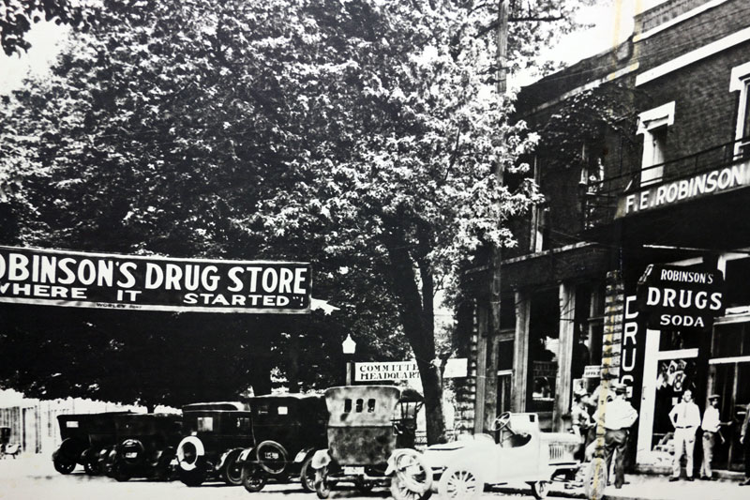
Five years later, the Butler Act was law. On Monday, May 4, 1925, the ACLU announcement was published in the Chattanooga newspaper. By lunch that day, Davis says, the school board superintendent, the school board chairman and other community leaders were conjuring a scheme at Robinson's Drug Store. They reasoned that the first county to mount a case would bring the attention of newspapers and — their faulty logic continued — perhaps even captains of industry. Later that day, Scopes was alerted by a student that he was wanted at the drug store.
"And as any teacher probably would have done, he trotted down to Robinson's Drug Store and they laid the proposition before him," Davis says.
"The best guess is that he was a young man who really had nothing to lose. [He] liked the town, was liked in the community. He was trying to do them a favor."
Allem interviewed numerous Daytonians who witnessed the trial, including druggist Robinson. He suggested fortuitous forces combined that summer to focus the world's attention on Dayton, starting with two larger-than-life central figures.
"There were no more famous people in America than William Jennings Bryan and Clarence Darrow," Davis says.
At the time, Bryan was a well-paid keynote speaker. A former congressman and three-time presidential candidate nicknamed "The Great Commoner," Bryan left no doubts about his religious fervor. He wrote a syndicated Sunday school lesson published in more than 100 newspapers.
A year before the Butler Act was passed, Bryan spoke in Nashville. His subject was, "Is the Bible true?" He was in Indiana at the time Scopes was "arrested" for teaching evolution. Reporters following Bryan asked if he would join the prosecution team, to which the Populist Democrat replied he would assist if he was asked. The request came soon after. The plan to bring attention to Dayton received a king-sized boost.
Within a week, interest grew exponentially when Clarence Darrow, the great criminal defense attorney who transfixed the media with his pleading in the sensational Leopold and Loeb child-murder trial, volunteered to help represent Scopes. That gave the event the luster of a prizefight between well-matched foes. Bryan thought Darrow an atheist. Darrow considered Bryan a charlatan.
By the trial's first day, an estimated 200 reporters had encamped in Dayton hotels and homes. At its height, 65 telegraph operators were posted around town to wire reporters' stories back to their newspapers. Those who came late (or didn't have a larger newspaper's expense account) slept on rows of cots hastily assembled in a storage room above Morgan's Furniture Co.
When the press arrived in Dayton, says Davis, himself once a journalism major, most had stereotypes in mind.
"Mencken called Dayton 'Monkey Town.' That was not a term of endearment," Davis says. Rhea County Historian Pat Guffey adds her own list of press indignities.
"They portrayed Dayton as people who went barefoot all the time, had no education, not a grain of sense," the retired high school biology teacher says.
Mencken, representing the Baltimore Evening Sun (which offered to pay Scopes' bail and any fines), was among the chief offenders. He did write that he expected to find "a squalid Southern village, with darkies snoozing on the horse-blocks, pigs rooting under the houses and the inhabitants full of hookworm and malaria. What I found was a country town full of charm and even beauty."
But he dropped the niceties once the battle of faith and reason commenced. Describing Bryan's entrance, he wrote, "He can shake and inflame these poor ignoramuses as no other man among us." Writing about a prayer service: "From the squirming and jabbering mass a young woman gradually detached herself. ... Her praying flattened out into a mere delirious caterwauling, like that of a tomcat on a petting party." For Mencken, the fervor in Dayton represented the most dangerous properties of religion: delusion, denial and near-sexual hysteria.
"At the last count of noses there were 20,000 Holy Rollers in these hills," the famed skeptic wrote. "Once one steps off the State roads the howl of holiness is heard in the woods, and the yokels carry on an almost continuous orgy."
By contrast, Dixon Merritt, who covered the trial for Outlook magazine and later became an editor of The Tennessean, served as an apologist. He observed that the many reporters sent to cover the big story were "hard put" at times for content.
"But being used to such disappointment, they bore it bravely and spread it over much space," he observed in his final piece from Dayton.
That said, there was much to cover in a courtroom spectacle pitting modernity against old-time religion. At stake for fundamentalists were the tenets of their faith: biblical inerrancy, the miraculous birth and resurrection of Jesus, the existence of both heaven and hell. Davis says the trial raised questions that still resonate today.
"The lawyers argued what I would say are some of the great questions of life," he says. "Who are we? Where did we come from? How did we get here? Where are we going? What is the meaning of truth?" His voice echoes slightly in the courtroom.
"You know," Guffey adds, "Darwin's theory is not that man had a tail and looked like a monkey. The theory of evolution, the true theory, is that things change over time, and that is basically the theory of evolution. But a lot of people don't understand that."
The case plodded along from July 10 to 21, sometimes by mutual obstinacy of the prosecution and defense. Another delay was the counsels' grandstanding, as when Darrow objected that the defense and townspeople kept referring to him as an infidel. He was an agnostic, he labored to remind them.
Late in the trial finally came the mano-a-mano sparring match the crowd had anticipated. Over loud objections, Darrow called a surprise witness to the stand: Bryan. Acknowledging the move was irregular, he nonetheless agreed.
In Inherit the Wind, Robert E. Lee and Jerome Lawrence's award-winning play based on the trial, the exchange is pivotal — a resounding rhetorical checkmate for Darrow. The real-life version was far less dramatic. The repartee between the two lawyers produced no faults in the state's case, and finally the judge cut off the questioning. Perhaps just as interesting, if not more so, were the events outside the courtroom, where an audience was gawking at a gorilla in a makeshift cage outside the Dayton Hotel.
Indeed, the trial's clearest victor was the hospitality industry. Restaurants did a booming business. The dining room at the Aqua Hotel served 6,000 meals during the trial. Taxis fared more than well. "The Smith Brothers Garage had five vehicles in almost continuous service and could have used more," Allem wrote. One of their fares was Joe Mendi, the vaudeville chimpanzee.
The trial ended on Tuesday, July 21, 1925. Darrow surprised the gallery by asking the judge to instruct the jury to return a verdict of guilty, which it did in short order. Darrow's decision perhaps reflected that he had exhausted his arguments and wanted to end the proceeding quickly. Doing so also robbed Bryan of delivering a final piece of gilded oratory in a closing statement.
Five days after the trial, Bryan succumbed to a stroke. At the time he was staying with a family living across the street from Dr. W. T. Thompson, Guffey's great-grandfather. Thompson found Bryan near death and stayed until he expired. His signature appears on the death certificate as attending physician.
Scopes was ultimately fined $100, but the decision was later overturned on a technicality. Scopes never returned to coach football at Rhea County. Instead he enrolled in graduate school, earning a master's in geology, and worked overseas for oil companies. He stayed out of the limelight, returning to Dayton for the premiere of the film Inherit the Wind in 1960. In 1967 he published a memoir. He died in 1970 at age 70.
The Butler Act remained on the books until repeal in 1967. Six years later, the state House and Senate again tried to influence the teaching of evolution by requiring that the creation account in Genesis be given equal time in classroom discussions. In 1975 a federal appeals court struck down the statute as unconstitutional. Yet even in the 21st century lawmakers find new ways to revive the debate — most recently with the so-called "Monkey Bill" in 2012, which Gov. Bill Haslam allowed to pass into law without his signature.
Growth came slowly to Dayton. Ironically, one of the most successful ventures was the 1930 opening of Bryan College, a four-year independent Christian-based school, to honor Bryan's efforts at the Dayton trial. The school now has 1,600 students.
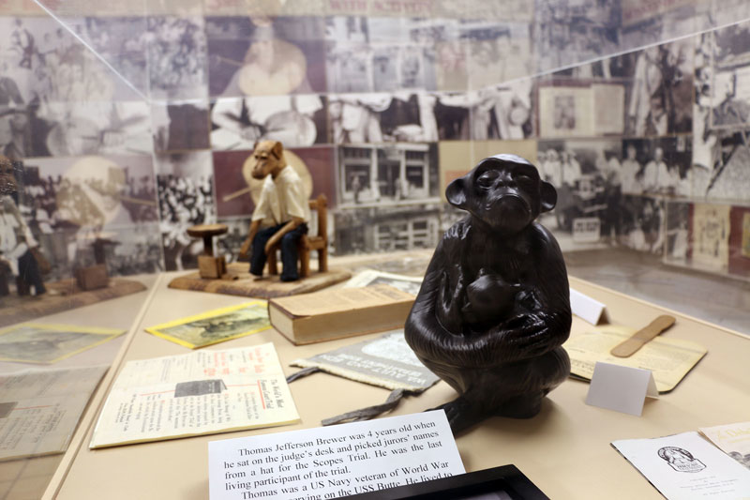
The stately courtroom where the trial took place is open to the public for a self-guided tour, except on days when court is in session. The basement is a Scopes Trial Museum, where you're likely to find Guffey as docent in charge.
Each July, the Scopes Trial Play and Festival attracts thousands to town for lectures, musical performances, street vendors and a play, Front Page News, produced by the Cumberland County Playhouse. This year's festival on July 17-19, 25 and 26 will fill Dayton's streets once again with the ranks of the curious, the skeptical and the fascinated. The century may be new, but the conflict has yet to get old.
For Davis, standing in the historic courtroom, the trial will always remain a mystery.
"Who won? Both sides said they did. Yet we're still talking about many of the same issues today," Davis says, looking about the quiet old chamber where the irresistible force of modern ideas butted up against the immovable Rock of Ages.
"And you know, that happened in a little town in a great big, huge courtroom where nobody had ever heard of the place before. And people still come here today to see where it all took place."



