

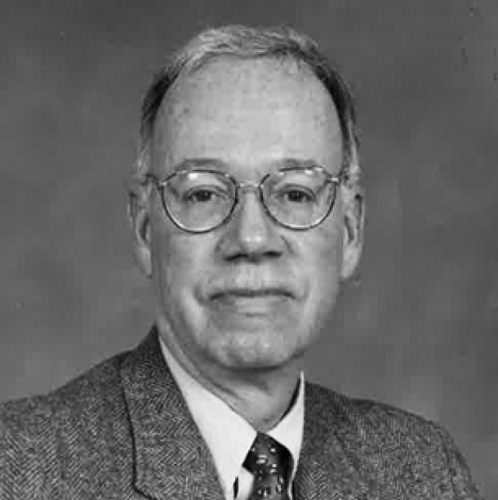
John Bradbury Reed, a revered local attorney whose reputation was exceeded only by his humility, died Tuesday, Feb. 2, after a 25-year battle with cancer. Noted for his keen intellect and rigorous professional ethics, the famously assured yet unassuming community leader helped shape the business and civic landscape of Nashville for half a century.
In a generation of lawyers expected to function as “utility infielders,” as he put it, Reed’s legal career was as wide-ranging as it was distinguished. As a business lawyer, he advised some of Nashville’s most prominent entrepreneurs, including Jack Massey. His commitment to social justice, on the other hand, once led him all the way to the U. S. Supreme Court, where he argued a habeas corpus case on behalf of an indigent convict.
Brad Reed was born in Nashville on Dec. 15, 1939. He graduated from Duke University in 1961 and was a member of Phi Beta Kappa, Pi Mu Epsilon (an honorary national mathematics society), and the now-defunct Order of Red Friars, a secret academic honor society founded in 1913. He attended Vanderbilt Law School, where he edited the law review and was the Founder’s Medalist for the Class of 1964. He taught at the law school from 1964 to 1972.
Following his admission to the bar in 1964, Brad joined the law firm of Bass Berry & Sims, where he practiced for more than 50 years. He finished his career with Riley Warnock & Jacobson.
Over the course of his long career, Brad served a wide range of organizations and participated in some of Nashville’s most significant business dealings. Although scrupulously discreet about his clients, his publicly acknowledged engagements included NLT Corp., Kentucky Fried Chicken and J. Alexander’s, as well as the Junior League of Nashville, which honored him with its Community Service Award in 2003.
He served as chairman of the board of directors of the Legal Aid Society of Middle Tennessee; chairman of the Tennessee Higher Education Commission; president of the Board of Trustees of The Ensworth School, serving on the board in two different periods of the school’s history, and a director of St. Mary’s Retreat Center in Sewanee. He also was chairman of the board of advisors of Belmont University’s Jack C. Massey Graduate School of Business and president of the Jack C. Massey Foundation.
Reed was an early proponent of investor Warren Buffett, buying his first Berkshire Hathaway shares in the early 1980s. Over the years, he introduced a number of friends to the Berkshire Hathaway annual shareholder’s meeting in Omaha.
His friends remember him as a man deeply suspicious of any form of cant. At the same time, he had a genuine interest in Christian theology and practice. A longtime member of Christ Church Cathedral, he served on the vestry and as senior warden for multiple terms. During this time, he helped found and organize the Covenant Association, which encouraged dialogue between clergy leaders of major congregations in Nashville.
Through the Covenant Association, he helped initiate a citywide interfaith reading and discussion of James Carroll’s 2001 book Constantine’s Sword, which details the history of anti-semitism in Christianity. He also helped to draft and publish a document called “An Advent Affirmation,” which deplored religious claims to exclusive access to God or salvation, and the religious persecution that has been justified by these claims.
As an outgrowth of his interest in Jewish-Christian dialogue, Reed co-founded, with Dr. David Barton, the Group of One, a fellowship group of Christians and Jews that has met monthly for more than 10 years.
Reed was always ready to pounce on evidence of intellectual dishonesty and social delusion — first in himself, and only then in others. He took great pleasure in recalling the story of his seventh great-grandmother, Mary Perkins Bradbury, who was tried and convicted in the Salem Witch trials of 1692, but who escaped the gallows and lived to a ripe old age.
Reed is survived by his wife of 24 years, Sharon Hels; children Elizabeth L. Reed, John Bradbury Reed Jr. (Hara), and Louise L. Reed; grandchildren Nikolas Reed, Alexander Reed and Christopher Reed of Castelldefels, Spain; brother Arthur D. Reed (Paula); and nephews John S. Shahan Jr., Arthur D. Reed III, Clay Reed and Watson Reed.
A brief visitation and a funeral liturgy will be held at Christ Church Cathedral at 900 Broadway, Nashville, on Sunday, Feb. 7. Visitation with family members will begin at 1:30 p.m. and the liturgy at 2:30 p.m. Instead of flowers, the family requests that gifts be made anonymously to the charity of one’s choice or to Alive Hospice, Nashville Cares or St. Mary’s Retreat Center.
Those who knew Reed cherished his sense of honor, responsibility and (sometimes brutal) candor. He held himself to the highest standards of character and fostered these standards in others. Although he lived a life of deep influence in his hometown and beyond, he was to the end positively allergic to self-promotion. Asked in a 2014 Nashville Bar Association Oral History interview how he’d like to be remembered, he replied simply and without hesitation: “As an honest, competent lawyer.”



