
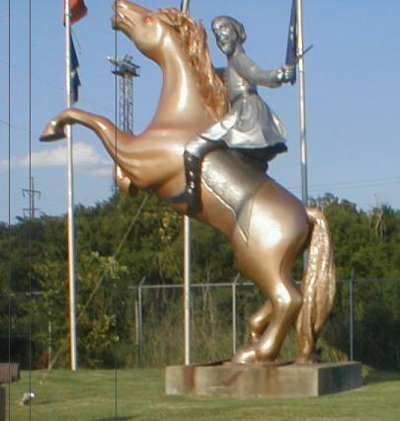
People of Tennessee, let's talk frankly about Nathan Bedford Forrest. Here's the thing. At best, he was a man of his times — savvy businessman, genius military leader, social club connoisseur and public speaker, who spent his remaining days after the War trying to wash the blood off his hands from Fort Pillow. And yes, he gave a speech that was more racially progressive than most people expected from him. It still amounted to, "I hope y'all will be able to get jobs, now excuse me while I kiss this woman."
Interestingly enough, kissing a black woman in public, when you are a white man she can't say no to, seems not to erase people's memories of Fort Pillow.
I mention this because there seems to be some confusion over in Memphis about whether we can't still use Forrest as some kind of valuable teaching tool about history and the Civil War. Chris Peck at the Commercial-Appeal says he'd like to see a Nathan Bedford Forrest exhibit at the Civil Rights Museum.
In a year that will mark the 150th anniversary of the Civil War, Memphis could make real social progress by trying to bridge the gap between those who say the war was about states' rights and those who say it was about slavery. In fact, wasn't it about both? The Southern economy in the 19th century was driven by cotton farming and cotton exports, which gave the South its own culture and class system. But that regional economy couldn't have prospered without the indefensible practice of human slavery and free labor. Could Memphis at least agree on that much 150 years after the fact?



