

New state legislation would tighten police control over body cam footage, license plate data and public records requests — a 21st-century version of the blue wall of silence.
A recently public amendment to HB2856/SB1999 would erect a blue firewall, effectively inhibiting efforts by victims of police violence, journalists or any member of the public to access data with “evidentiary value,” a broad term that applies to anything that could be used against an officer in court. Following the Metro Council's prolonged debate over license plate data collection, the proposed legislation would also preempt efforts by cities and municipalities to regulate their own data.
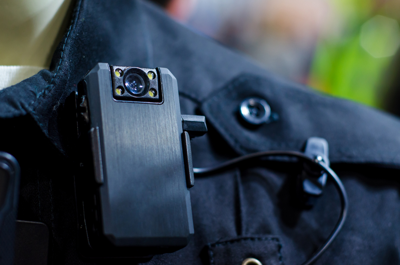
The bill initially sought to extend law enforcement agencies’ retention period of license plate data by 10 days. If it hits committee tomorrow — it’s been deferred once already — a new amendment will furnish the bill with several far-reaching provisions. The amendment will lock up police data — like footage from drones or officers’ body-worn and in-car cameras — for as long as it’s involved (or potentially involved) in legal proceedings, an investigation or “other action.”
This placeholder-and-switch strategy helps lobbyists and legislators shoehorn controversial legislation late in a legislative session. The Scene's Nicole Williams laid out the situation recently: A so-called “caption bill” is introduced as a placeholder of sorts, but amendments are later filed to rewrite the bill. These amendments — which are not typically posted on the general assembly’s website until after they’ve been considered in committee — can result in bills that bear little resemblance to the caption text, as is the case with SB1999.
The bill’s sponsor, Rep. Michael Curcio (R-Dickson), is scheduled to defend the legislation to fellow members of the Criminal Justice Subcommittee on Wednesday. The Senate Judiciary Committee will hear the Senate’s version of the bill, sponsored by Sen. Mike Bell (R-Riceville), on the same day. The Tennessee Association of Chiefs of Police, which recently underwent an executive shakeup, declined to comment on the legislation, as did Nashville's Fraternal Order of the Police. Both have lobbying footprints on Capitol Hill.
The proposed legislation includes an exception for officers to choose to release footage, as well as a new term, “criminal justice technology,” broadly defined as any digital or electronic tools used by law enforcement. Neither Rep. Curcio nor Sen. Bell responded to the Scene in time for publication.
This legislation follows several fatal police shootings, including the killing of Landon Eastep in January. A full list of officer-involved shootings in Tennessee can be found here.



Post a comment as anonymous
Report
Watch this discussion.
(0) comments
Welcome to the discussion.
Log In
Welcome to the discussion.
Keep it clean. Please avoid obscene, vulgar, lewd, racist or otherwise abusive language. Comments featuring hate speech or threatening or violent content will not be tolerated.
PLEASE TURN OFF YOUR CAPS LOCK.
Be truthful. Don't knowingly lie or mislead.
Be proactive. Use the “report” link on any comment that violates our comment policy.
Share with us. We'd love to hear your feedback.