

Kilmar Armando Abrego García, the Maryland man mistakenly deported to El Salvador in March by federal immigration authorities, appeared in federal court Friday to answer charges related to a 2022 traffic stop in Tennessee. The U.S. Department of Justice secured an indictment against Abrego García for human-smuggling charges on May 21 in the Middle District of Tennessee, extending a legal saga that has embarrassed the Trump administration, which previously described his initial deportation as an administrative error. Judge Barbara Holmes was tasked with determining whether Abrego García poses a flight risk or danger to the public that would justify pre-trial federal detention. Abrego García has maintained his innocence, entering a plea of not guilty to the government's charges on Friday.
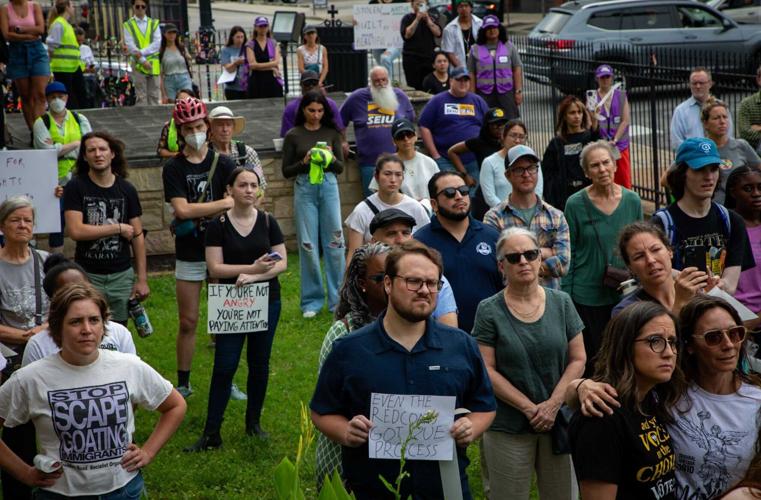
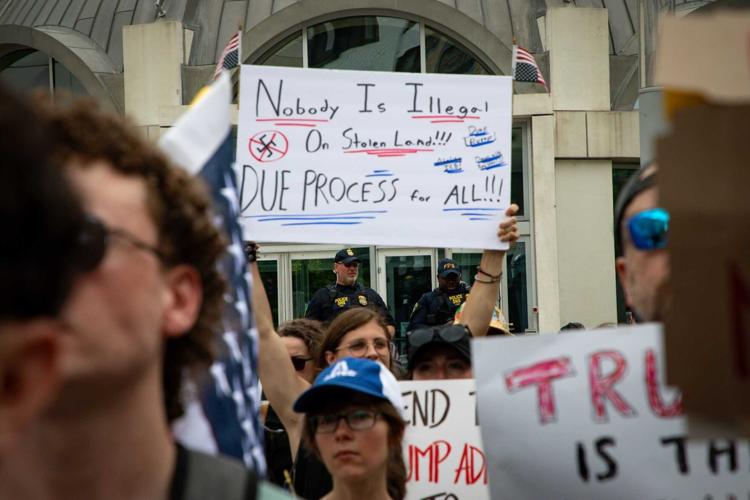
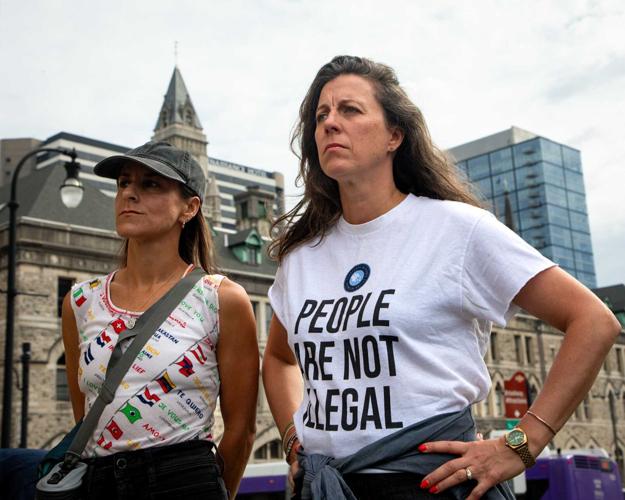
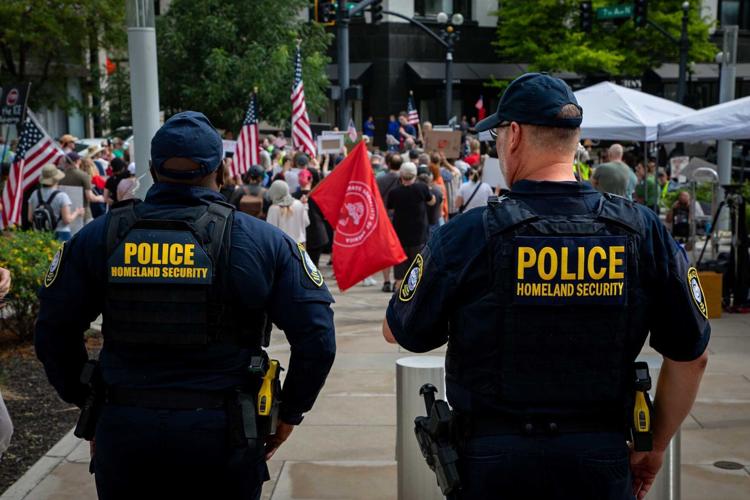
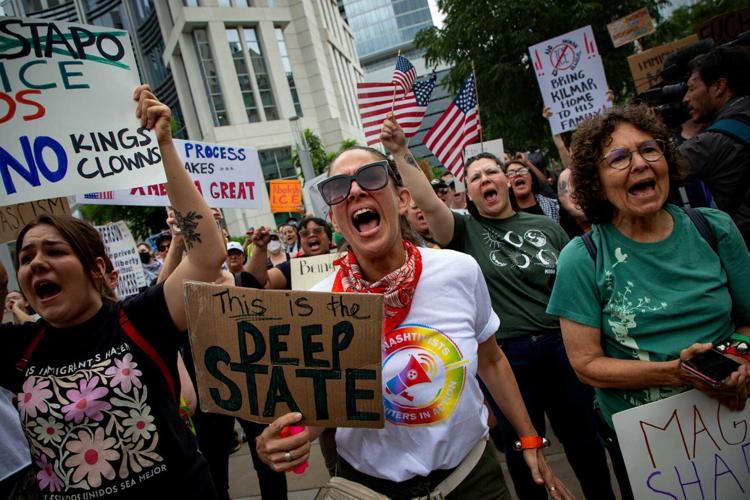
Meanwhile, roughly 200 protesters gathered outside the Fred D. Thompson Courthouse and Federal Building for a peaceful demonstration that included numerous speakers and chants, all calling for due process in the case. Dozens of Metro Nashville police officers entered the side of the currently closed public library carrying bags of riot gear, but no riot police were deployed. MNPD and DHS officers were on site throughout the hourslong demonstration. One Christian counterprotester verbally clashed with the group.

Following his erroneous deportation to El Salvador, Abrego Garcia faces two charges of illegally transporting migrants
The mistaken deportation, and Abrego García’s subsequent return to the States, sparked outrage across the country as an example of the federal government violating due process rights. It also briefly presented a constitutional crisis when the Trump administration appeared to ignore a court order to bring Abrego García back to the U.S., though it eventually complied. The delayed indictment coincided with the resignation of at least one Nashville-based federal prosecutor in the U.S. Attorney’s Office and has turned Abrego García into a political prisoner.
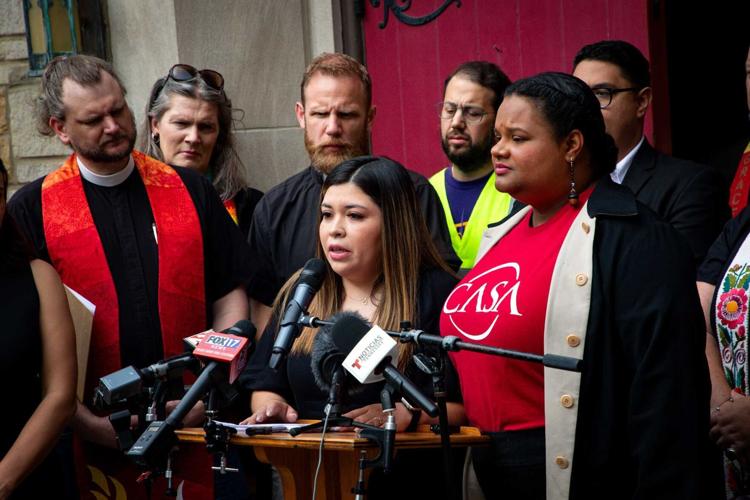
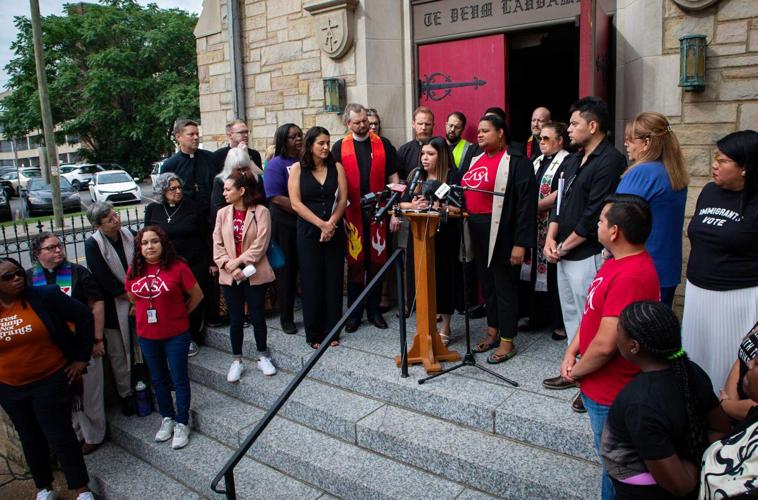
At Nashville’s First Lutheran Church, just steps from the federal courthouse, Abrego García’s wife Jennifer Vasquez Sura addressed media before her husband’s arraignment on Friday. She passed along words from Abrego García, who has been in federal custody since his return to the United States.

Protesters gather near the Fred D. Thompson Courthouse and Federal Building during Kilmar Armando Abrego García's arraignment
“To all the families still fighting to be reunited after family separation — or if you too are in detention — Kilmar wants you to have faith,” she told the crowd. “He said, ‘These dark times we are facing, all tribulations that God has put in our path, keep praying and keep fighting. The light will come soon for all of us.’”
Federal public defenders Richard Tennent, Will Allensworth and Dumaka Shabazz represented Abrego García, who communicated with the court through a Spanish-language interpreter. Rob McGuire, acting U.S. attorney for the Middle District of Tennessee, led prosecution for the United States.
Abrego García was driving nine people in a passenger van when he was stopped in Cookeville by Tennessee Highway Patrol for a speeding violation on Nov. 30, 2022. During the stop, Abrego García admitted to having an expired driver’s license and acknowledged he had been driving 70 mph despite the 65 mph speed limit. Abrego García told troopers the group was traveling to Maryland from St. Louis, Mo., after finishing a construction job. Federal prosecutors allege he was traveling from Texas, having picked up individuals who recently crossed the U.S.-Mexico border. Abrego García was released after a roughly 90-minute stop. The Department of Justice, led by Trump appointee Pam Bondi, is pursuing human smuggling charges against Abrego García and has attempted to connect the Maryland man to gang activity and sexual misconduct in court proceedings.
Prosecutors’ case against Abrego García relies on a sketch assembled from several pieces of circumstantial evidence. The United States relied heavily on testimony from Peter Joseph — a Homeland Security Investigations agent assigned to this case on April 28 — to embroil Abrego García into an alleged criminal network. Joseph’s testimony stitched together secondhand information from anonymous witnesses, also referred to as “cooperators,” who variously implicated Abrego García during interviews conducted in May.

Protesters gather near the Fred D. Thompson Courthouse and Federal Building during Kilmar Armando Abrego García's arraignment
Citing these conversations, Joseph alleged a transportation-for-hire job involving Abrego García that included transporting firearms and lewd behavior. Judge Holmes threw out some of this testimony as hearsay or irrelevant to the charges alleged after objections from Abrego García’s attorneys.
“You need to present this in as expeditious, non-salacious manner as possible,” Judge Holmes told McGuire at one point.
For Abrego García’s defense, Tennent pointed out that the anonymous witnesses were closely entwined with one another and that interviews were conducted while those individuals were under duress from pending federal charges. Since speaking with federal agents, at least one individual has received legal benefits from the government, including avoiding deportation proceedings.
Joseph, the state’s primary witness, also admitted that he was not actually present for the interviews he relayed to the court.
“So you were orally told what someone orally told someone else?” Tennent asked Joseph before requesting that portions of his testimony be struck from the court’s record.
“I’m still not entirely clear either — is it correct that there’s not reports of these interviews?” Judge Holmes followed up. “It’s just one agent telling another agent what these interviews consisted of?”
McGuire admitted that he had glossed over this detail during his initial examination. Joseph clarified that he had testified to interviews conducted by other agents later relayed to him orally. Tennent proceeded to point out implausibilities and inconsistencies in the statements made to federal agents, who, he argued, had no direct evidence tying Abrego García to gangs or firearms.

Protesters gather near the Fred D. Thompson Courthouse and Federal Building during Kilmar Armando Abrego García's arraignment, June 13, 2025
Judge Holmes repeatedly appeared unwilling to extend the court’s credibility to state evidence offered with little or no verification. An extended afternoon debate between McGuire and Holmes about fair evidentiary leaps derailed the state’s examination and reflected a general skepticism from Holmes about the reliability of testimony, documents and exhibits submitted by the prosecution.
“If he is so dangerous, why did they wait so long to indict him?” Shabazz asked the court during closing arguments. “The only reason they’re calling him dangerous now is to justify denying him due process. They have to cover that up.”
After six hours in court, Judge Holmes said she would take time to write a decision “sooner rather than later.”
Hamilton Matthew Masters contributed reporting.



Post a comment as anonymous
Report
Watch this discussion.
(0) comments
Welcome to the discussion.
Log In
Welcome to the discussion.
Keep it clean. Please avoid obscene, vulgar, lewd, racist or otherwise abusive language. Comments featuring hate speech or threatening or violent content will not be tolerated.
PLEASE TURN OFF YOUR CAPS LOCK.
Be truthful. Don't knowingly lie or mislead.
Be proactive. Use the “report” link on any comment that violates our comment policy.
Share with us. We'd love to hear your feedback.