
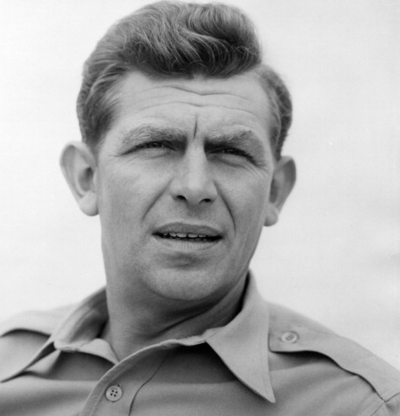
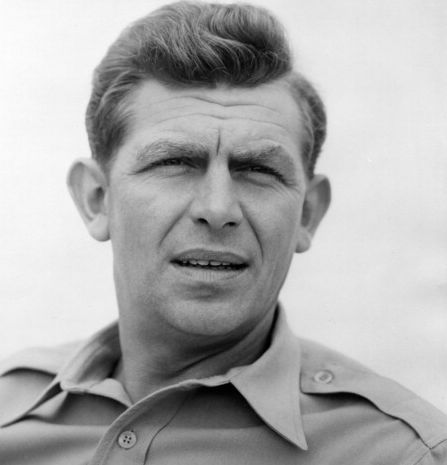
It’s always stuck with me that Metro Police Chief Steve Anderson emulates the fictional sheriff, Andy Taylor. Back in 2014, Adam Tamburin wrote a profile of Anderson for The Tennessean that talked about it:
"In law enforcement, I always get to be on the right side. I always get to do what needs to be done for the good of the city, so I don't have to fight with myself about doing something I don't necessarily believe in."
Anderson says he sees Andy Griffith's mild-mannered Mayberry sheriff as a role model — he keeps a picture of the actor near his desk at police headquarters. Andy was not an aggressive leader, Anderson said. Instead, he guided with a gentle hand and a consistent presence.
I’ve been reading
Alyssa Rosenberg’s series for The Washington Postabout how fictional depiction of policing have intersected with and influenced real life, and, of course, in Tuesday’s installment, Andy Taylor makes an appearance. Rosenberg writes:
The fantasy of Mayberry wasn’t only about Sheriff Andy’s gentle approach. Mayberry was racially homogenous and so crime-free that his deputy, Barney Fife (Don Knotts), was left grumbling that if anti-jaywalking ordinances went unenforced, “Mayberry’s going to turn into a regular sin town!” But even given the greater complexities of policing in a big city, starting in the 1960s such idealized relationships between cops and their communities vanished from pop culture just as they corroded in the real world. For all the talk of community policing, fictional police officers seemed to be fighting a two-front war, one against crime and the other against civilians portrayed as obstacles at best, criminal accomplices at worst. From his first moment on screen, Sheriff Andy was already a nostalgic throwback.
Public policy points to many potential causes of these fissures: racism; residency rules that let officers live outside the cities they served; compressed schedules that meant officers spent even fewer days in those cities; the rise of radio cars that took officers off foot patrols and of centralized 911 call systems that directed residents away from local precincts; and shifts in emphasis from community service to crime prevention and crime-fighting. And whatever the roots of this poisonous tree might be, we’re seeing the fruits every day, from North Miami to Tulsa and Baltimore to Charlotte.
Needless to say, Anderson may idolize Taylor, but few Nashvillians see the influence. In the
Gideon’s Army reportthat
Steven Hale wrote about on Tuesday, I was struck by how often the community members the activists interviewed expressed feelings that the police were not a beneficial part of their communities, but a disruptive outside force that is too present for traffic stops but not present enough when community members need help.
One community member, Jackie Sims, says, “As long as we continue to skate along the surface with these conversations, not much is gonna change. And I think it’s foolish for us to think that we cannot become a Ferguson or a Baltimore. Yes we can. Yes we can. The right match has not been struck, that’s all.”
While Rosenberg is looking at the way really popular narratives shape how we understand our problems, I think it’s useful to listen carefully as well to what Sims is saying here. Nashville has always prided itself on not being like other cities. “The Nashville Way” — how we desegregated civilly because Diane Nash asked nicely and we had no violence — that’s our story, one we cling to and are proud of. It is the story we believe in that tells us we can’t become a Ferguson or a Baltimore.
And it’s a story that doesn’t gag us when we tell it, even though it’s untrue, because we got very lucky and our racists were inept. The folks who tried to kill Z. Alexander Looby and his wife failed. The restaurant owner who tried to gas John Lewis and James Bevel failed to kill them. The people who punched and kicked and spit at protesters weren’t strong enough to achieve their end goal. That’s it. There’s nothing special about Nashville except that we’ve historically been very lucky. But what Sims says here is right — no matter how It-City we are, our luck can run out.
I don’t think you can read the Gideon’s Army report without coming away feeling like something is deeply wrong with how our police force interacts with our community. And the demands of the activists don’t seem unreasonable. Basically, they boil down to wanting more accountability for police officers and for the police to stop jacking up innocent people just based on where they live.
I’m sure Andy Taylor would have a pithy saying and a satisfactory solution for our situation at the end of a half an hour. Chief Anderson is in a tougher situation. But he’s been given a generous gift by the people who participated in the Gideon’s Army report — they’ve told him where the problems are before they blow up in all our faces. We’ll see if he can respond in the same spirit of generosity.



