

The other day I heard a story about folk singer Dave Van Ronk being arrested at the Stonewall Riots. He was at a bar in Greenwich Village in New York and he emerged to find the riot happening. He decided that, whoever the cops were against, he was for, and so he joined the fight. As it progressed, I suppose he figured out whose side he had taken, but he jumped in because — in his words — “I saw what was going down and I figured, they can’t have a riot without me!”
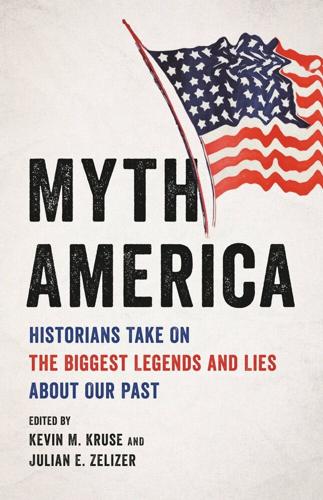
Historians are yet again — or, as always — complaining that the left is teaching people to hate the United States and to overlook our good points. In The Hedgehog Review, Johann Neem, a professor at Western Washington University, has a review of Myth America: Historians Take on the Biggest Legends and Lies About Our Past that is now making the rounds. (As a side note, when you say that you read a book and “found no essay — not a single one! — that challenged myths that came from the left,” you might not want to immediately follow that sentence with sentences about the essays that challenged myths that came from the left.)
Neem sums up his problems with Myth America — and the field of history — thusly:
To believe that Republican lies threaten our democracy, you also have to believe that our basic norms and principles are worth defending. But why sustain something as corrupt as American democracy? In her contribution to Myth America, Kathleen Belew, professor of history at Northwestern University, condemns those who proclaim that the events of January 6 do not reflect who we are as a country. She argues instead that this is “exactly who we are,” and a careful examination of the white nationalism and violence in our history will prove it. Belew simply inverts the story: White nationalists—including the Ku Klux Klan—embody the true America. Any story suggesting that we Americans are something better, or even that we have ideals that should inspire us to be better, is naïve and false.
This is such a grossly unfair presentation of what Belew and other historians like her are doing that it has to be intentional. And if that’s the case, it’s not normally worth even talking about outside of academic circles. But we’re living in times in which one of the appeals of the fascist uprisings we’re seeing is that fascists promise to control the historical narratives and only let out stories that, literally, make America great again.
So I want to just point a few things out. One: White nationalists do embody a true America. You can’t understand American history at all if you don’t understand it as a white nationalist project. Unfortunately for white nationalists, all the rest of us were listening while they were daydreaming about how awesome America could be if we recognized that everyone is created equal, that we have certain inalienable rights — including life, liberty, and the pursuit of happiness. When white nationalists decided it would be cool if our leaders were agreed upon by the citizens and that citizenship could be expanded to people who hadn’t had voting rights in their home countries, when white nationalists amended the Constitution to try to ensure that there wouldn’t be two tiers of justice, we were all listening.
We all were like, “Yeah, that sounds great! Where do we sign up?” And then for 250 years, white nationalists have been trying to come up with reasons why the rest of us can’t sign up for all that. That is just the fundamental issue at the heart of the United States — deeply flawed assholes, some of whom were doing great evil, had a really awesome idea that they wanted to share only with their buddies. But the rest of us want in on that idea.
Two: The way you can justify claiming that liberal historians only tell shit stories about the United States is if you define the United States by our shit power structures and you identify with them. Like, if someone tells me the United States is deeply racist, I don’t feel personally attacked by that because I’m not investing my own self-identity in believing that we aren’t. I’m the one over here tapping the sign reading, “Let’s try living up to our ideals.”

I continue to wish Allen Ginsberg wasn’t such a shitty person, because very few other poets have articulated the dangerous violent silliness inherent when a bunch of people doing bad stuff insist on pretending — and forcing everyone to pretend — that they’re doing good. In his poem “America,” Ginsberg asks, “Are you being sinister or is this some form of practical joke?” Who can tell? How can we know?
But Ginsberg also says, “It occurs to me that I am America. / I am talking to myself again.”
As much as America is a white Christian nationalist project, it’s also the project of a queer Jewish poet and his beatnik friends. It’s the project of Martin Luther King, who, in Republicans’ favorite MLK speech, said: “When the architects of our republic wrote the magnificent words of the Constitution and the Declaration of Independence, they were signing a promissory note to which every American was to fall heir. This note was a promise that all men — yes, Black men as well as white men — would be guaranteed the unalienable rights of life, liberty and the pursuit of happiness. It is obvious today that America has defaulted on this promissory note insofar as her citizens of color are concerned. Instead of honoring this sacred obligation, America has given the Negro people a bad check, a check which has come back marked insufficient funds.” Weird how Republicans never quote this part. Almost like they’ve never read the whole speech.
Anyway, I digress. In its whole history, America has been beset by people who just want us to be who we claim to be. I love those people. We get stuck on questions of whether slavery was really “that bad” (it was), and in arguing about this we miss the stories of the people who opposed it, who emancipated themselves and worked to emancipate others. We’re back to arguing about whether queer and trans people are a secret cabal of child molesters (they are not), and that takes up all the space where we could be talking about the rioters who just wanted a place they could hang out and not be harassed by the police.
It truly seems like the whole point of circling back to these questions about “Why do academics hate America?” is because that question keeps the focus on, say, Jefferson instead of his dead wife’s sister, whom he kept in a closet, or on Jackson instead of the Native American leaders who came to his house and insisted his word should mean something, or just on anything that keeps us focused on the same small cast of founding fathers instead of on the rich traditions and histories we have of people trying to make America live up to its founding promise.
And it keeps us from the lesson of Dave Von Ronk — that the only side worth being on is the side struggling for freedom.



Post a comment as anonymous
Report
Watch this discussion.
(0) comments
Welcome to the discussion.
Log In
Welcome to the discussion.
Keep it clean. Please avoid obscene, vulgar, lewd, racist or otherwise abusive language. Comments featuring hate speech or threatening or violent content will not be tolerated.
PLEASE TURN OFF YOUR CAPS LOCK.
Be truthful. Don't knowingly lie or mislead.
Be proactive. Use the “report” link on any comment that violates our comment policy.
Share with us. We'd love to hear your feedback.