



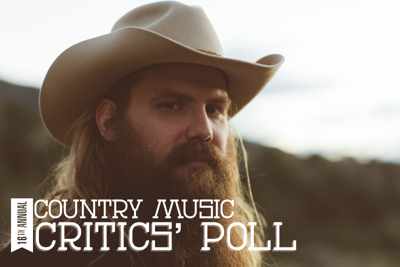

Chris Stapleton
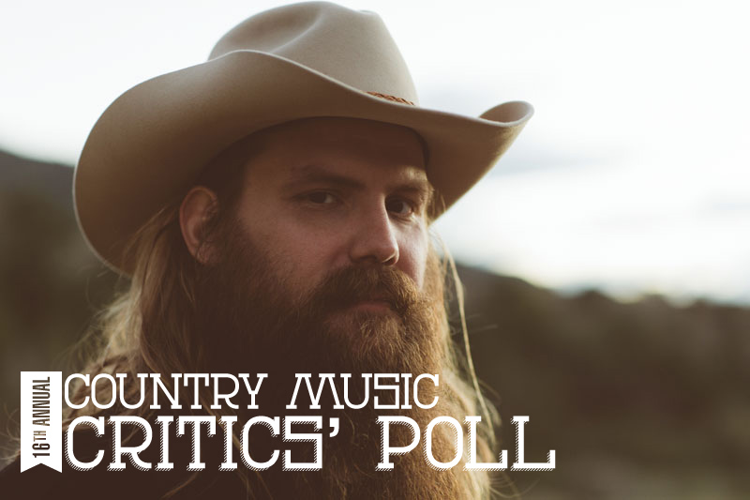
See all our 16th Annual Country Music Critics' Poll coverage: the full list of results, select factoids from the results, our interview with Chris Stapleton, our feature about how Stapleton and Jason Isbell triumphed without country radio and our critics' comments.
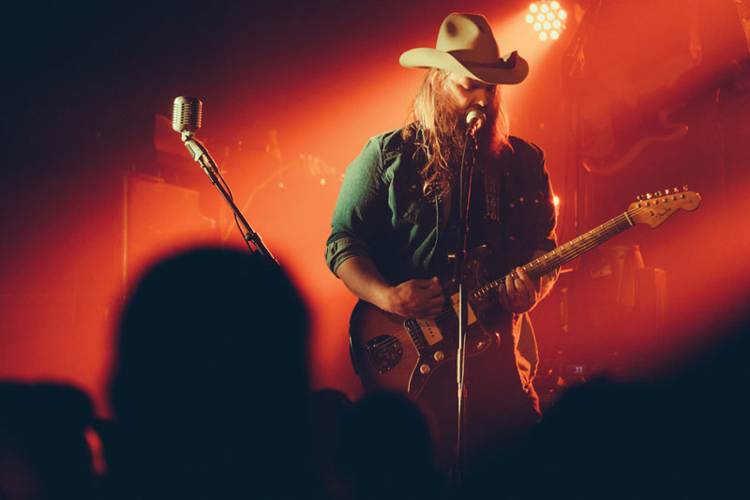
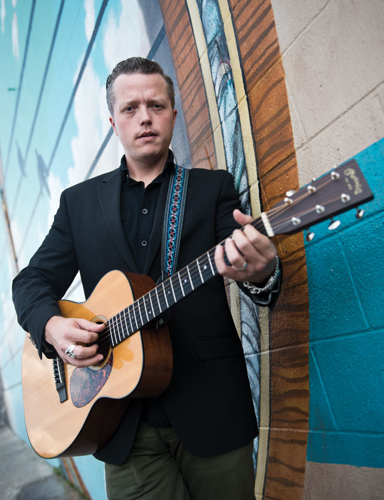
The two milestone dates in country music last year were July 28 and Nov. 4. The first was the day Jason Isbell's Something More Than Free hit No. 1 on Billboard's country album chart. The second was the day Chris Stapleton won three Country Music Association Awards on national TV. The following week, Stapleton's Traveller, a May release that had dropped off the margins of the album charts in September, re-entered at No. 1. These triumphs were a big deal because they happened with almost no help from country radio prior to November.
In February, then-Sony Nashville CEO Gary Overton had famously declared, "If you're not on country radio, you don't exist." Stapleton and Isbell hadn't been on country radio, and suddenly they were on top. And they weren't the only ones. Kacey Musgraves, Willie Nelson and Merle Haggard, Don Henley and Aaron Watson also had No. 1 country albums in 2015 while being more or less ignored by mainstream country radio. Ashley Monroe, The Mavericks and Turnpike Troubadours, three more outsider acts, landed in Billboard's Top 5.
Tossed out the window was the longstanding assumption that you have to be in the Clear Channel rotation to sell records — and by records I mean any recordings sold as compact discs, vinyl LPs or downloads. The oft-repeated claim that there was a large country-music audience left unserved by terrestrial radio finally had some evidence to back it up.
The 16th annual Country Music Critics Poll hailed these breakthroughs by voting Traveller and Something More Than Free as the year's best and second-best albums. The 82 voters from across North America and beyond also had Stapleton and Isbell as Nos. 1 and 2 respectively in the Male Vocalist, Songwriter and Artist of the Year categories. The two men also placed three songs between them in the Best Singles top 10. And their fellow non-radio-supported chart invaders were also honored: Musgraves (No. 4 Album and No. 3 Artist), Monroe (Nos. 3 and. 4), Nelson and Haggard (Nos. 6 and 7), The Mavericks (Nos. 9 and 6) and Turnpike Troubadours (Nos. 15 and 10).
Most of these acts had past success with conventional country radio before falling out of favor. But before July 28, none of Isbell's albums with Drive-By Truckers, none of his solo albums, none of Stapleton's albums with The SteelDrivers and none of his handful of solo singles had touched the Top 40 of Billboard's country charts. Their July and November breakthroughs were a cause for celebration among the critic-voters. But why?
Music critics have always had an ambivalent relationship with commercial success. On the one hand, we like to believe that we can recognize great records whether they sell many copies or not. On the other hand, if we're writing about "popular music," as we so often declare, there should be evidence at some point that the music we like can be popular.
Behind this tension is the fact that we critics are trying to describe two very different phenomena: the individual experience of one person listening to one recording, and the social experience of a whole culture sharing a musical event. Both interactions can be powerful, but they're not the same thing.
The Stapleton and Isbell albums would have been rewarding as individual experiences if they had only sold 10,000 copies apiece. But by topping the country charts, they took on the additional resonance of a social experience, something you could share with lots of people. You could walk into a hillbilly bar or a hip independent record store and chat with strangers about Stapleton or Isbell with a reasonable expectation they'd know what you were talking about. They were now shared reference points when discussing what's encouraging and what's frustrating about American culture. That makes a difference.

Jason Isbell
Our enjoyment of music changes when it can be shared not just with our basement buddies or our Facebook friends but with anyone and everyone in the public arena. Some hipsters are always disappointed when their secret talisman is discovered and claimed by non-hipsters, but most fans are delighted when the music they love becomes a connection to people unlike them, folks they might never bond with otherwise. This year Stapleton and Isbell became that kind of shared experience.
By contrast, consider James McMurtry's Complicated Game, which to my ears was last year's best album in any genre, perhaps the best album of the decade thus far. It did respectably in the poll, finishing at No. 8 in the Best Albums voting and earning McMurtry the No. 3 slot in the Best Songwriters category. But the record never found a large audience, and thus it remained an individual experience rather than a social one. As a result, even its greatest admirers heard it in an isolated manner quite different from the way we heard the Stapleton and Isbell albums.
Critics who never heard McMurtry — or who were unimpressed — instead celebrated their own individual experiences with Rhiannon Giddens, Tomorrow Is My Turn (No. 7 in the Best Album voting), John Moreland's High on Tulsa Heat (No. 16), Corb Lund's Things That Can't Be Undone (No. 18) and/or Joe Ely's Panhandle Rambler (No. 20).
These were admirable recordings, but their modest sales made them private rather than public pleasures. On the other hand, the singles released by Stapleton (Nos. 5 and 8 in our poll), Isbell (No. 2), Little Big Town (No. 1), Cam (Nos. 3 and 20), Eric Church (Nos. 6 and 10), Monroe (No. 4), Musgraves (Nos. 13 and 23) and Nelson & Haggard (No. 15) were shared so widely that they became part of the cultural conversation — and thus added an extra dimension to their impact.
Let me be clear: I'm not saying that commercial success defines quality in music. A lot of bad records did well on the country charts this year. For instance, the bestselling country album released in 2015, according to Billboard, was Luke Bryan's Kill the Lights, but it could manage only a tie for 75th place in our poll's Best Album category. Quality exists independent of sales, but our experience of that quality is transformed by popular response.
But what was it about the Stapleton and Isbell records that made their popularity so gratifying? Part of it was their sound: Both the vocals and the guitars were left a little rough around the edges. Certain imperfections were left unpolished, even if they grated. Because individuality is often revealed by blemishes, these records had more personality than the sound-alike perfection of so many mainstream country releases.
And Stapleton and Isbell's sound echoed the experiences of the songs' flawed characters. Stapleton's were attracted to restlessness but also warped by it; Isbell's were both rooted in small-town life and trapped by it. When these folks started drinking or falling in love, what seemed fun at first soon got twisted. As such, these songs stood in sharp contrast to Music Row fantasy, where the girls are always willing, the beer always helpful and the guitars and vocals always Pro-Tooled to seamless gleam.
There's a philosophical divide here. Should country music provide its heartland, working-class audience with a vision of what life could be if all our problems disappeared? Or should it reflect back listeners' actual, screwed-up lives so we might better understand them? Since the advent of Garth Brooks in 1989, Music Row has consistently taken the first approach. Since the launch of the Country Music Critics Poll in 2000, its voters have consistently preferred the latter.
If Stapleton and Isbell were shoving the music of imperfection into the country charts, Eric Church was reaching out from inside those charts to pull in that same attitude. Church, who hired Isbell's old band the Drive-By Truckers as an opening act last year, countered the triumphalism of his 2014 album, The Outsiders, with the mix of wounded disappointment and roughened resilience on 2015's Mr. Misunderstood. It landed at No. 2 on the Billboard country album chart and at No. 5 in our poll.
Stapleton, Isbell and Church seemed to be taking their cues from old-timers such as Willie Nelson and Merle Haggard, two men who never shied from leaving rough edges in their music nor from confessing failure in their lyrics. Nelson and Haggard's fourth album collaboration, 2015's Django & Jimmie, topped the Billboard chart and finished No. 6 in the poll.

Cam
This was the most male-dominated group of winners in the 16-year history of this poll. Stapleton, Rodney Crowell, Jamey Johnson (twice) and last year Sturgill Simpson have won the Best Album vote, while Stapleton, Johnson (twice again), Church and Brad Paisley have won the Artist of the Year vote. But the 22 other winners in those two categories have all been women. The Dixie Chicks have won Artist of the Year four times and Miranda Lambert three times. This made sense, because the women were writing and singing the most original country records of this century.
And here come some more. While Stapleton won by big margins in the Album, Male Vocalist, Songwriter and Artist of the Year categories, he came up a surprising second to Cam in the New Artist category. Many voters who made the SteelDrivers the No. 3 Best New Artist in 2008 balked at voting for Stapleton again seven years later.
Cam (the one-time Miley Cyrus songwriter Camaron Marvel Ochs) stripped the highly polished country-pop formula of its bombastic tendencies and invested it with real emotion and genuine humor. So did the duo Maddie & Tae (Madison Marlow and Taylor Dye), who were voted the No. 3 Best New Artist for the second year in a row after releasing a hit single in 2014 and their first full-length album in 2015.

Kacey Musgraves
Meanwhile, Ashley Monroe and Kacey Musgraves, who dominated the poll in 2013, proved that first impression was no fluke by releasing remarkable follow-up albums that finished Nos. 3 and 4 in the poll. Their lyrics subverted the country-radio paradigm every bit as much as the lyrics of Stapleton, Isbell and Church did. Monroe and Musgraves, though, delivered their message not with vocal growls and cranked-up guitars but with an anti-diva, conversational purr that got under the skin.
Just as the original Outlaw Country movement, spearheaded by Nelson and Waylon Jennings, was anticipated by the frank subject matter and idiosyncratic recordings of Loretta Lynn and Dolly Parton, so has this new Outlaw Country Movement, spearheaded by Stapleton, Isbell and Simpson, been anticipated by Lambert, Musgraves and Monroe. It's as if the men finally woke up and decided to play catch-up.
Email editor@nashvillescene.com




