

"There's definitely a stuffed turkey on the table," Kasar Abdulla says, describing a typical Thanksgiving dinner in the South Nashville home she shares with her husband and two young daughters. Things get more traditional from there — or maybe less traditional, depending on your cultural vantage point. Alongside the turkey, there are Kurdish stuffed grape leaves called epikhras, which Abdulla likens to dolmas, and naan from local Kurdish bakeries.
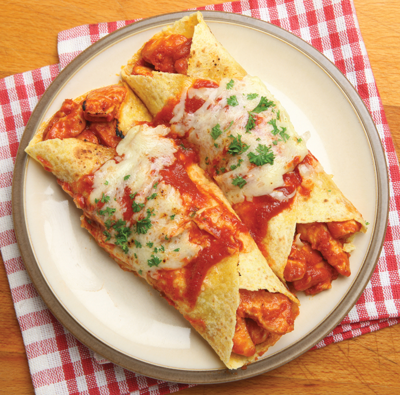
"And believe it or not," she says, "Mexican enchiladas. And next, lasagna."
It's a menu that has evolved over time. Abdulla says her parents' generation, and her mother in particular, dismissed American holidays when they first emigrated from Kurdistan in the early '90s. But growing up, she says, "I began to understand it, and my family started to celebrate it."
As for those Thanksgiving tortillas, "being part of the younger generation, we love to explore different foods," Abdulla says. "We learned to cook enchiladas from Rachael Ray."
That Ray-cipe gets adjusted, though: "We sort of reduce the sauce level to tailor to Kurdish tastes." (Cheese levels are similarly attenuated.) The lasagna earned its way onto the table by way of Abdulla's grandmother, who as a 70-year-old new immigrant to the U.S. learned to cook the dish from a neighbor. Not every Kurdish table has lasagna on it, but Thanksgiving has been so widely embraced in Nashville's Kurdish community that the holiday now has a name of its own: eida eilokay, which basically means "the festival of turkey."
Abdulla says that for Kurdish Muslims like herself, "It's much easier to celebrate Thanksgiving than it is other holidays." (More on that in a moment.) And while she acknowledges the fraught nature of the Thanksgiving origin story, she says, "The Muslim community has really seen many of the values in Thanksgiving that are aligned with Muslim values. So for example, thanking God is very huge. We thank God five times a day, but now there's another opportunity to thank God by uniting the family and the neighbor over food and conversation."
In addition to the chance to share meals with neighbors and family, Abdulla says Thanksgiving "has the other value ... thinking of others who may not have the feast that you have on the table, something that's been ingrained in you from the Muslim perspective as well, especially with Ramadan kicking in — this notion of, 'Are you being wasteful, or are you being mindful?' "
There's still arguing over football, though. "Because you're American as well as Muslim or Kurdish," Abdulla says, "there are those holidays where you can be both, and there isn't a conflict." The same can't be said for Halloween — "the way it's celebrated, there's not much value for Muslims" — or Christmas.
"You will find families will have dinners, or community dinners," Abdulla says, because of the time off from work. "But there's no gift-sharing, there's no Christmas trees, there's no Christmas lights. It's not celebrated, because there are a lot of celebrations in the Christian tradition that contradict Islam."
Abdulla says she welcomes discussion of why her family doesn't celebrate Christmas. Muslims believe in the Messiah, but don't believe he (or "He," depending on your view of things) was born in December, for example, nor do they believe he was the son of God. But matters of theology sometimes take a backseat to more immediate concerns. Like when Abdulla's young daughter returned home from school and asked plaintively, "How come Santa doesn't come down the chimney?"
The next day, Abdulla says, her daughter's teacher sent home some glittery powder. "The teacher said if I throw this on my doorstep, the reindeer will actually come to my house."
Abdulla says she wishes the public schools were more careful. "Some teachers push a little too much," she says, "which affects children, because they think they're not special. [My daughter] said to me, 'But I have been good, right, Mama?' "
It's not that Abdulla is anti-Christmas — far from it. She'd just appreciate a stricter observation of the difference between American holidays and Christian ones. Or on the other hand, broader inclusion of religious holidays. "It does become difficult to be that minority," she says. "There are many opportunities to learn and understand what Christmas is all about. There aren't that many chances to really know and understand what Eid [the feast celebrated at the end of the Ramadan] is all about."
Her neighbors will bring cookies and gifts during the Christmas season, even if Santa doesn't. "Out of respect for our neighbors' holiday, we accept them, " she says. But her relationship with her neighbors has moved beyond just acceptance — evolving and deepening over time.
"We've gone from tolerating each other to understanding each other," she says. "Christmas is valued in the eyes of my Christian neighbor, as Eid is valued in my eyes." And so, just as her neighbors bring gifts for Christmas, "During Ramadan, I invited many of my neighbors for the breaking of the fast at sunset. ... And it's funny, because there are so many similarities. Around Eid time, kids visit family and even get money or candy. ... You put on your best clothes. There's gift-sharing like there is in Christmas."
And what about New Year? Kurdish Muslims have three: There's the American/Gregorian-calendar new year; the Muslim new year (it's now the year 1435); and there's the Kurdish new year known as nowruz, as celebrated in the non-Arab Middle East.
"The beauty of America is the fact that there are those diverse holidays," Abdulla says. Still, it isn't always easy. "There are difficulties for me as a Muslim American to balance and to find my way, and to find my family traditions. I have two little girls, my husband and I. ... Where do I become grounded in who I am? Kurdish, female, Muslim, but American at the same time?" She says she still wrestles with these questions, but ultimately feels lucky to have so much to draw from.
"I will take what is good in my Muslim faith and Kurdish culture," she says, "and take what is good in the American identity and make it my own."
You know, the whole enchilada.



