

Church Street Park
When a plan to spruce up Church Street Park was rushed through the Metro Council earlier this year, Mayor John Cooper assured skittish councilmembers that the urgency was required to get the park ready for centennial celebrations for the 19th Amendment.
After the celebration, Cooper promised District 19 Councilmember Freddie O’Connell in a letter that the community would embark on a public process to determine the future of the park, located across the street from the entrance to the Nashville Public Library Downtown.
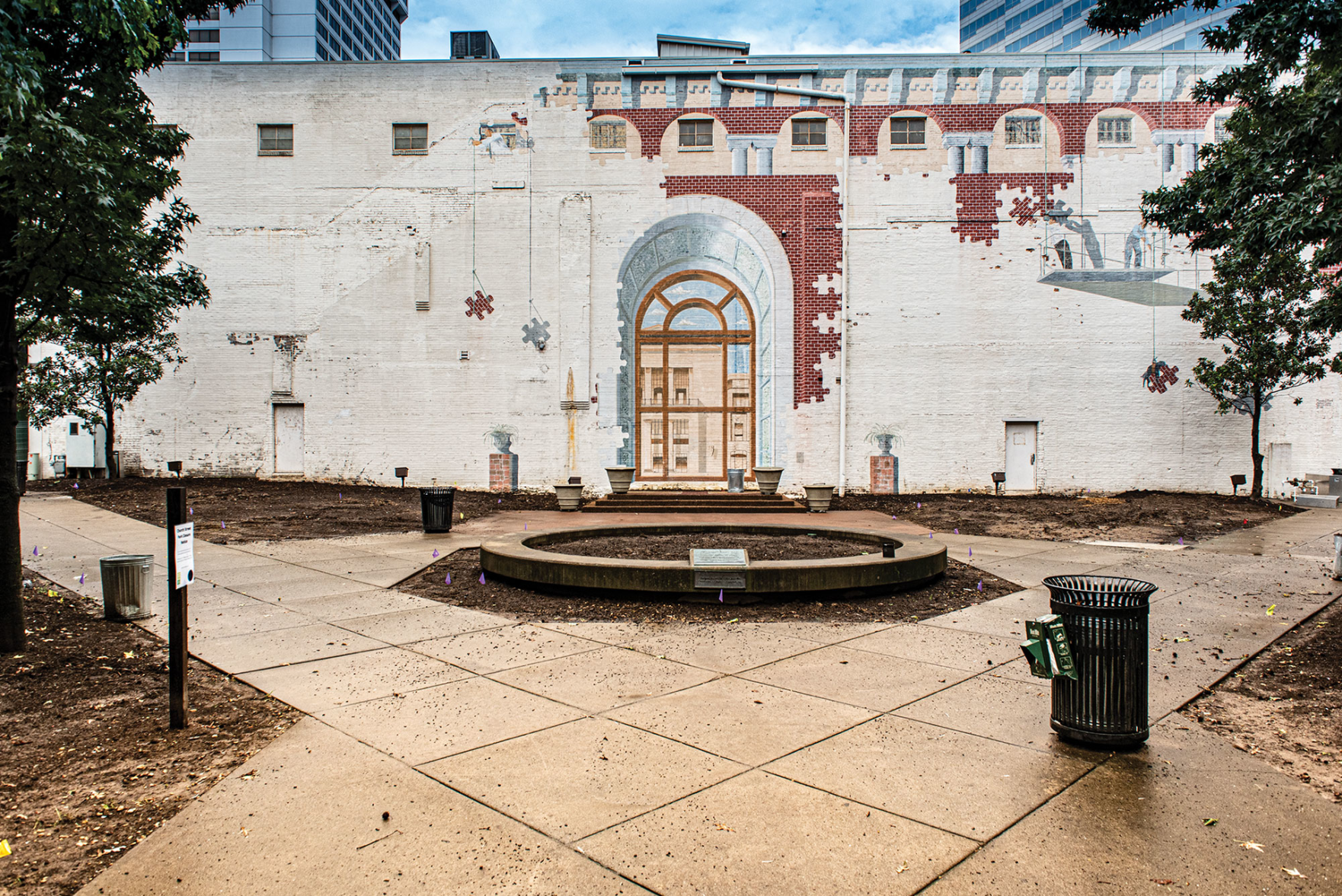
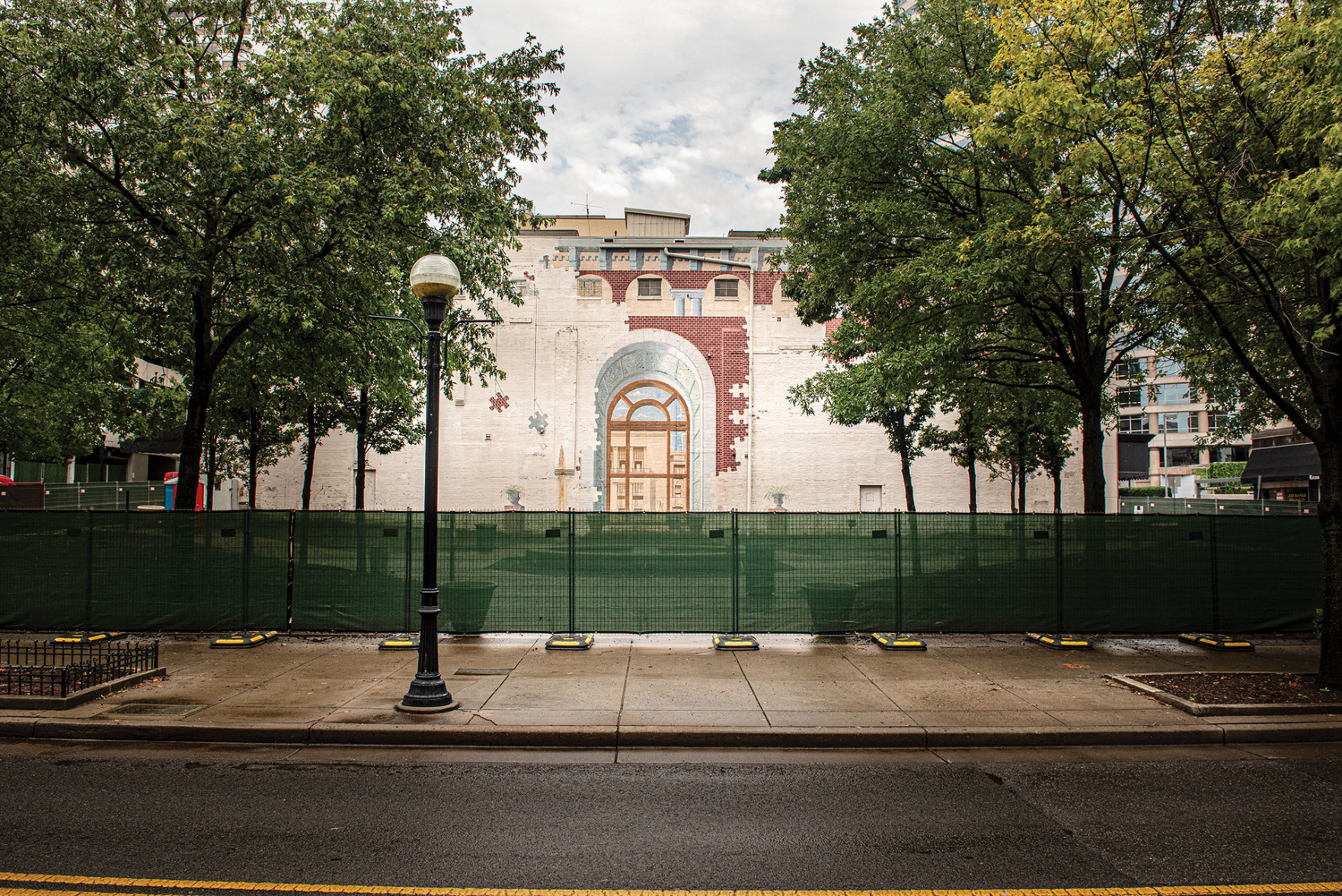
But the anniversary of Tennessee’s crucial ratification of the 19th Amendment has passed, no celebrations were held at the park, and little substantial work has been completed in the area where a group of unhoused people lived — until, that is, a wall went up around the park late last month.
“We’ve started some of the work in the park but have delayed the programming piece of it for the health and safety of everybody downtown with the [COVID-19] numbers being what they are,” says Alexia Poe, a spokesperson for the nonprofit group affiliated with nearby Hermitage Hotel spearheading the nearly $500,000 renovation. (The status of the pandemic’s spread in Nashville has actually improved by most metrics since the park was closed in late July.)
The group expects the work to be done in October.
In the meantime, most of the people who used to spend nights and days in the park — in part because of its proximity to the library and other services downtown — have migrated. That’s according to Andreos Chunaco, a street outreach and resource navigator at nonprofit group Open Table Nashville.
“From my understanding and what I’ve seen, most of the folks who were using and staying overnight at the library park migrated over to the People’s Plaza, since that’s a public space nearby, still central, still downtown,” says Chunaco, referencing an area near the state Capitol that, for several weeks over the summer, was occupied 24-7 by a group of activists protesting racial injustice. “[It was] one of the last few places where people can really be — at least before this new protest bill was passed — and not be accosted.”
The bill, passed in a special legislative session earlier this month to crack down on protests in the area, makes camping on state property a felony.
According to Chunaco, the people displaced by the work at the park are among the city’s most vulnerable due to “multiple layers of mental health conditions or other barriers.” The central location allowed those most in need easier access to food, shelter and other services.
“My heart really goes out to those folks, because they really are some of the most vulnerable that we have in Nashville, and they were completely underserved,” Chunaco says. “Now that they’ve had to move from that space, they’re having to find and occupy more tenuous spaces that are much less safe and much further away from their sources of survival and support and well-being.”
Though Chunaco laments what he calls a lack of adequate communication about the changes, Metro Homeless Impact Division Director Judith Tackett says she notified service providers in the area on July 6, three weeks before the park’s closure, in addition to sending caseworkers to communicate the changes.
“I feel we’ve done our due diligence on that part,” Tackett says.
Some business owners and residents of high-rises in the area have long complained about the presence of unhoused people in Church Street Park. David Andrews, owner of D’Andrews Bakery and Cafe on Church Street, says people residing in the park used to harass his customers.
“They were just a constant — I don’t want to say nuisance — bordering on nuisance,” Andrews says. “It just wasn’t pleasant to be down here. … You sort of get to know them, and the ones who are nice and friendly you’re friendly back to them, and they become almost your neighbors. And the ones who are not nice, that’s when you’ve got to stand in the door and just say no.”
In the past month, Andrews says, “It’s gotten so much better with that park closed right now.”
Long-term planning at the park is key, Andrews says. If the group sponsoring the renovation gets its way, the park will be cleaner and will have a steady stream of programming. If downtown developer Tony Giarratana gets his way, a tower will rise on the land and he will build a park on the adjacent Anne Dallas Dudley Boulevard. Other options could be on the table as well in the public process promised by Cooper.
“That park has so much potential,” Andrews says. “It could either be a great park again, or it could be a great high-rise. My biggest fear is that it’s good for a couple of months and then we’re back in the same situation.”
Open Table’s Chunaco is under the impression that the park’s former residents will be able to return in October when the work is complete.
And while Tackett says she is concerned for the people who used to live at the park, she approaches the issue from a more long-term point of view.
“The focus always has to be housing, wherever that is,” she says. “It’s not one specific location, it’s everywhere where a person is experiencing homelessness. This is not just a Metro government issue. This is a community issue, and our goal is to reduce homelessness for people — how long they are on the streets, in the shelter, wherever they are — and move them to housing.”



