
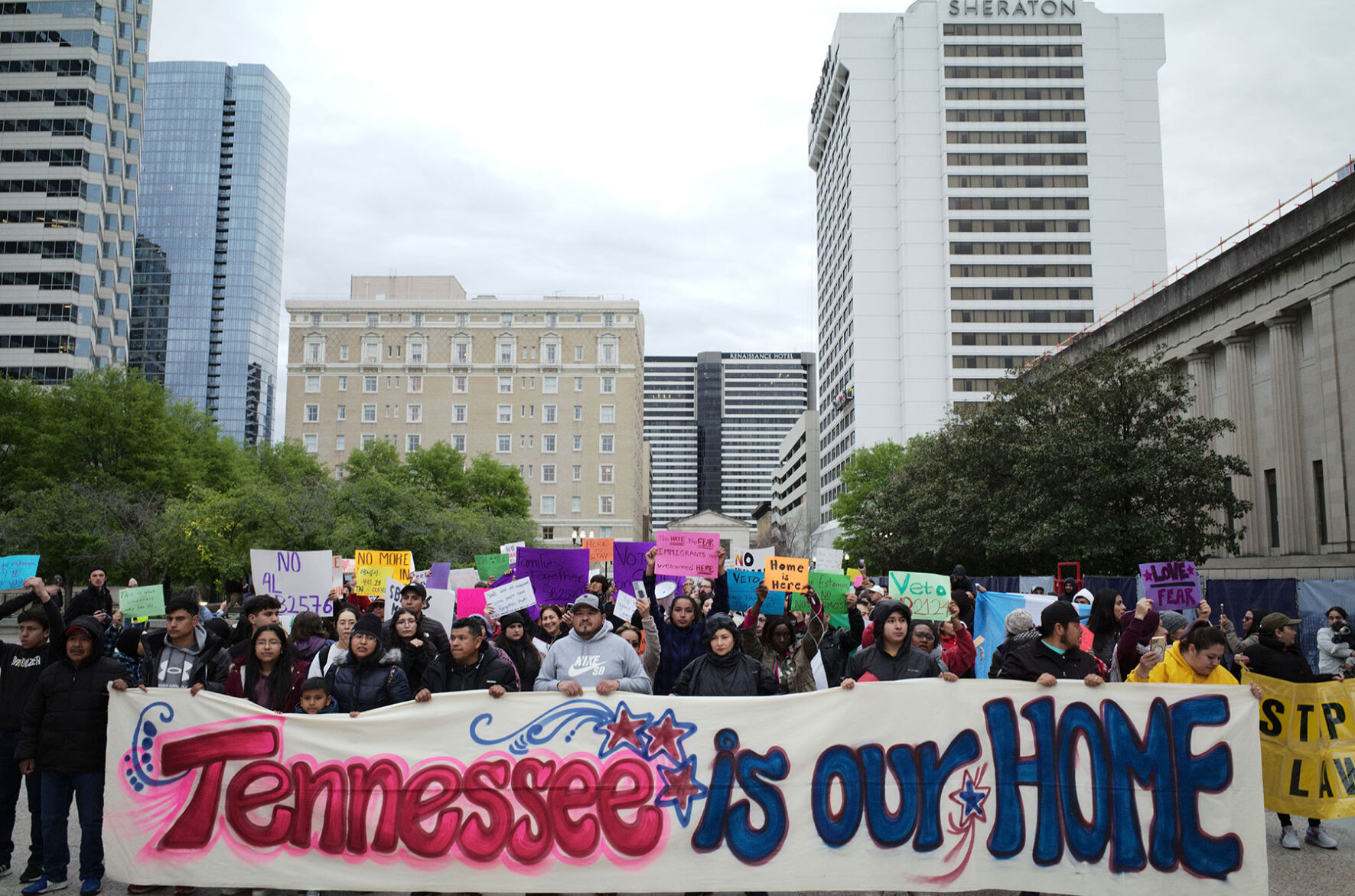

Carmen was nervous when she arrived in the United States in December 1999, leaving her home country El Salvador behind. She acquired temporary protected status, or TPS, in 2001, and after more than 20 years of — in her own words — surviving and working hard every day, she now owns a small business and provides for her family. And she says TPS, a temporary status given to people from certain countries fleeing dangers like civil war and earthquakes, helped make it all possible.
“I came from extreme poverty,” she tells the Scene in Spanish through a translator. Carmen is sitting in her Nolensville Pike restaurant while a playlist of grupo and ranchera music plays. “With four children, I wanted to give them a better life, better schools. That’s why I came here.”
She says life in a new country was difficult, but Nashville is now her home. Two of her children graduated from college, and she’s become a grandmother. She’s made friends. It would be difficult to leave this life behind.

Nashville under pressure as state and feds push for stronger legal muscle to arrest immigrants
But with the reelection of Donald Trump, Carmen is concerned about what the future holds for her, her family and her fellow business owners. Immigration law is in a constant state of flux, changing with each new presidential administration, and the current situation is chaotic. The president has attempted to revoke birthright citizenship (a move that is unconstitutional), empowered U.S. Immigration and Customs Enforcement to arrest people near “sensitive locations” like churches, and issued a flurry of other changes and executive orders related to immigration.
“I’m praying the president’s heart softens a little bit,” says Carmen. She thinks her TPS will be extended, but given the uncertainty — and the fact that some of her family members are undocumented — the Scene is not using her full name.
TPS doesn’t provide a path to citizenship or permanent residence (though some holders can apply for those opportunities), and it isn’t a uniform policy. Eligibility varies by country, and even by year. For example, there’s one cohort of Venezuelans who received TPS in 2021 and another group who qualified in 2023. An order to extend TPS for Venezuelans who received TPS in 2023 by the outgoing Biden administration was vacated by Trump earlier this month.
Carmen says the prospect of being sent to their countries of origin is scary for many immigrants. She herself only returned to El Salvador once in the past 25 years to visit family, with permission from the U.S. government, saying she risked her life to do so.
TPS allows immigrants to live in the country without fear of deportation and lets them qualify for work and travel permits. The American Immigration Council reported that in 2022 there were 7,800 TPS holders in Tennessee.
Carmen says she didn’t want to be a “burden” on the government, and TPS let her be productive. “Cooking’s always been one of my greatest passions,” she says. She opened her own restaurant in 2012.
Even if her TPS is safe, Carmen is still facing the consequences of widespread fear and uncertainty. She motions to her restaurant’s many empty seats, and says other neighboring immigrant-owned businesses have been struggling — people are staying at home out of fear. They’re not working and they’re not patronizing businesses.
“A lot of people hoped the new administration would have improved the economy, but it’s getting worse,” says Carmen.
Trump and other Republicans have often scapegoated immigrants for economic woes, disregarding consensus studies and reports that immigration is good for the economy.
“I don’t think we’re the problem,” says Carmen. “We’re people who like to work. We’re not just here to be here, and we’re a people of fighters.”

In four parts, we explore what new legislation means for the local immigrant community



Post a comment as anonymous
Report
Watch this discussion.
(0) comments
Welcome to the discussion.
Log In
Welcome to the discussion.
Keep it clean. Please avoid obscene, vulgar, lewd, racist or otherwise abusive language. Comments featuring hate speech or threatening or violent content will not be tolerated.
PLEASE TURN OFF YOUR CAPS LOCK.
Be truthful. Don't knowingly lie or mislead.
Be proactive. Use the “report” link on any comment that violates our comment policy.
Share with us. We'd love to hear your feedback.