

Franklin Masonic Hall
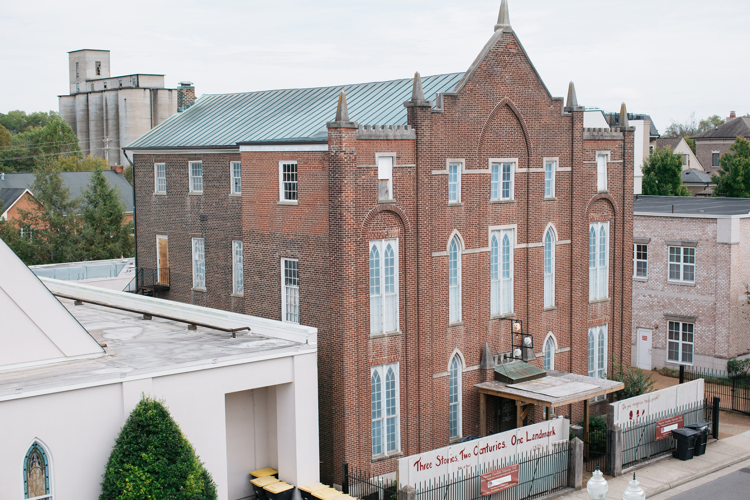
The Franklin Masonic Hall, just off Main Street in downtown Franklin, was the first three-story building in town when it was built in the 1820s. Everyone met there, at least at first — church congregations that hadn’t built dedicated buildings yet, dances, markets, funerals. And of course, the Masons.
Chickasaw leaders met with Andrew Jackson in the first-floor great room in 1830, trying to negotiate a treaty that would thwart or mitigate their genocide. If “leave your land now and Americans won’t wipe you off the planet” also counts as trying to thwart a genocide, then Jackson had the cruel version of that same goal.
Skip ahead 30 years. You can imagine how useful a three-story brick building in which each story is dominated by one large, open room was during the Civil War. U.S. forces housed whole companies in it, including U.S. Colored Troops toward the end of the war. Sometimes it was a hospital. When the Union Army wasn’t using it, it was filled with people from the contraband camp tired of sleeping on the ground with no roof over their heads. And after the Battle of Franklin, it was a Confederate hospital, filled with the wounded, dying and dead.
I’m at the Franklin Masonic Hall because if any building in Tennessee is going to be haunted, surely it’s this one.
I join the executive director of the Historic Franklin Masonic Hall Foundation, Rachael Finch, and the director of preservation, Grace Abernethy, at a round table toward the front of the first-floor great room. A rosary sits in the middle of the table between us. As we talk, it becomes apparent that neither woman is Catholic. But — and I say this with all the affection of a Methodist minister’s daughter — if you need something holy and Christian you can hold in your hands, Catholics have the best tchotchkes.

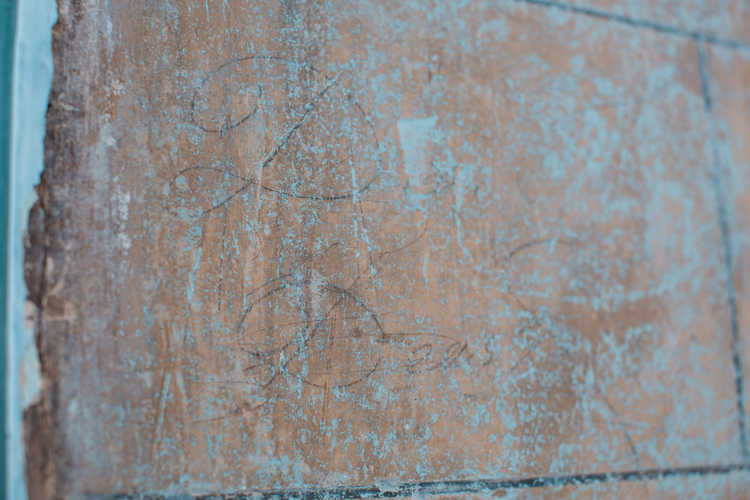
Civil War-era graffiti
Finch and Abernethy talk about the careful preservation they’re doing, how helpful the Masons — who still meet in the building — have been, and their hopes and dreams for saving the building and opening it up as a museum. Then we go up the “new” staircase, which is a century old, winding our way to the second floor, where the Masons have their main meeting room. The hallway is covered in Civil War-era graffiti — names, regiments, “Dear, Dear, Dear” written over and over by someone practicing before he set pen to paper, the outline of a hand missing the three outside fingers.

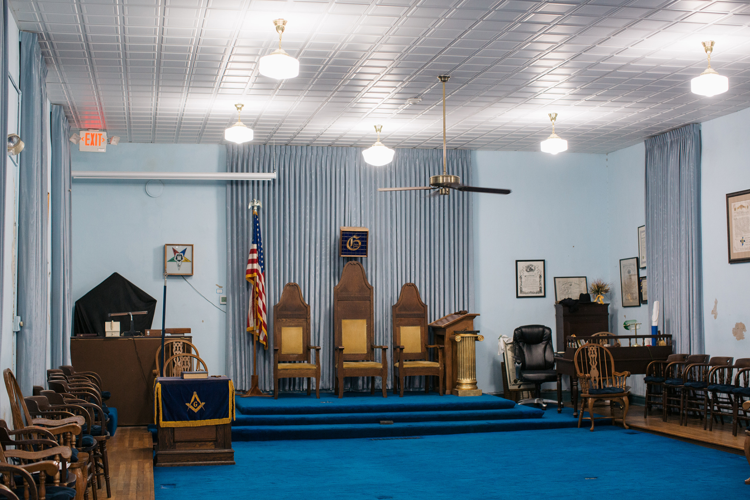
The hall’s second floor
The Masons hold their meetings in the large room on this floor, with antique wooden chairs lining each wall, facing a pedestal with a Bible. As we’re standing in this room, Finch and Abernethy tell me of sightings of men in blue uniforms in the downstairs foyer, of a pair of legs seen walking through this room, of a recording made of a girl singing where a male voice can be heard singing along with her — even though at the time there were no men in the building.
Finch asks me if I want to see the third floor. I’m overcome by the feeling that I absolutely do not want to go up there. And yet, of course I do.
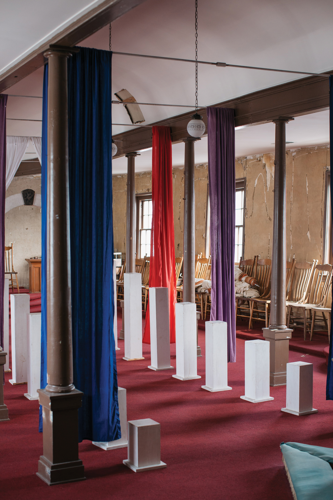
We walk past the sign that says not to go up the steps and curl around another tall story. We go into the main room on this floor. It’s got the same chairs-on-the-outer-wall-facing-inward setup as below, but everything seems much older. The ceiling is vaulted. A chandelier hangs at each end.
This room is wrong.
It feels cramped, but maybe that’s because the windows are shorter than in the rest of the building. Plus, things aren’t square. The far corner of the room is 6 inches lower than where I am. One of the walls leans out 3 inches. I know that skeptics have shown, repeatedly, that if you have a place where two walls and a ceiling come together, you will see that corner as square even as you experience it as being off kilter. The dissonance can give you a feeling of seasickness. That’s the logical reason the room feels unsettling. Knowing that doesn’t help.

The hall’s third floor
Then we go into the room that would have been at the top of the old staircase, above the bathrooms. There’s a hole in the floor. Finch tells me that if a Mason is going to be allowed up here on the third floor, he has to go through a symbolic death, burial and rebirth. This hole in the floor — and now I see the trap door that fits over it leaning against the wall — is the ceremonial burial chamber.
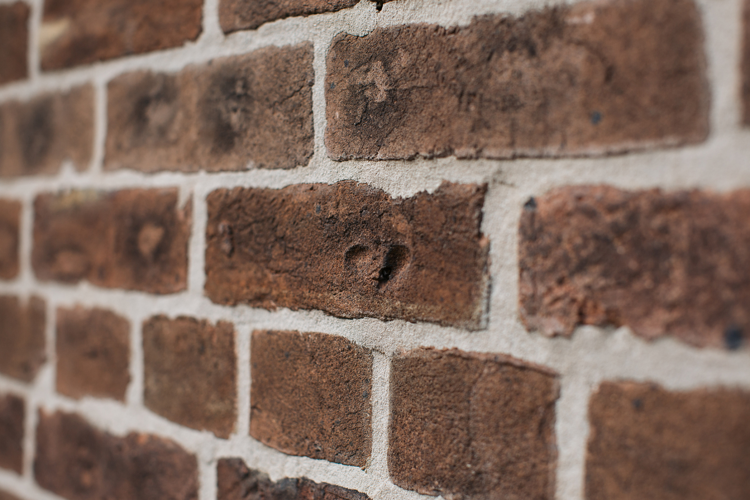
Then we go outside to look at the walls, composed of bricks that were handmade by enslaved people. Their fingerprints are all over the building — dents in the brick where a person pressed down on the wet mud, and then the heat of the kiln set it in place. You can slip your fingers right into those dents.
Isn’t this a kind of haunting? Aren’t I having an interaction with a dead person here, my fingers on this brick, resting in these prints? If so, what would the person who left these marks want from me? What am I hoping to glean from her? Assurances that we go on, in some form? That we’re remembered?

Fingerprints in the bricks
A psychic came by the hall recently. She told Finch there’s a Confederate soldier in the building; he thinks he’s dying, but refuses to accept that he’s dead. One-hundred-and-fifty years trapped in the worst, scariest moment of his life, and he can’t believe it’s over. He knows the women are there. He can see them, hear them, smell them. He assumes they’re nurses, because who else would women in a hospital during wartime be?
The psychic says the question he asks of the women, over and over, is, “Why won’t they help me?”
Other than what they’re doing right now — trying to preserve this place and tell its story — what help can they give?



