
After two straight seasons of frustrating losses, endless injuries and anemic offense, there’s no guarantee the Tennessee Titans will bounce back to their winning ways in 2024.
But this much we do know: If they fall short, it won’t be for a lack of trying.
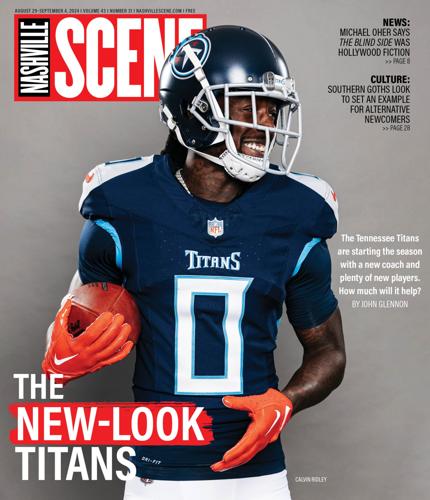
Determined to reverse the course of a franchise that had lost 18 of its past 24 games, the Titans instituted a massive overhaul during the offseason, saying goodbye to former cornerstones like coach Mike Vrabel, running back Derrick Henry and quarterback Ryan Tannehill while adding the likes of coach Brian Callahan, wide receiver Calvin Ridley and cornerback L’Jarius Sneed.
In short, the 2024 Titans roster should look very little like those of the past two years — when the 2022 team suffered a 10-game losing streak and the 2023 team limped to a last-place finish in the AFC South.
Every NFL team makes changes to some degree during the offseason, moving on from players and or coaches for various reasons. But the Titans produced a super-sized transformation over the past several months.
Some examples:
• The Titans added 35 players to the roster between last year and the start of the 2024 training camp — 12 veteran free agents, 14 rookie free agents, seven draft picks and two trade acquisitions.
• Only nine of the 22 players who started the Titans’ 2023 season opener remained on the team’s roster as the 2024 season neared.
• The Titans spent a whopping $318.2 million on free agents (the most in the NFL, per sports site Over the Cap) since the end of last season, adding projected starters like Ridley, running back Tony Pollard, wide receiver Tyler Boyd, center Lloyd Cushenberry, defensive lineman Sebastian Joseph-Day, linebacker Kenneth Murray, cornerback Chidobe Awuzie and safety Quandre Diggs. Sneed was acquired via trade from Kansas City.
Whew.
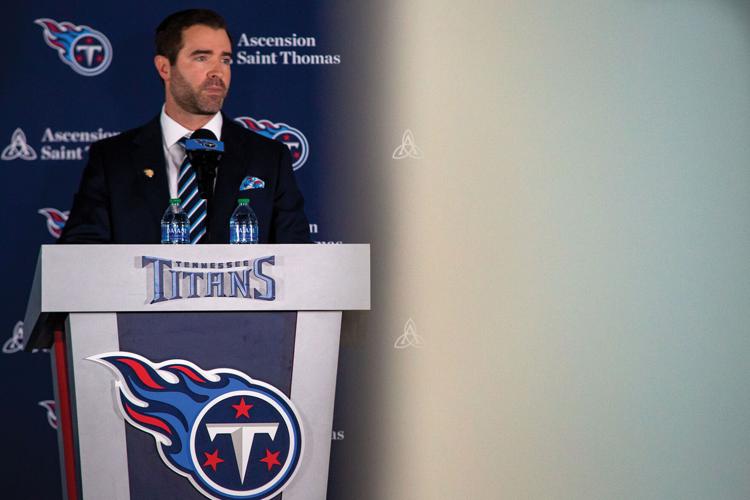
Take a bow for your offseason efforts, general manager Ran Carthon.
“People were big fans of Tony Pollard, people were big fans of [Cushenberry, Awuzie] and all the other guys we’ve signed,” Carthon said earlier this year. “The biggest compliment you can get from all of this is when guys from other teams text you and say, ‘You guys signed one of my favorite players.’ And I have gotten [a lot] of those texts, just [on] the type of guys that we’ve signed and the impact they’ve made.
“I feel good about what we’ve done so far, and excited.”
Here’s a closer look at the Titans’ most significant changes from last season and how they’re likely to impact the team in 2024.

Coach Brian Callahan
Coaching
It was owner Amy Adams Strunk who decided to fire Vrabel after two straight losing seasons that had been preceded by four consecutive years of winning — as well as three playoff berths.
In the end, it was not only the ugly numbers of the past two seasons that caught up to Vrabel, but Strunk’s desire for a more “aligned and collaborative team across all football functions” — a philosophical difference from Vrabel’s more alpha-oriented approach.
Empowered by Strunk to lead all areas that impact the football team, Carthon spearheaded a coaching search that landed on Callahan. The son of former NFL head coach Bill Callahan (who’s now the Titans’ offensive line coach), Brian Callahan spent his past five seasons as the Cincinnati Bengals’ offensive coordinator.
The 2024 season will mark Callahan’s first as a head coach and as a play-caller, but he earned plenty of praise in Cincinnati for his work with Bengals star quarterback Joe Burrow and the rest of that team’s high-powered offense.
“I think Ran and I are going to build a great [partnership], that I don’t have any doubt about,” Callahan said in January. “That to me is the starting point, is the personalities to mesh and fit and build a partnership with a vision towards building a football team that’s got the ability to have sustained success.”
How will Callahan’s first Titans team differ from Vrabel’s last?
The most obvious changes will come on the offensive side, where the Titans will be far more likely to throw the ball than they were in the past, when the team’s offense was built around Henry’s powerful and productive runs.
An example: Tennessee finished among the NFL’s top five teams in percentage of run-versus-pass plays in four of the past five years. On the flip side, Cincinnati finished among the NFL’s top five teams in percentage of pass-versus-run plays in three of the past five years.
The departure of Henry, combined with the arrival of Ridley and Boyd, makes it all too clear that Titans fans should see quarterback Will Levis firing more footballs around Nissan Stadium this season.
“The teams that win the most games are generally the teams that pass the ball the best,” Callahan said in 2023 when explaining his offensive philosophy. “Usually because they have really good quarterbacks, and usually because they have guys that can make plays on the football outside.”
On the other side of the line for the Titans, Dennard Wilson brings quite a résumé to his first job as a defensive coordinator.
In 2023, when Wilson served as Baltimore’s defensive backs coach, the Ravens ranked sixth in the league in passing defense (allowing 192 yards per game), first in fewest points allowed (16.5 per game) and third in interceptions (18). A year earlier, when Wilson served as Philadelphia’s defensive backs coach, the Eagles ranked first in passing defense (allowing 179.8 yards per game) and tied for fourth in interceptions (17).
Wilson’s calling card is his aggressiveness, which should be most noticeable when the Titans are defending the pass.
Titans cornerbacks in years past tended to play it safe, surrendering short passes while making sure they weren’t burned by long completions. Under Wilson, expect those cornerbacks to get more physical with wide receivers, pressing opposing pass-catchers from the moment the ball is snapped.
Wilson said in February: “I can tell you this about the scheme, and I learned this a long time ago. General George Patton said this: ‘Nobody ever defended anything successfully. You are going to attack, and attack some more.’ We are going to be an attacking defense. We are going to be violent in our approach. We are going to be smart, we are going to be intelligent, we are never going to compromise for competing, and that is the brand of football we are going to play around here.”
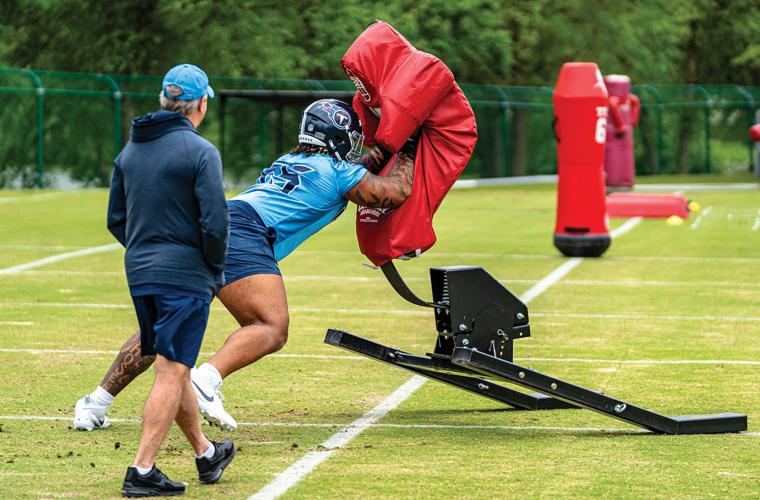
Almost all of the Titans’ assistant coaches are new from a year ago as well, but the most notable of the arrivals is Bill Callahan, who’s spent 22 years as an NFL offensive line coach, guiding 14 offensive linemen to a total of 35 Pro Bowl selections.
The hope is that the elder Callahan will be able to better a Titans offensive line that allowed quarterbacks Levis and Tannehill to be flattened far too often last season.
“I would say, as far as experience goes, there’s not really anybody that has more in all the different facets of an organization,” Brian Callahan said of his father in February. “He’s been arguably, in my opinion, the best offensive line coach in football for a long time. ... He’s probably forgotten more football than I know. And so it’s a huge asset to us to have him.”
Offense
Before we start highlighting what’s new and improved about the Titans’ offense in 2024, it’s only fair to pay one last round of respect to Henry and Tannehill, two players who engineered the bulk of Tennessee’s offense over the past half-decade.
A potential future Hall of Famer, the 6-foot-3, 247-pound Henry steamrolled defenses for 9,502 yards and 90 touchdowns during his eight-year Tennessee tenure, becoming one of just eight running backs in NFL history to surpass 2,000 rushing yards in a single season in 2020.
Tannehill helped steer the Titans to a 39-24 record in his 63 starts, twice throwing for more than 3,500 yards in a season and piling up 93 touchdown passes.
It seemed only fitting that in the Titans’ final regular-season game against Jacksonville last season, the two teamed up to produce a victory in front of the home fans. Henry even grabbed a microphone following the contest, thanking his legion of loyal supporters “for the greatest eight years of my life.”
But the harsh truth is that despite the efforts of Henry and Tannehill over the past two seasons, the Titans were a losing team. Tennessee chose not to aggressively pursue new deals with either player, as Henry signed with Baltimore and Tannehill went unsigned during free agency.
“I think it was just one of those times where I think it was just best for everybody to just proceed forward,” Carthon said regarding Henry. “I think the world of Derrick. Derrick’s been a consummate pro.”
Which newcomers will the team count on to better an offense that last year averaged just 17.9 points per game, tied for the sixth-lowest in the league?
The flashiest (and priciest) new arrival is Ridley, who the Titans snatched away from division rival Jacksonville by signing him to an eye-opening four-year, $92 million contract. A former Alabama star, Ridley missed the 2022 season because he violated the league’s gambling policy. But the fleet-footed Ridley bounced back last season to catch 76 passes for 1,016 yards and eight touchdowns.
“To actually have the opportunity to even consider [signing] him was something that we had as part of our plan,” Carthon said. “But ... it was more of a pipe dream. Like, ‘Can we afford [other players] and get Ridley?’”
Pollard, expected to split time with Tyjae Spears in the Titans’ backfield, is another Titans offensive addition who should provide some sizzle. A Memphis native and Memphis University alum, Pollard is the kind of back — like Spears — who can produce yardage in both the running attack and passing game.
Adding to the Titans’ air attack is Boyd, a veteran who played under Callahan for the past five seasons, averaging more than 70 catches per year.
But it’s entirely possible that the Titans’ most-needed new faces on offense are rookie left tackle JC Latham (the Titans’ first-round pick) and center Lloyd Cushenberry, a free-agent signee. The 6-foot-6, 342-pound Latham and the 6-foot-4, 315-pound Cushenberry are two very large men who should provide Levis with a very large degree of comfort when he drops back to pass. That wasn’t the case last year, when Titans quarterbacks were sacked 64 times, tied for the fourth-most in the league.

JC Latham and Coach Bill Callahan during practice
The hope is that Levis will have enough time in the pocket to improve upon the 58.4 percent completion rate he posted as a rookie, a figure that ranked last in the NFL.
Who knows? Levis may even have the opportunity to spritz himself with his new cologne: Will Levis No. 08, Parfum de Mayonnaise, otherwise known as “the scent of greatness.”
The Titans would love to see some greatness from Levis, whose performance as a rookie starter in nine games gave ammunition to both his boosters and detractors.
Defense
If Ridley and Boyd were the Titans’ splashy additions at a significant position of need on offense, Sneed and Awuzie — a pair of physical cornerbacks — fit that description on defense.
Tennessee added Awuzie through free agency, then acquired Sneed via trade from Kansas City, signing him to a four-year, $76.4 million deal. A two-time Super Bowl champion, the 27-year-old Sneed is recognized as one of the best corners in the game. He stifled the NFL’s best receivers on a regular basis last year, surrendering zero touchdowns when targeted in 16 regular-season games in 2023.
That’s music to the ears of fans in Music City, who’ve watched the team endure some brutal struggles in pass defense over the years.
The Titans’ corners were passive at times in the past. But the team’s top three players at the position this year — Sneed, Awuzie and Roger McCreary — should be anything but when it comes to attacking enemy offenses.
“The one [similar] trait is they’re all dogs,” Titans cornerbacks coach Chris Harris said in the spring. “That’s a great start. We like tough, physical corners, guys who tackle. They all have that in common. Everybody has their different skill set, but one thing they have in common is that they’re tough, physical guys.”
A lingering knee issue has long limited Sneed’s practice and preseason time. But if Sneed is as consistent and durable in games as he was in Kansas City — when he missed just three contests over three years, while totaling seven interceptions and 33 passes defensed — the Titans aren’t going to be too concerned about practice patterns.
“It’s a huge get,” Carthon said of Sneed. “He matches [Awuzie’s] energy of being a physical, aggressive corner that can also play in run support. ... We have guys who are willing to stick their face in there and tackle people.”
Sneed and Awuzie are far from the only new faces in the Titans’ secondary, as the team also signed Seattle’s two starting safeties last season, Jamal Adams and Quandre Diggs. Adams is a question mark after injuries limited him to a combined 10 games over the past two seasons, but Diggs — a Pro Bowler from 2020 through 2022 — will give the Titans range and experience next to veteran Amani Hooker.

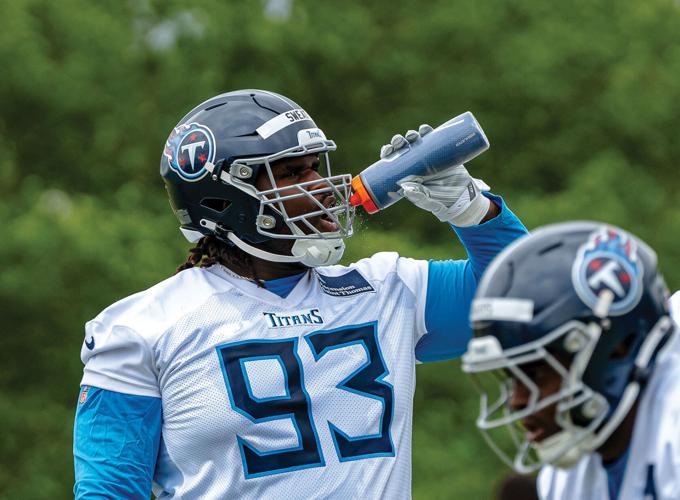
T’Vondre Sweat during practice
Maybe the most fascinating Titans newcomer is rookie defensive tackle T’Vondre Sweat — all 6-foot-4 and 362 pounds of the second-round pick. Sweat last season earned the Outland Trophy, given to college football’s best interior lineman, while playing at the University of Texas. Plenty of NFL observers had doubts about Sweat, concerned with his weight, conditioning and maturity. The fact that Sweat was charged with a DWI in the weeks leading up to the NFL Draft didn’t help his cause.
But to his credit, the mammoth Sweat made quite an impression in training camp, overpowering Titans blockers while forming a frighteningly powerful duo with Pro Bowl defensive tackle Jeffery Simmons.
“He’s just so big and so powerful, and he’s got real pass-rush wiggle for a guy his size,” Callahan recently said of Sweat. “I mean, he can get on the edge and work it. He’s got fast hands. … You watch him in one-on-ones, and he can win one-on-one, which a lot of times those big guys struggle to win. But he’s got enough quickness to do it.”
So many new faces, so much turnover.
Some Titans fans may be left wondering what happened to their teams of yesteryear. But considering the Titans’ recent fortunes, the time for change is now.

Calvin Ridley



Post a comment as anonymous
Report
Watch this discussion.
(0) comments
Welcome to the discussion.
Log In
Welcome to the discussion.
Keep it clean. Please avoid obscene, vulgar, lewd, racist or otherwise abusive language. Comments featuring hate speech or threatening or violent content will not be tolerated.
PLEASE TURN OFF YOUR CAPS LOCK.
Be truthful. Don't knowingly lie or mislead.
Be proactive. Use the “report” link on any comment that violates our comment policy.
Share with us. We'd love to hear your feedback.