

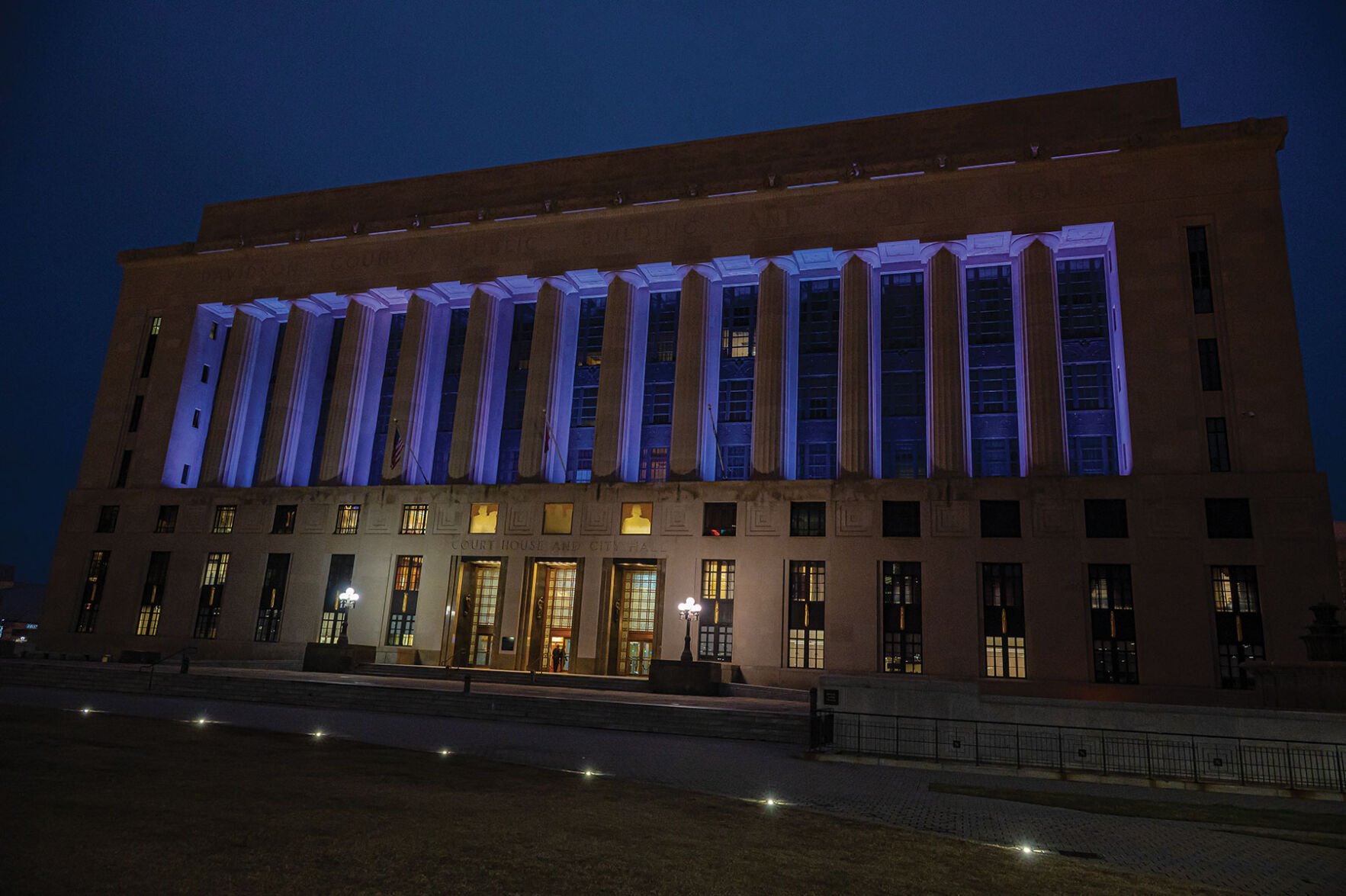
The Metro Courthouse
It’s impossible to discuss the broken relationship between the city of Nashville and its state government, whose seats of power are separated by just a couple of blocks, without talking about the Republican National Convention.
Republicans, who dominate Tennessee state government, desperately wanted to host the RNC in Nashville in 2024. The Metro Council, controlled by left-leaning representatives, did not, and the body voted last year not to support a bid for the GOP coronation festivities.
That decision set off a flurry of vengeful promises, later mostly fulfilled by the Tennessee General Assembly during its 2023 session. But it can’t be said that the legislature’s posture toward Nashville was wholly inspired by the RNC decision. Months before the Metro Council vote, the General Assembly decided to crack Nashville’s congressional district, leaving the Democratic city represented in Washington, D.C., by far-flung rural conservatives. And the legislature has spent years preempting Metro efforts on zoning and other matters.
But this year the efforts reached a new volume. During the three-month session, the Tennessee General Assembly passed bills cutting the Metro Council in half, abolishing Nashville’s police oversight board, restricting funds related to the Music City Center, taking over seats on Nashville’s airport and sports boards and easing the path to a NASCAR-fueled overhaul at The Fairgrounds Nashville’s racetrack.
Though Republicans in the legislature occasionally slipped and admitted the reason for the moves was retribution, bill sponsors and supporters frequently cited a desire for governmental efficiency and fiscal oversight.
Democrats, especially those from Nashville, were outraged — and even the rare Republican would speak out against the bills. Sen. Mark Pody (R-Lebanon) saw his district take on a chunk of Nashville in recent redistricting, and he railed against some of the anti-Nashville efforts (while also sponsoring the police oversight bill). He at times pleaded with his GOP colleagues to turn down the temperature of the Metro stir-fry while noting that he thought Nashville should not be “picking a fight” with the legislature. To no avail.
The issue has become a significant one in the ongoing mayor’s race, set to be decided in an August election with a possible runoff the following month. Some candidates argue that their experience at the legislature, working with state agencies or, in Republican Alice Rolli’s case, as a fellow conservative, will allow them to reason with state leaders and stamp out some of the tensions. Other candidates caution against negotiating with terrorists.
At-Large Metro Councilmember Bob Mendes in part conditioned his endorsement of mayoral candidate and District 19 Councilmember Freddie O’Connell on the latter argument. Mendes said campaigning on a belief that the state can be reasoned with is “a naive posture” that he cannot support, thus his endorsement of O’Connell (who did say he plans to frequently engage with the governor’s office, the legislature and community leaders outside of Nashville if elected).
With little hope of a cease-fire, some in Nashville see the only recourse in the courts. The first anti-Nashville bill to pass this session, the one capping the 40-member Metro Council at 20 members, has already been put on hold by a court. Residents or city leaders could still sue over others, including the police oversight bill.
“We hope cooler heads will prevail, but in the event they do not, we are prepared to vigorously defend the constitutional rights of our city and its residents,” Metro Legal Director Wally Dietz said in March.

With national attention trained on Tennessee, the state legislature passed laws punishing Metro and restricting gender-affirming care — but nothing on gun control



Post a comment as anonymous
Report
Watch this discussion.
(0) comments
Welcome to the discussion.
Log In
Welcome to the discussion.
Keep it clean. Please avoid obscene, vulgar, lewd, racist or otherwise abusive language. Comments featuring hate speech or threatening or violent content will not be tolerated.
PLEASE TURN OFF YOUR CAPS LOCK.
Be truthful. Don't knowingly lie or mislead.
Be proactive. Use the “report” link on any comment that violates our comment policy.
Share with us. We'd love to hear your feedback.