
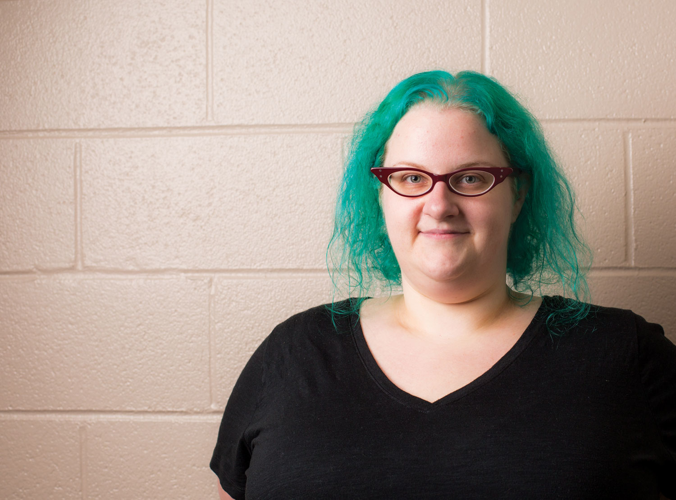


Rose Marie Pink
Three years ago, Oasis Center, which provides services for youth experiencing homelessness, lost some funding for programming for people who are 18 to 24. So a few people held an emergency meeting at the LGBT center OutCentral to talk about how to make sure the needs of young people were being met. Out of that meeting came Launch Pad, a volunteer-based initiative dedicated to ensuring young people have a place to sleep at night, with a focus on being affirming to LGBT youth.
“It’s difficult for youth to access traditional shelters in ways that don’t sometimes end with them being victimized by older people or having some negative interactions around gender [and sexuality] and things like that, particularly for LGBTQ youth, who are disproportionately represented in this group of unhoused people,” says Rose Marie Pink, who is now the vice president of Launch Pad’s board. See more from our conversation with Pink below.
In the city’s annual count of people experiencing homelessness, there was a pretty big spike this year in youth ages 18 to 24. Is this something you’ve noticed at Launch Pad?
I think we’ve definitely seen that over the past three years that we’ve been running. I think we don’t have a lot of societal safety nets right now — particularly in Nashville — for affordable housing. Whatever we did have is disappearing. I’ve always known a lot of people who share houses among a lot of people to have rent be affordable. But when you’re 18 and coming out of things, and you don’t have parents to co-sign for leases and things like that, there aren’t always many options available to you. Almost every night that we were open this year we had more people trying to sign up than could. We have to limit our reservation system this year for the first time, and that was met with sort of — we don’t like it, but I think it’s a useful thing to know whether we’re full or not ahead of time.
You were saying when Launch Pad first started, it was mainly for LGBT youth — can you explain why?
LGBTQ youth are often coming out in this age group or before, and sometimes that means they are tossed out of the house by their parents, and they lose several places to stay with family. For a lot of people, you can see things that are — you know, where people are very stressed about coming out, or people who came out decades ago. We can forget how stressful and terrifying it was, because maybe it went well for us. But it doesn’t go well for a lot of people, and one of the realest things about that is people can be victims of violence, they can lose their housing, lose access to resources via their family that weren’t even on their minds. Losing access to your parents’ health insurance, things that parents on some level have to decide to do spitefully.
Are there barriers to LGBT youth getting into more traditional homeless shelters?
They’re less comfortable going to religious shelters because they’re often met with more hostility, and they tend to be gender-segregated, and sometimes youth who are queer are less comfortable in those situations, are more likely to be victimized in those situations, are more likely to be made to feel unwelcome. It’s a pretty big, multifaceted problem for LGBTQ youth, and we’ve found, by looking through our statistics, that it’s on average more than 50 percent people who identify as LGBTQ. And so, because LGBTQ people aren’t anywhere near half the population — we know they’re just a very disproportionate part of who you’re seeing in unstable housing situations.

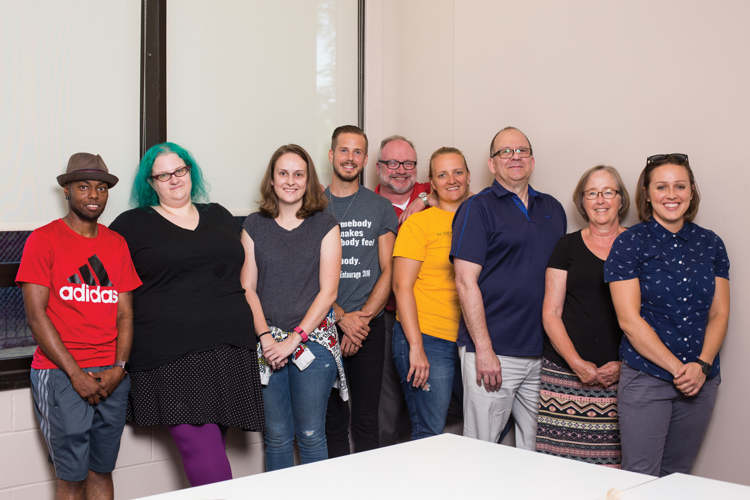
Launch Pad board members
Do you find in the groups of people you serve that you have to do a lot of LGBTQ education?
For the most part we’re not seeing tons of homophobia, but we sometimes see some transphobia and have to intervene on that level. Sometimes it’s not even about the conversion experience of being like, “We want you to not be transphobic.” It’s more like, “So part of the deal of you being here is that you aren’t being transphobic while you’re here.” I think if we had more time, and more time to interact with these people, maybe we could devote more time to being like, “Let’s try to unpack transphobia,” and stuff like that. But usually if it’s an issue, the fact that it’s part of the agreement for being in Launch Pad’s space kind of makes that not an issue anymore.
Statistically, once LGBTQ youth find housing, they have a difficult time keeping it. Do you see that trend?
I don’t think we’ve seen a ton of bounce-back from that, per se. I think we see a lot more people who really haven’t been able to get into housing at all. We had someone at the end of this season who was getting into housing that we were really excited about, but not a ton of people seem to be able to.
This post has been changed to reflect that Pink was not at the first meeting that lead to the creation of Launch Pad.



