

This year’s legislative session is set to have major implications for how long people convicted of serious crimes spend in prison. Two bills in particular involve long-discussed issues in Tennessee’s criminal justice system.
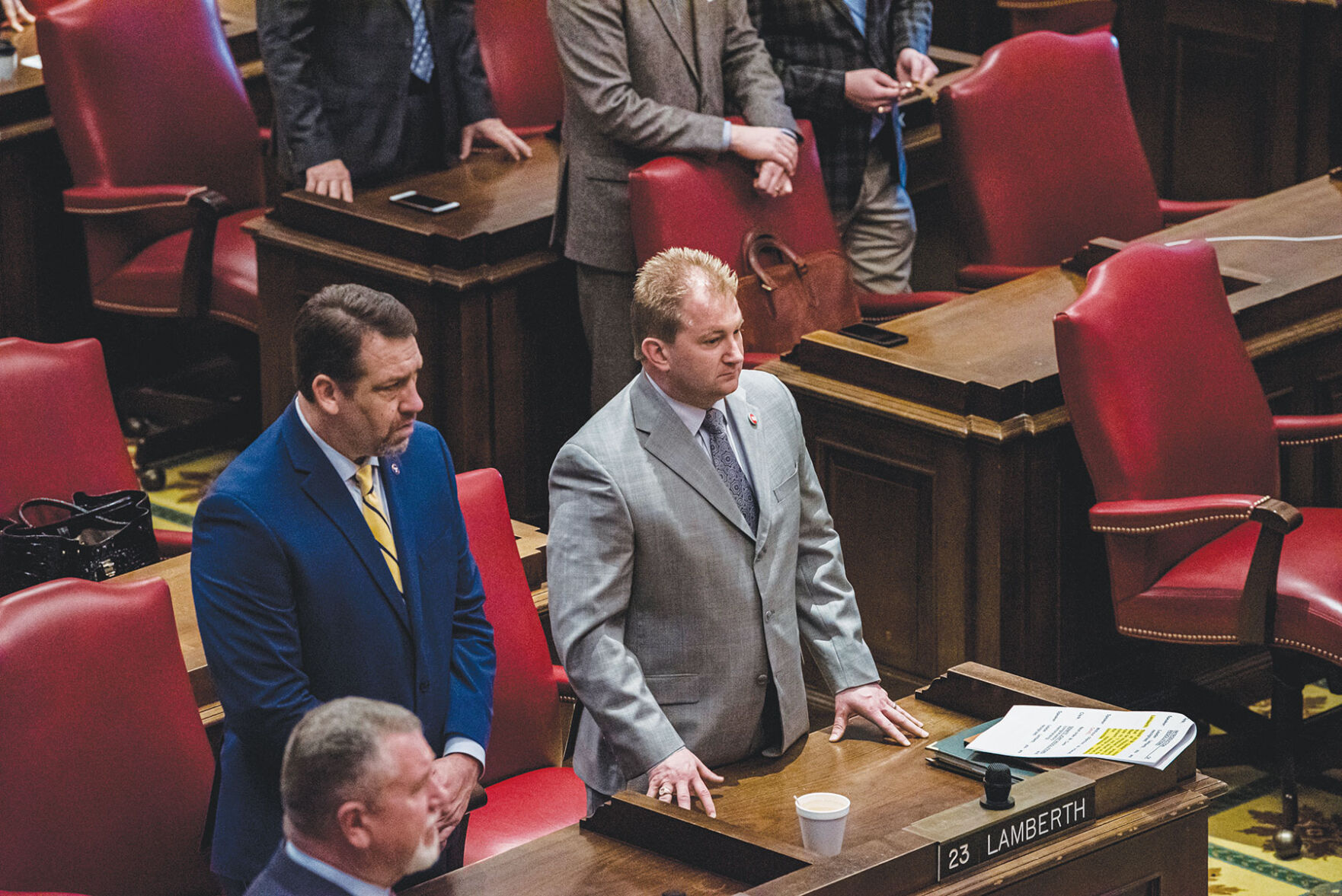
The first is the forthcoming Truth in Sentencing Act of 2022. In a Tennessean op-ed earlier this month, House Majority Leader William Lamberth (R-Portland) announced the legislation as a way to “make Tennessee’s sentencing codes more transparent” and create more certainty when it comes to how long a convicted person will be incarcerated. At present, the sentence handed down at trial often doesn’t accurately reflect how much time a person will serve in prison. Many incarcerated people are released sooner because of good behavior and the opportunity for parole. But advocates of so-called truth in sentencing argue this is unfair to victims and their families, who are rarely given a true picture of how long the person who harmed them will be in prison. Criminal justice reform advocates have often been skeptical of such laws, which became popular decades ago along with other tough-on-crime policies like mandatory minimums.
But Lamberth says in his op-ed that the bill he’s pushing would “preserve the judge’s discretion” while narrowing “sentencing ranges to reflect current state averages for most felony offenses.” He says his bill would also phase out parole, replacing it with a system through which the Tennessee Department of Correction has “the discretion to evaluate an inmate’s risk factors to best determine how they will be supervised upon release after their full sentence has been served.”
“Having a predictable, transparent sentence is just being honest about what our sentencing structure really is,” Lamberth tells the Scene. “We’re going to work on rightsizing our sentences so that our elected judges have the discretion when they feel like someone should be sentenced to prison, that everybody knows how long that’s going to be, and we can plan for that person’s release.”
He says that should include looking at criminogenic factors that might’ve contributed to their actions.
“Do they have mental health issues?” he says. “Do they have drug addiction issues? Do they come from an impoverished background or a broken home? What has really driven that person to break the law?”
Another bill awaiting action this session is one that would reform Tennessee’s life sentence. Currently, a person sentenced to life with the possibility of parole must serve 51 years before they are eligible for a parole hearing. But the bipartisan bill — Senate Bill 561/House Bill 1532, which passed the Senate with overwhelming support last year — would make it so a person sentenced to life with the possibility of parole is eligible for parole after 25 years. That would revert the law back to the way it was years ago, before President Bill Clinton’s 1994 Crime Bill harshened criminal sentences. The bill will apparently need a new House sponsor, as Rep. Dan Howell (R-Georgetown) has backed away from it, telling Chattanoogan.com, “I don’t think the victims of violent crimes will be best served by this legislation.”
At a press conference in front of the state Capitol on the new session’s first day, clergy, activists, formerly incarcerated people and victims’ family members called on the House to pass the bill and give people facing the 51-year life sentence real hope of a second chance.
Former Metro public defender and current executive director of the Choosing Justice Initiative Dawn Deaner said at the event that there are currently 1,304 people serving these sentences. More than half, she says, were 25 or younger when they committed their offense, and 118 were juveniles.
“This is the Bible Belt,” said Rahim Buford, a formerly incarcerated man and activist who served 26 years in prison for a murder committed when he was 18. “We say we believe in redemption, we say we believe in second chances, and yet we have three death sentences. One, a 51-year life sentence; another, a natural life sentence; another, a death penalty.”
Rafiah McCormick was also there. Her son Rodney Armstrong was killed in July 2020.
“It may seem like an oxymoron that I’m a victim’s rights advocate who fights for restorative justice,” she said. “But I’m not a unicorn. There are others like me. For many of us, healing means trying to make sense out of the senseless and find some purpose through our pain. We are interested in justice and accountability, but we’re more focused on our healing and the healing of society.”
Later, she added: “Right now, Tennessee’s current life sentence with the possibility of parole does nothing to restore community or even healing. It may put a salve on our anger if that person that harmed just rots in jail, but when do we get growth from rotting?”

With the legislative session underway, we look at where state lawmakers are taking redistricting, education, criminal justice reform and more



