


Bill Hagerty
Americans love an outsider.
Well, at least they say they do.
For all our anti-establishment preening, it’s still careerists who most often win elections. That may be hard to remember in an era when the president is a twice-divorced, six-time-bankrupt former reality-show personality, the governor is an HVAC man, and the most famous member of the U.S. House of Representatives is an ex-bartender.
Plenty of candidates bank on Americans’ thirst for the underdog, for the unexpected and the unvarnished. And in 2020, why not? Especially considering the fact that Donald Trump is one of just five men to become president without having previously held elected office — and the only one of that quintet who wasn’t either a general or cabinet secretary beforehand.
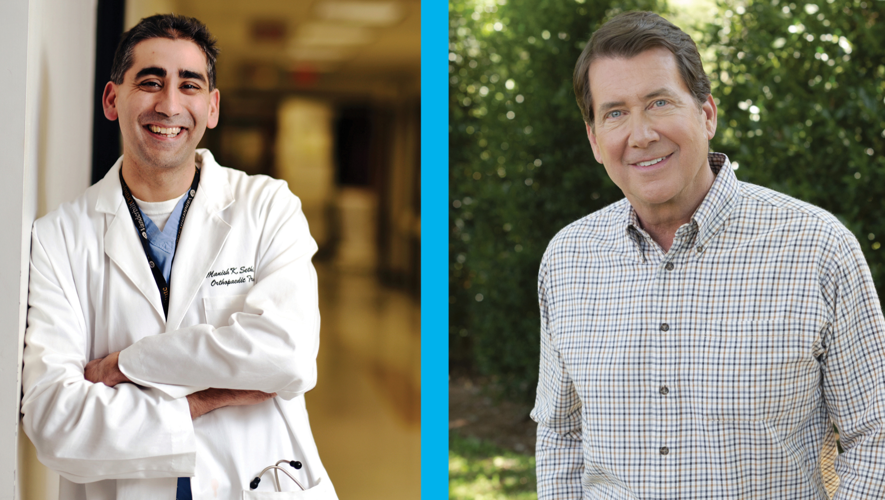
In the Republican primary for the U.S. Senate seat being vacated by the retiring Lamar Alexander, Manny Sethi wants to remind you that he is the outsider.
In a way, he always has been. He was the only person at Brown University and Harvard Medical School from Hillsboro, Tenn., a small community in Coffee County that could be called a jerkwater, except the railroad doesn’t go there. He’s the son of two immigrants from India — not exactly a booming demographic in Hillsboro (population: 450).
“We looked a little different, but no one ever treated us different,” Sethi says.
An orthopedic trauma surgeon, Sethi has never held elected office. In addition to practicing medicine, he started Healthy Tennessee with his wife — it’s a nonprofit that operates health fairs, providing free screenings and health education to often underserved communities statewide.
Sethi’s opponent, on the other hand, seems like he was practically groomed from birth to be in the Senate.
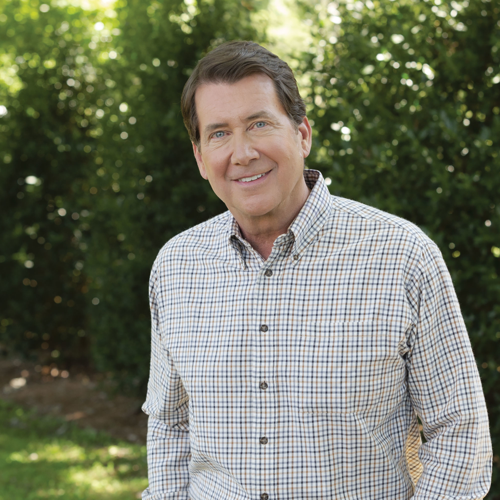
Bill Hagerty was a White House Fellow under George H.W. Bush, Mitt Romney’s national finance chair in 2008, a pledged Jeb Bush delegate to the 2016 Republican National Convention and then-Gov. Bill Haslam’s economic and community development commissioner.
Now the longtime associations with the uber-Establishment Bushes and Romney (and for that matter, with Haslam, who called on Trump to step aside as the GOP’s nominee less than a month before the 2016 election, and said he’d write in another Republican if he didn’t) may seemingly wrap Hagerty in the trappings of the Never Trump wing of his party. But his loyalty to the president is unquestioned: After serving as director of appointments for Trump’s transition, he was named ambassador to Japan, where his performance won praise from foreign policy observers — a rarity for Trump appointees.
Hagerty makes it very clear he’s Trump’s man (though not in an interview with the Scene; his staff hemmed and hawed through multiple interview requests). The president endorsed Hagerty in a tweet (naturally) in July 2019, months before Hagerty made his candidacy official.
Since then, the candidate has adopted his former boss’s favorite media strategy: bombastic tweets. Lately, they’ve featured the words “left-wing angry mob” and “Socialist” and included calls to jail people who burn the American flag, despite 30 years of jurisprudence protecting that particular form of protest.

Manny Sethi
Hagerty’s strategy is to tie himself as tightly to Trump as possible — not unwise in a deep-red state where, according to the Vanderbilt poll, the president’s approval rating hovers at 51 percent. Hagerty ends all his tweets with “#TrumpEndorsed,” and the bottom third of his yard signs are splashed with “ENDORSED BY TRUMP.” A few around town don’t sport the endorsement, but the campaign says don’t be fooled by any of those — as, they insist, they were printed early in the campaign, and the latest signs include the verbiage. It’s worth remembering, however, that Trump endorsed Hagerty months before the latter officially filed his campaign paperwork, authorizing him to spend money.
Sethi isn’t really fazed by Hagerty’s seemingly disingenuous performative outsiderism.
“I think people know what’s real,” Sethi says. “That’s the incredible thing I’ve really learned during the campaign and I’ve learned in my medical practice. Patients know what’s real, voters know what’s real. They know who we are, they know the truth.”
Sethi isn’t exactly running away from Trump either. For much of his campaign, he’s remained focused on fighting illegal immigration.
“My parents came here the right way, they waited their turn,” he says. “We need fundamental reform.”
To him, that includes ending benefits like welfare and food stamps for the undocumented and prosecuting border-crossers and those who overstay visas. He’s also in favor of repealing and replacing Obamacare with a “free-market solution” that relies, in part, on allowing people to buy health insurance across state lines.
Immigration and health care aren’t exactly new issues, but Sethi says establishment Republicans have given up the fight.
“They’ve been so ineffective because they can’t articulate a clear plan to the American public, and that’s why we need people who come from outside of government,” Sethi says.
Sethi also says the cabal of Washington insiders, such as they are, have been giving away the farm to China — “the communist Chinese government,” he repeatedly calls the world’s largest country. That reliance, he says, has shown up during the pandemic, as so many masks, gloves and antibiotics are manufactured there.
There’s a dose of localism in Sethi’s platform too: He wants a renewed focus on fighting opioid addiction that counts on state and local leaders knowing what’s best for their constituents.
“[Healthy Tennessee] traveled the state talking to mayors, sheriffs and drug courts and recovering addicts,” Sethi says. “The federal government has a one-size-fits-all approach, but Anderson County, Morgan County, Scott County have different challenges than Shelby County. We need a locally based solution. … We need to talk about faith-based treatment. With prescription-based recovery, the recidivism is so high. Drug courts are a good answer. Getting people back to work is a good answer, and we need to look at how adverse childhood events affect addiction.”
That said, there’s plenty of Trumpian rhetoric about current events, too.
“The biggest issue right now is taking on this mob that’s rioting, burning and looting in the streets,” he says. “Someone needs to stand up to them. I’ve had enough of this. This country has given us everything.” But he tempers that blunt instrument with an unexpected piece of reconciliatory language.
“We need to be talking about the things that bring us together as Americans. We need to have that conversation.”
Still, Sethi doesn’t hesitate to swing the big stick at the left. In a recent video he railed against protests — complete with footage of burning buildings and the beating of a man in a wheelchair — and against business closures. He tweeted that Metro Mayor John Cooper’s decision to wind back Nashville’s reopening plan is “lunacy,” and that Cooper “is more interested in shutting down Nashville’s economy than he is in leading.”
“He was more than willing to join mass protests and allow riots,” Sethi’s tweet continued, “only to now revert to closing down Nashville, destroying small businesses and hurting working families.”
In broad strokes, then, there’s not much difference in Sethi and Hagerty’s messaging style. And in policy terms, there’s little space to be found (insomuch as “being mad at protests” is a policy, for example). In Tennessee’s 2018 U.S. Senate election, Democrat Phil Bredesen, an overwhelmingly popular former governor, lost by more than 10 points to Republican Marsha Blackburn. Over on the other side of August’s ballot, James Mackler — who dropped out of the 2018 race to make room for Bredesen — leads a pack of hopefuls in the Democratic primary race. But barring a massive realignment in the state, the Republican nominee is all but certain to win the November general election, so electability isn’t a factor either.
Thus, Republican primary voters can only base their decision on what kind of a person they want in the world’s greatest deliberative body. And Sethi is betting they want an actual outsider.



