
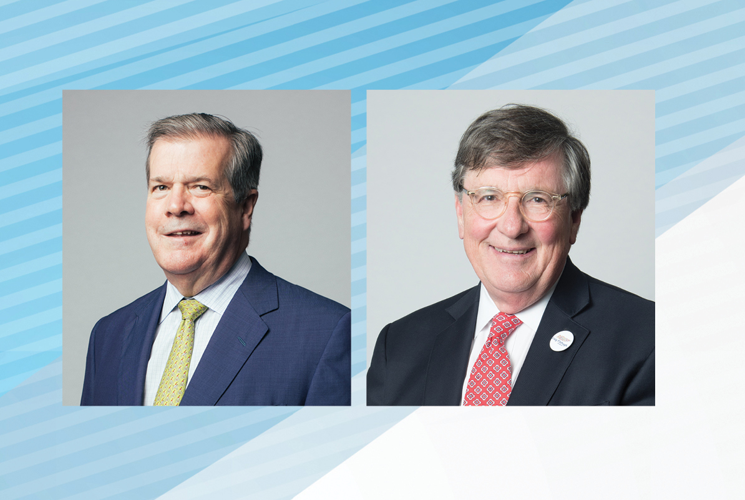
In a lot of ways, Karl Dean and Craig Fitzhugh are in the same bind as the four Republican gubernatorial candidates: How do you sell yourself to voters as a top pick when in so many ways you’re so similar?
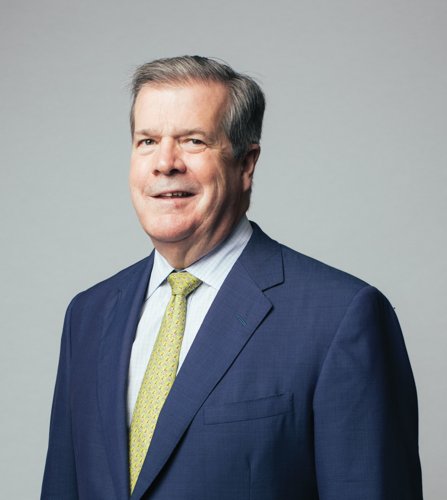
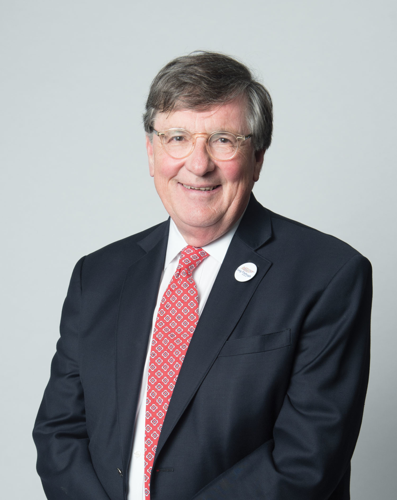
Dean, a former Metro public defender and law director who served as Nashville’s mayor from 2007 to 2015, is a 62-year-old affluent white man. Fitzhugh, a lawyer turned banker who’s represented House District 82 for the past 24 years and currently serves as House minority leader, is a slightly less affluent (but still well-off) 68-year-old white man.
Both men grew up in small towns, albeit in very different states — Dean in Gardner, Mass., and Fitzhugh in Ripley, Tenn. Both have been married for decades and are close with their grown children. Although both stopped practicing law years ago, it’s clear their legal experience has shaped their platforms, which both show a thorough understanding of a wide range of issues facing the state — and which options can realistically be pushed through a GOP-controlled legislature.
Dean and Fitzhugh both tout their abilities to work across party lines, and they highlight similar priorities if elected: increased spending on education, expanding Medicaid and improving access to health care, and creating economic opportunities and boosting wages for lower-income and rural Tennesseans. Both also support legal abortion, protections for LGBT residents, and some level of increased gun control. Both oppose harsh immigration policies and are in favor of in-state college tuition for undocumented immigrants who have grown up in the state.
But when you drill down, differences between Dean and Fitzhugh do emerge, and not just in their styles on the stump. Dean, as Nashvillians who remember his tenure as mayor know, can come across as somewhat stiff and awkward, although as the race has progressed, he seems to have relaxed slightly. Fitzhugh has a folksy charm that can quickly sharpen into an attack — but only for a minute or two, and then he’s back to all smiles.

Karl Dean
Dean has a lead in early polling, a lead in name recognition and a significant lead in fundraising. But Fitzhugh has a lead in something else — general goodwill.
Dean was not an unpopular mayor by any means, and he easily won re-election to a second term. But numerous corporate incentives, despite being supported by Metro Council at the time, and a lack of development regulations — which have turned Nashville from It City into a place many residents can’t afford — have led to increasing criticism of Dean’s tenure as mayor, launched by progressives and even some Republicans.
Dean has also been bashed for his support for charter schools, which Fitzhugh supports in only a very limited manner. Dean controversially pushed for a statewide charter authorizer after the Metro Nashville Board of Education vetoed an application for nonprofit charter-school organization Great Hearts; Fitzhugh fought that legislation, though it eventually passed. And after Dean left office, he founded the pro-charter nonprofit Project Renaissance, which gave up on its education-reform efforts not long after Dean announced a run for governor.
Unsurprisingly, the political action committee affiliated with the Tennessee Education Association endorsed Fitzhugh, as did the political arm of the Tennessee State Employees Association. (Both organizations also endorsed House Speaker Beth Harwell in the GOP primary.) But the Coalition for Nashville Neighborhoods endorsed Fitzhugh, too — picking Fitzhugh, who lives in Ripley (a three-hour drive away), over the Democrat who served as Nashville’s mayor for eight years.
“I just think my body of works shows that I have empathy for neighborhood groups, no matter where they are,” says Fitzhugh.
Trying to find someone (outside of the Dean campaign) to bad-mouth Fitzhugh is like looking for a needle in a haystack — a haystack in a field in Ripley, while you’re standing on a sidewalk in downtown Nashville. And the Dean camp’s attacks, so far, have been as milquetoast as if Haslam had written them. Even Republicans who loathe many of Fitzhugh’s stances still sing his praises.
“He has won the respect of people across the aisle and on the same side of the aisle, because he recognizes that there are 7 million people in this state, and that all their voices deserve to be heard,” says state Rep. Jeremy Faison, a Republican from Cosby. “And that’s why I consider him a friend.”
It’s this affability, combined with his rural roots, that Fitzhugh’s supporters think could make him a tougher candidate than Dean in the general election. That’s despite the fact that Fitzhugh is running slightly to the left of Dean, with mailers referring to himself as “a Democrat who isn’t scared to be one.”

Fitzhugh
On the stump, Fitzhugh tells the story of how his father worked his way up from being a janitor at a bank to running a bank, and how he’s worried that his grandchildren no longer have similar opportunities. Fitzhugh talks about playing football on a newly integrated team at Ripley High School in the 1960s — and he still calls football games in Ripley almost every Friday night in the fall. He’s also a graduate of the University of Tennessee-Knoxville and a military veteran — all talking points that Columbia University and Vanderbilt Law School grad Dean, who’s married to coal heiress (and former Southern Environmental Law Center attorney) Anne Davis, does not possess.
Mark Braden, a Republican political operative in Nashville, says the Dean campaign is hoping to woo crossover voters, as former Gov. Phil Bredesen is attempting to do in the Senate race — but he doesn’t see that strategy working.
Braden, who is a senior vice president at Mercury Public Affairs, says that as a Republican, he doesn’t feel threatened by Karl Dean’s candidacy. “But Craig Fitzhugh scares me,” he adds. “I don’t think Dean can coalesce the modern Democratic party and the rural Democrats — I don’t see him connecting with those Reagan Democratic voters that have now left the party.”
Faison, who lives in rural Cocke County in solidly red East Tennessee, agrees.
“I don’t think Karl Dean is a serious statewide candidate,” Faison says before noting that no matter who is on the ballot in November, he will be voting Republican. “He’ll do fine in Nashville, but outside of there?”
Unsurprisingly, Dean takes issue with this. He says his record is “more progressive” than Fitzhugh’s and that he knows how to build consensus, even if the local progressive Indivisible groups have endorsed Fitzhugh. And if any of the polling to date is accurate, the majority of Democratic primary voters appear to think Dean is their best bet for a competitive race in November.
“Right now, if you look at independents,” says Dean, “which are kind of the key component of this race according to Vanderbilt, I’m leading all candidates, both parties … with 60 percent favorability.” It is worth noting here that Braden (along with many other GOP operatives in the state) has serious issues with the methodology of both the Vanderbilt and MTSU polls. When asked about this, Dean replies that he trusts the polling.
“I think I’m much more toward the center [than the Republican candidates], and I think that’s where the people are,” says Dean shortly after marching in the Independence Day parade in heavily Republican Farragut, Tenn. “The state generally likes a pragmatic, sort of commonsense, get-it-done person to be the governor. Someone who’s going to focus on issues that matter to voters.”
As Dean is talking, a woman walks past him and shouts, “You’ve got my vote!” I ask her why she plans to vote for Dean.
“He just sounds like he’s not a businessperson, and he’s for the people,” says the woman, who gives her name as just Danielle. Ironically, her sentiment resembles Fitzhugh’s campaign slogan: “People Matter.”
But does Danielle think Dean could beat a Republican in November?
“I don’t think he has a chance.”



