
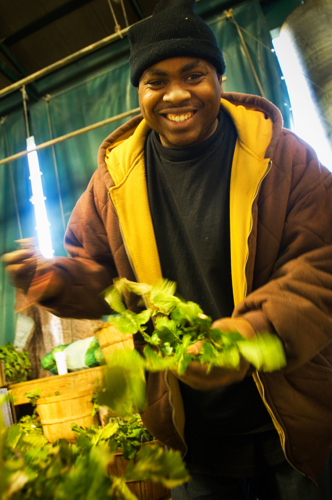
David Choby

David Choby
Roman Catholic bishop
By Andy Telli
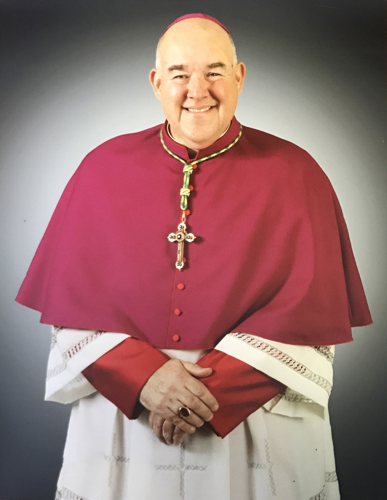
For Bishop David R. Choby of the Catholic Diocese of Nashville, his priesthood of more than four decades was defined by the personal relationships he formed. “The priesthood offers a wonderful opportunity to be a part of people’s lives,” he once said, “from the cradle to the grave.”
Choby made many lifelong friends among the people he served as a priest. He celebrated birthdays and holidays with them. He baptized their children as infants and married them as young adults. His friends were with him for the joyful occasion of his installation as the 11th Bishop of Nashville in February 2006, only the second native of the diocese tapped to be its leader. And they were there through his years of declining health and at his bedside when he died in June.
It was Bishop Choby’s ability to make a personal connection that helped him in two areas that will have an impact on the Diocese of Nashville for many years to come: encouraging men to become priests, and meeting the spiritual needs of the many Catholics from around the world who now call Middle Tennessee home.
Choby waged a one-man campaign to reverse the growing shortage of priests. During his 11-year tenure, Choby oversaw a boom in the number of seminarians preparing for the priesthood and ordained 28 new priests — about 40 percent of the priests in active ministry in the diocese. And with each one, he made a personal connection, serving as their spiritual adviser and friend. The seminarians, one said, “knew we were his pride and joy.”
The bishop cast his net far beyond the borders of the diocese to find men called to the priesthood, welcoming seminarians from Vietnam, Kenya, Brazil and Mexico.
“What it reflects is the fact that young men from any number of different cultures and places have the same experience and attitude and regard to the value of the Catholic faith,” Choby once said. “And they’re attracted to it.”
The changing faces of the men serving at the altar matched the changing faces of the people in the pews. Demographic change in Middle Tennessee meant Bishop Choby was tasked with meeting the spiritual needs of Catholics who had grown up in a variety of cultures, each with its own religious traditions. He responded by working to provide various ethnic communities of Catholics a place to worship in their native tongue and a chance to hold on to their religious culture. He dedicated churches and a chapel for two Latino congregations, Korean Catholics, Coptic Catholics and Burmese Catholics. At the time of Bishop Choby’s death, regular Masses were celebrated for communities from Spanish-speaking Latin America; Vietnam; Korea; Sudan; Egypt; French-speaking former colonies of France such as Haiti, the Republic of Congo, Ghana and the Ivory Coast; India; Nigeria; and Portuguese-speaking Brazil.
Matt Lackey
Chef
By Samantha Nawrocki
In our kitchen at The 404, hardly a day goes by that someone doesn’t begin a sentence with “Do y’all remember that time Matt Lackey ...” Even members of our team who never met him say they feel like they know him from the stories. Working with Matt at Flyte was never easy, but it was always exciting. Each day brought the thrill of some new ingredient or technique. The relentlessness of his passion for Southern food was contagious, and the rest of us of us would spend the afternoon adapting to something unexpected he dreamed up while we were already dealing with nearly impossible to-do lists. Through all of the chaotic days and nights, he retained an unparalleled focus to provide our diners with the best dining experience possible. Matt’s intensity undoubtedly created better chefs and stronger people around him.
At the end of the day, when everyone was spent, Matt was always the first to want to buy you a beer. Outside of work, his often irreverent and always over-the-top sense of humor made him stand out. He never left anyone out — especially if they wanted to be. If you were going through something, he wanted to throw you a party, and not just any party. Coping with a bad breakup? If you were around Matt Lackey, you were in for the night of your life.
Matt’s spirit of adventure eventually took him west to Colorado, where he no doubt continued to explore new flavors while teaching the world about the food closest to his heart — he was a great ambassador for Southern cuisine. He died at 31 in a Colorado climbing accident. I hope we can all do him proud by continuing to celebrate the farmers, recipes and food that he loved.
Margaret Ann Robinson

Margaret Ann Robinson
Library patron
By Donna Nicely
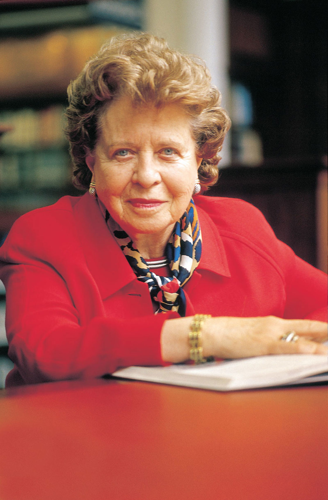
I met Margaret Ann Robinson in 1994, when I came to the city to be interviewed for the position of library director of the Nashville Public Library. She was chair of the board. After a grueling day of interviews, late in the afternoon she took me to the mayor’s office for the final conversation of the day. As we waited, she took a long look at me and stated, “You need lipstick!” And that is how our friendship began: frank, loving and funny.
Margaret Ann loved the public library, and served on its governing board for more than 30 years. She celebrated its openness, its mission to serve everyone in the community. She was generous with the library staff, often attending staff functions to express appreciation for their work. She was one of the most cordial and welcoming persons I have ever met, but she had the ability to take the measure of a person after a few minutes of acquaintance. This came in handy when we were working with Metro Council members, meeting with donors or working through details of library design. One time we met with a property owner to look over a possible library site. Even though he kept extolling the potential, it was clear the land was not suitable. Margaret Ann was gracious, but afterward commented tartly, “Who does he think we are — little old ladies in tennis shoes?”
Margaret Ann was always ready to put her time, energy and resources into supporting the library, and she encouraged others to do the same. She was instrumental in establishing the Nashville Public Library Foundation, which provides enrichment funds for special library programs.
In 1998, when Robert Stern of Robert A.M. Stern Architects was competing for the main library design contract, he met with a small staff group and Margaret Ann. When he proposed creating a formal interior garden — an unusual feature in a library — Margaret Ann’s eyes lit up. She knew immediately that was the setting for her family’s legacy. She and her husband Walter provided the landmark endowment to ensure that the main library garden retains its beauty forever.
As the discussion with Mr. Stern continued that day at the Richland Branch Library, the sky grew dark and the trees outside the window bent in a ferocious wind. As Margaret Ann would say while telling this story, “You could hear the blinds rattle.” Sirens blared. The historic Nashville tornado was upon us! The group rushed into the most secure place in the building — the ladies’ room. And even though we knew things were serious, we couldn’t help but appreciate the humor of our situation.
It was a privilege to be her friend.
Edwin S. Gleaves
Dean and archivist By Betsy Phillips
It’d be very easy to write a long piece just about Edwin Gleaves’ many accomplishments — from his long and esteemed career teaching a generation of librarians at Peabody College to his time at the helm of the Tennessee State Library and Archives. But one doesn’t actually have to make a case for the importance of a man who was a college dean and then ran an important part of the state government. His titles do that all by themselves.
And truly, Gleaves’ passing is such a loss not because he was a prominent person in town, but because he had such a generous spirit and a voracious curiosity. Gleaves learned Spanish just because he was embarrassed that his younger brother could speak it and he couldn’t. But that bit of sibling rivalry led to a lifelong interest in Latin America. It also led Gleaves to volunteer as a translator at the Siloam Family Health Center.
He championed diversity at Peabody and often said his students and their accomplishments were the legacy that made him the most proud. He could speak at length about history and place current events in their historical context, but he didn’t dwell only in the past. As soon as he heard about this newfangled thing called “email” in the 1980s, he hunted down someone in the state who had it, and got that person to show him how it worked. Email at that time was only white letters on a black screen, but Gleaves immediately saw that electronic communication was going to be important. The Tennessee State Library and Archives was one of the first state entities to adopt email.
Gleaves worked tirelessly to make the TSLA a statewide resource. He was an early champion of the Tennessee Electronic Library — which he wanted to call ELVIS (Electronic Library Virtual Information System), but alas, he lost that fight — a program that makes many of the resources of the TSLA available to any Tennessean with a computer. This set the groundwork for current digitizing efforts, such as the amazing collection of historical maps available online, and the whole of the Tennessee Virtual Archive.
Gleaves saw libraries as intellectual and physical refuges for people. He believed in the power of books and information to transform lives, and he was eager to find as many ways as he could to put people in libraries, and to put libraries where people could use them.
Frank Trew
Donelson advocate
By Jeff Syracuse
I first met Frank Trew at a meeting for the Donelson Gateway Project when we needed help with our website. As I quickly learned, my new friend’s skill set was widespread, and he used it to successfully serve his community in extraordinary ways.
Frank graduated from the University of Tennessee and became a paramedic, working for Cheatham County for years. After obtaining his paramedic license, he became very active with the Davidson County Rescue Squad, a 75-plus-year-old, all-volunteer organization that provides search and rescue services in Nashville. Frank also volunteered as a paramedic at Hermitage Landing (now Nashville Shores).
Frank helped form the Lincoya Hills Neighborhood Association, which became a model for how neighbors come together for the greater good of all. He served for a time as president, and like all good neighborhood leaders, Frank brought his professional and personal skills to work on behalf of Lincoya Hills.
I worked with Hip Donelson founder Andrew Bradley to take advantage of the benefits of the communication network that Facebook provides — something Hip Donelson was capitalizing on — and I began to add neighborhood and community leaders to keep it growing. Frank had the same realization that I had, and soon after, he, Andrew and I began to meet regularly. Thanks to Frank’s leadership, Hip Donelson has been able to build an increasingly stronger organic network while at the same time creating a bona fide nonprofit organization that serves the community with great success. It is an incredible testament to Frank’s leadership that the organization has come so far.
When it came to creating the Hip Donelson Community Farmers Market, nobody in the original group had ever worked in a farmers market — but Frank coalesced the passions and skills of those involved in the early days to create the foundation for what has become one of the most successful markets in Middle Tennessee. More than 200,000 visitors have attended since the market opening in 2012, and vendors have sold more than $1 million in produce.
Additionally, Hip Donelson was the first market to partner with Piedmont Natural Gas in offering double-SNAP benefits to provide healthy food for at-risk schoolchildren and families in need. Frank went on to become a founding member of the Tennessee State Farmers Market Association — he was elected president — and was appointed by Mayor Karl Dean to the Metro Human Relations Commission, reappointed by Mayor Megan Barry and served as chairman.
Donelson will miss one of its biggest champions.
Betty Lentz Gray
Educator
By Pat Nolan
Most of us have favorite teachers from high school. That was certainly true for me, even in classes where I didn’t get the best grades.
Betty Lentz Gray taught me chemistry at Father Ryan High School in 1967-68, my junior year. I did well fall semester, working mostly in textbook theory. But when our classwork went into the lab the next spring? Well, at least I didn’t blow up the school.
When Mrs. Gray died in September, I posted her obituary online and found a lot of my classmates and others had similar remembrances, even several decades later.
“I had her for chemistry, and by the grace of God and her help, I passed,” wrote one friend. “I found freshman chemistry at Vanderbilt easier because of her.”
“She was remarkable and so patient with us, and challenging us to observe and think!” wrote another. “I can remember Jay Catignani and I distilling wine in her class and a resulting explosion sending wine everywhere.”
One remembrance came from a student at Brentwood Academy, where she taught after leaving Father Ryan: “Students were thankful for the things she taught us not just about science, but about life. Blessings and peace to her family.”
But one of the most insightful notes came from an African-American classmate at Father Ryan, Lindsey Draper. He remembers April 1968, the morning after the Martin Luther King assassination, when the National Guard was bivouacked in nearby Centennial Park, behind the school.
“All the other teachers treated it as just another class day,” Draper said. “But not Mrs. Gray. When we entered class, I remember her saying: ‘They expect me to teach chemistry today. I can’t do that — I’ve never lived in occupied territory before. And I can’t imagine being Ted [Lenox] or Lindsey.’
“What impressed me the most about Betty was that she didn’t search us down and have some private conversation, but that she raised the issue in front of the whole class. That’s what separated her from other teachers. Anyone can do stuff in private — she was upfront.”
Tony Cross
Women’s basketball coach
By Steve Cavendish
I’ll always remember Tony Cross for his ability to pick up a split.
Belmont’s longtime women’s basketball coach was tasked with teaching a few classes during his quarter-century at the school, mostly in the Physical Education section of the catalog. While some coaches taught classes called Lifetime Fitness or some version of Health, Cross taught bowling at the Melrose Lanes on Tuesdays and Thursdays.
Knowledgeable students knew that if you took the afternoon class you could do a little (non-school-approved) day drinking at Melrose Billiards to be nice and limber before walking upstairs to “class.” Cross didn’t care that some students might be buzzed, only that they took their lessons seriously.
“Follow the arrows,” the tall Cross intoned before effortlessly picking up a tricky 5-7 split.
He was less laid-back on the sidelines — apprenticing under Tennessee legend Pat Summitt imparts something about intensity — but was always approachable off the court. He inherited an unheralded Belmont side in 1984 and built them into an NAIA power and later a solid NCAA competitor. His counterpart on the men’s team, Rick Byrd, got much credit for taking the school to the NCAA tournament for the first time in 2006, but Cross followed him the next year, with his Atlantic Sun champions and Big Dance invitees.
After the 2010 season, Cross and Belmont parted ways, with the coach joining the Murray State staff as an assistant until his death. With the Racers, he focused on player development and academics, something he was known for with the Bruins: Nine of his Belmont teams were named to the Top 25 Honor Roll for academic performance.
He remains the winningest coach in the program’s history and ranks in the Top 50 all-time in NCAA women’s basketball for career victories.
That’s impressive, but he was an even better guy off the court.
Max Barry
Son
By Bruce Barry
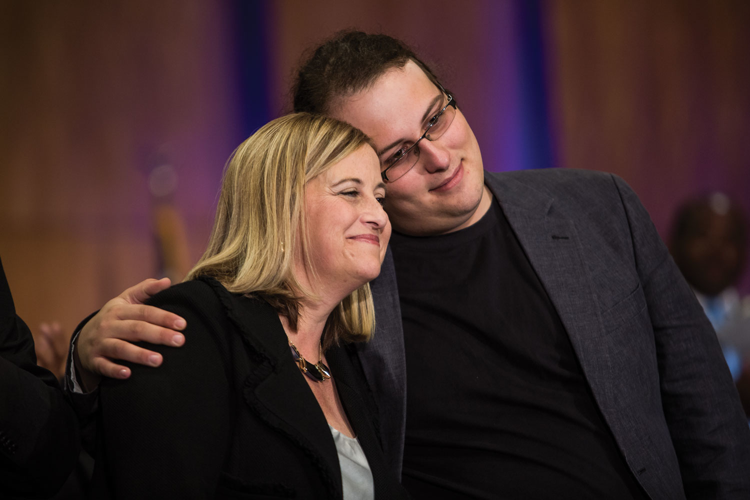
Editor’s note: On July 29, Max Barry, the son of Mayor Megan Barry and husband Bruce (a longtime Scene contributor), died in Denver after a drug overdose. This is a transcript of the remarks given by Bruce at Max’s memorial service, held at the Belcourt.
One thing that I’ve learned in the last couple of days is that this crushing weight of sadness and loss has an incredible emotional counterweight called community. I learned this about a thousand times last night at the Blair School, and as Tommy [Prine] so perfectly put it, there is this hole in our hearts. … I want to say that this warm embrace from an incredible family and community and an astounding city fills that hole in a lot of ways.
We have been quite open about the circumstances that bring us here, about the circumstances that happened last Saturday in Colorado. We think that’s important, Megan and I, for people to understand about the mistake he made. And we, of all ages, have made incredible mistakes in our lives, and we almost always walk away from them. And he made one that you don’t walk away from. But the point I really want to make here is that the circumstances last Saturday in Denver tell the story of his death, and not the story of his life. The person he really was is not the person who was there on Saturday.
Talking about how much Max loved life — he loved music so much. He loved comedy so much, things that would make him laugh. He loved adventure. He also loved breakfast. This is something that we both genetically passed on to him — the power of a great breakfast on a lazy Saturday, you can rule the world with that. There’s a cliché, “the journey is the destination,” we’ve all heard it. It can be restated as “half the fun is getting there.” I think for Max all of the fun was getting there. One of the reasons why his friends found his presence and his force and his companionship just so compelling is because the journey was where it was at, and being with him for that. It was never about where we were going.
Richard Dinkins talked about Max’s incredible talents and coordination on a playing field, but the other thing about Max on the playing field was that he did not have — and for some people this is probably a flaw, but not for him — he did not have a competitive bone in his body. He also played small kids’ soccer for a while (22 kids and a cloud of dust). I noticed that kids who were really good at this and the ones who continued to play were the ones who “must win” and hate losing.
And that wasn’t Max. He didn’t want to beat the other team, he wanted to meet the other team. I just think that’s the person he was — warm, sensitive, tolerant. An inquisitive, companionable person.
The people we love and know, spouses and parents and children, we capture each other with moments, frozen moments in time that define our relationships. I’ll share one very quickly. A few years ago, Megan and Max and I were in Alaska — we had an occasion out west for a family wedding and we snuck in a side trip — and as part of that we were on a boat for a few days, cruising around Alaskan sounds. It wasn’t one of those big cruise ships, it was a boat with maybe 50 people and a naturalist — very groovy. And as part of that one day, there was little side trip where we were rafting on a glacial lake. It was an incredible place, just the three of us. It was stark, cold, even though it was August. It was one of those places where your inner thought is, “Holy cow, this is amazing.”
And the thing I want to say about this is it’s not that we ever needed to turn to each other and say that. It’s that we were living this fantastic, breathtaking outdoor moment through each other’s eyes, the three of us. And that’s the kind of moment where you’re not a parent of a child, you’re just individuals. And you hope you come to know your children not just as children, but individuals, where you understand each other in this perfect, exquisite way. And what I learned yesterday, meeting so many people over at the Blair School, is that for a lot of people, to use a phrase that’s suitable for a movie theater, Max had a co-starring role in a lot of those moments. And I learned that from people I didn’t even know. It’s just astounding. And I would say that having those moments and keeping them with you is how you take that hole in your heart and fill it the rest of the way up.

Megan and Max Barry
Fausto Flores
Construction worker
By Steven Hale
In a city where cranes line the streets like tall palm trees in Southern California, there are hundreds of construction workers on the job every day. Fausto Flores was one of them. On the morning of July 22, the 42-year-old was cutting a wooden handrail on the fourth floor of what is now the Solis North Gulch apartment complex when he fell to his death. He was the third Nashville construction worker to die on the job in as many months, following the deaths of Sergio Gutiérrez (age 30) in May and Alfonso Dominguez (age 61) in July. The series of incidents prompted investigation by state regulators and protests by workers’ rights groups.
Electrician Tim Maiz, who worked with Flores, spoke to WSMV about his fallen co-worker: “He worked hard. He was here every day on time. What can you say? He was just a hardworking man trying to make a living.” Indeed, what can you say? Even in the best circumstances, the men and women who have transformed Nashville’s skyline with the work of their hands are often overlooked. The towers the city celebrates stand as a testament to their labor and reminder of the ones lost.
Eric Mumaw

Eric Mumaw
Metro police officer
By Steven Hale
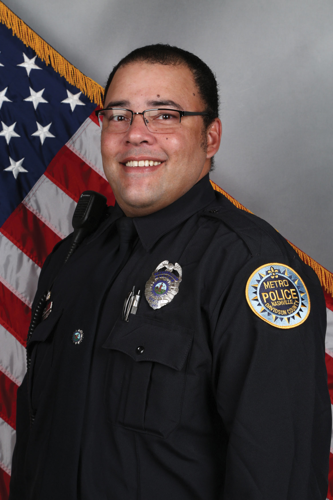
Metro Police Officer Eric Mumaw could not have known that the call he responded to shortly after 4 a.m. on Feb. 2 would be his last. Thankfully, the number of police officers nationwide who die in the line of duty has consistently decreased in recent years. But Mumaw’s story underscores the fact that for an officer and their family, there is always a risk.
On that February morning, Mumaw — an 18-year veteran of the MNPD — and two other officers responded to a report of a suicidal woman sitting in her car on a boat ramp at the edge of the Cumberland River. As they tried to talk her down, the car began to move into the river. (Police allege she put the car into gear.) Mumaw was pulled into the frigid water and drowned.
“Officer Mumaw dedicated his life to the safety and protection of us all, and today he gave his life to that calling,” said Mayor Megan Barry in a statement later that day, confirming his death. Eulogizing Mumaw at a memorial service, Metro Police Chief Steve Anderson noted the officer’s involvement in the Shop With a Cop program. As part of the program, an 11-year-old boy named Xavier — who might not have been able to give or receive gifts otherwise — had gone shopping for Christmas presents with Mumaw, buying gifts for his mother, his siblings and himself. The boy was quoted by WSMV in a story about the program, describing his time with the late officer: “He was a good man. I wish he was my father.”
The highest calling for a police officer is to protect and serve. And on the last morning of his life, Eric Mumaw did not hesitate to answer it.
Jocques Clemmons

Jocques Clemmons
Son, father, community member
By Steven Hale
If you try to ask Sheila Clemmons Lee what she remembers most vividly about her late son Jocques Clemmons, she won’t even let you finish the question before she answers.
“His smile,” she says.
Among other reasons, that’s why the photo that accompanied the Metro Nashville Police Department news release announcing that Clemmons had been shot by an officer — a straightfaced mugshot — bothered his family and so many others who’d known him. It didn’t sum up who he was any more than the 51-second clip of the incident that led to his death.
Shortly after 1 p.m. on Feb. 10, Clemmons ran a stop sign and pulled into a parking lot at East Nashville’s James A. Cayce Homes. Officer Josh Lippert pulled in behind him. Clemmons tried to run, first around Lippert, then away from him as the officer gave chase across a parking lot. After a brief scuffle, Clemmons tried to run again when Lippert shot him three times. Police said Clemmons dropped a gun he’d been carrying during the scuffle and picked it back up. District Attorney Glenn Funk ultimately decided not to pursue charges against Lippert.
Shortly after the shooting, Lee got a call from Clemmons’ girlfriend — the mother of his two sons, Jae’vion, 14, and Jae’suan, 9 — who was screaming into the phone. Eventually, she slowed down enough for Lee to hear what she was saying.
“She said, ‘Jocques, your son, has been shot,’ ” Lee says. “And at that point I really just blanked out.”
On the way to the hospital, she says, she started saying it out loud: “My son is gone.” When she got to the hospital, she told anyone who would listen, “Just tell me what I already know.” Eventually, they did. But the police would not let her identify his body — they had to protect the evidence. She says a detective on duty asked her whether her son had a criminal record.
“Basically, that’s how they ID’d him,” she says.
But that’s not who he was. Jocques Clemmons was the joyful little boy, the young man, the uncle and the father. After he died, Lee says, his kindergarten teacher reached out to share the first thing she thought of when she heard what happened — his smile.
Jane Anderson Dudley
Philanthropist
By Kay West
The headline for Jane Anderson Dudley’s obituary that ran in the Palm Beach Daily News, a sister publication of the Palm Beach Post that covers the social affairs of the wealthy residents of the island, read thus: “Jane Dudley, among last of Palm Beach’s Old Guard, dies in Tennessee.” It is accompanied by a black-and-white photo of glamorous Jane — was she ever anything other than glamorous? — cheek to cheek with Bob Hope at the Cancer Ball in The Colony in February 1973. (She chaired the event that year and four more times.)
The obit leads by calling her “a longtime Palm Beach winter resident and a stalwart of the island’s society and fashion sets.”
It is true that she and her late husband of 52 years, the equally soigné and sophisticated Guilford Dudley Jr., wintered in Palm Beach, attended countless balls in New York, entertained grandly in Washington, D.C., during Ronald Reagan’s two terms, lived in Denmark during Guilford’s post as ambassador to that country and traveled the world as passport-carrying members of the international jet set. But the obituary written by her family makes perfectly clear that she was of Nashville, and repeated her assertion that she lived much of her life within a one-mile radius of where she was born.
Indeed, she was steeped in Old Nashville — her father was the coach of the Vanderbilt track team and she was a graduate of the Parmer School, Ward-Belmont Ladies Seminary (a preparatory high school) and Vanderbilt University. She worked for The Tennessean newspaper after college, and in 1952, she married Guilford Dudley Jr., who had just been named president of the Life & Casualty Insurance Co.
The first gala the young Mrs. Dudley chaired was the Bal d’Hiver, the first charity ball to be held at the Belle Meade Country Club. Through her lifetime, she chaired more than 25 charity events around the world, raising millions of dollars, but none meant more to her than the one she founded not far from her own backyard.
In 1962, answering Cheekwood Museum and Botanical Garden’s call for help to raise funds for the historic site, Dudley created and chaired the first Swan Ball in June 1963. It became the most prestigious white-tie affair (and coveted invitation) in Nashville and was renowned on the society circuit. She chaired it again the second year, and later served as honorary chair and chair of the International Committee. It is one of the nation’s longest running charity ball.
Two months before her death on Nov. 6, Jane Anderson Dudley attended the dinner for the 2018 Swan Ball Auction Committee and Advisory Committee. In a photograph, sitting serenely and smiling between 2018 Swan Ball chairs Beth Alexander and Patti Smallwood, she is, as always, stylishly and elegantly dressed, her eternally blond shoulder-length bob perfectly coiffed. It is as impossible to imagine Jane Dudley in sweats, minus makeup with her hair pulled into a ponytail as it is to imagine a Swan Ball without its founding and eternal swan.



