

Guy Clark
1941-2016
Songwriter’s songwriter
By Rodney Crowell
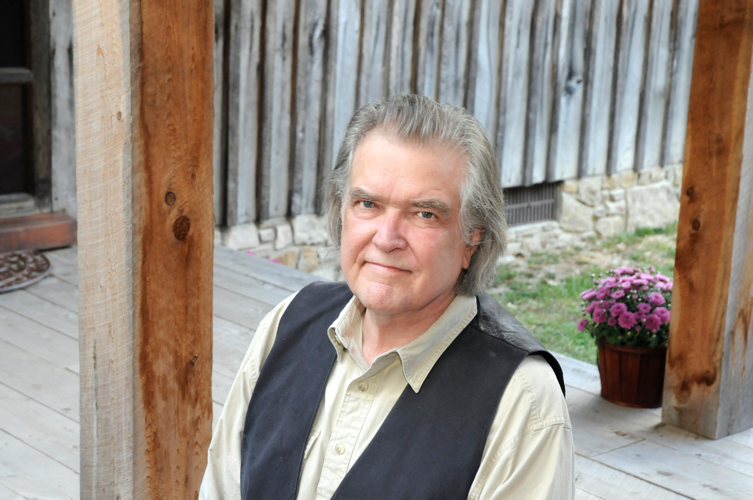
It was on an August afternoon in 1972 that I first heard the name Guy Clark. I’d been in Nashville for perhaps a week and had fallen into the daytime habit of hanging around Centennial Park, strumming a Martin guitar and recycling an amorphous set of less-than-original songs. My preferred audience was the patchouli-scented hippie girls who frequented the grounds, and replacing the bed I’d made of a picnic table on Percy Priest Lake with a roof, feminine body and clean sheets was my main objective.
Sadly, I managed only to attract the attention of a husband-and-wife high-wire act who, for obscure reasons, had quit the circus in favor of the Nashville street scene. The couple listened to three, maybe four songs — enough to form an opinion — before the husband offered up this bit of advice: “You need to find Guy Clark, my friend. He’ll show you what good is.”
By October, I’d landed a job washing dishes at TGI Fridays on Elliston Place and was scaring up extra bucks playing pass-the-hat sets at Bishop’s Pub. Skinny Dennis Sanchez and Richard Dobson were regulars at the pub. Affecting beat poet/literary hobo personas in the country music capital of the world consistently left the duo short of scratch when the rent came due on their Acklen Avenue duplex. Which necessitated my moving in.
A twin bed in proximity to a 6-foot-7, out-of-work bass player wasn’t the situation I’d had in mind. Not that it mattered; during the nine months I roomed with Richard and Dennis, sleep came more often than not as an afterthought. With my dishwashing shift ending at 2 a.m., most nights I came home to find the likes of David Olney, Robin and Linda Williams, Dave Loggins, Johnny Rodriguez, Steve Earle, Rocky Hill, Bronco Newcombe and Mayo Thompson, all hell bent on swapping songs till dawn.
When I first laid eyes on Guy, he was lying face down on my bed, size 13 rough-outs dangling off the end. I’d returned from the regular world to find an afternoon jam session in progress. “I’m Susanna,” said the beautiful stranger who met me at the door, “Guy’s hung over bad and needed a nap. We heard about the new kid from Texas and stopped by to size you up.” And in that instant, the most enchanting woman I’d ever met became a lifelong friend.
As did her husband.
It’s hard to frame in a few words a relationship that spanned four-and-a-half decades. Guy had nine years on me, and I revered him as the older brother I never had. I emulated him. Despite my hero worship, or perhaps because of it, we became trusted friends. Laughter was our deepest bond. As time passed, I became, more or less, my own man, made senseless choices — I hurt him, he hurt me back. Ten years got away during which we seldom laughed. But slowly we found our way back. Perhaps the last 15 years weren’t our best, but in many ways they were the most meaningful.
Guy loathed the word mentor (or pretended to), scorned the notion that he was any such thing. But, from my perspective, it’s so much a part of who he was. His recognition as the “Songwriter’s Songwriter” is as much a byproduct of his readiness to share his knowledge of the songwriting process as for the narrative structure and timeless beauty of his songs. Early on, we’d listen to recordings of Dylan Thomas reading “Under Milk Wood” and “A Child’s Christmas in Wales.” Afterward, he’d explain, “You have to make the language in your songs as seamless and true. To shoot for anything less is to disrespect the craft.”
He kindly introduced me to Mickey Newberry, Jerry Jeff Walker and Townes Van Zandt, and as I developed, made them listen to my songs. Guy’s generosity was boundless. As was his energy. He could out-drink, out-smoke, out-hang and out-encourage every songwriter he came into contact with.
The day he died, Sam Bush, Verlon Thompson, Shawn Camp, Chris and Morgane Stapleton, son Travis, Joy Brogdan and I gathered around the bed to pay our respects and sing him off. The scene set me to thinking about the out-of-work tightrope-walker and the advice he’d given me that long-ago day in the park. And then it hit me: We were at Guy’s side because at one time or another in each of our lives, he’d shown us what was good.

Merle Haggard
Merle Haggard
1937-2016
Country music legend
By Adam Gold
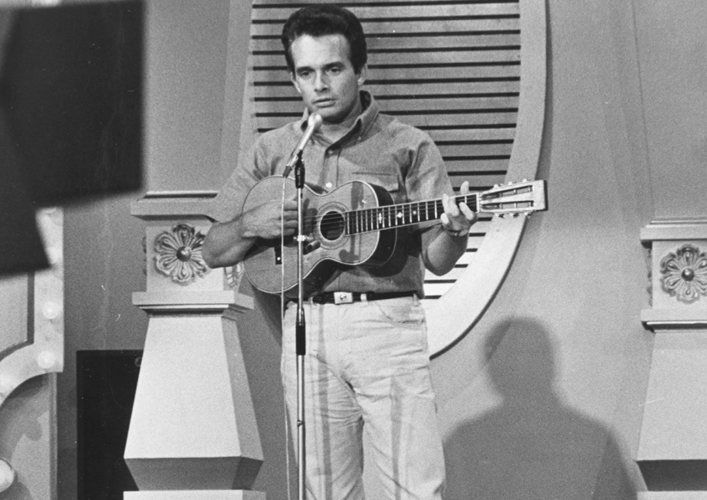
On his own terms, Merle Haggard created one of the richest bodies of work in the history of American music. In Nashville, you don’t get to get away with that — even if you’re the guy who wrote “Mama Tried.” The outlaw country legend and co-sculptor of the rough-hewn Bakersfield sound had 38 country No. 1s between 1966 and 1987. The influence of Haggard hits like “Workin’ Man Blues,” “If We Make It Through December” and “Okie From Muskogee” is simply incalculable.
“It’s what inspired me to be what I have tried to become,” Vince Gill told Billboard in 2013. “I didn’t want to be an interpreter of songs, I wanted to be a writer of songs. That was just as important as being a guitar player or a singer. That history of the songs he has came up with over the past 50 years is unmatched.”
And yet Haggard will be remembered as much for his unwavering integrity and steadfast refusal to let Music Row water down his gravelly croon and lyrical truths about American life.
‘’I’ve never been a guy that can do what people told me,’’ Haggard told The New York Times in 1990, not long after falling out with CBS Nashville over the label’s refusal to release his anti-flag-burning anthem “Me and Crippled Soldiers.”
“It’s always been my nature to fight the system.’’
“He told me a lot of things that I really needed to hear,” Haggard’s late-in-life friend Sturgill Simpson told the Scene in October. “There was no apologies or excuses or watering down or sugarcoating. The first time I met him, within 10 minutes he was saying things and telling me stories that, like, I would never tell anybody [as long as] I ever lived. The sheer humility — [giving] just zero fucks — it was inspiring.”
Born April 6, 1937, in Oildale, Calif., Haggard had a story that couldn’t be more American. He came of age during the Great Depression. He worked on farms, train-hopped around the Golden State and even did a stint in San Quentin before his country star rose. And he spent most of his days in the decades since his chart success faded living on a tour bus, traveling from the theater to theater, singing, working on an album until April 6 of this year, his 79th birthday, and the day he died of complications from pneumonia. Even then, the Hag had a two-night stand set for September.

Candice Ferguson
Candice Ferguson
1978-2016
Local rock advocate, den mother and friend
By D. Patrick Rodgers
The local music scene suffered a great loss in April, when Candice Ferguson of Battle Tapes Recording, who had been undergoing treatment for breast cancer, died at age 37. Candice and her husband Jeremy played a massive role in the local rock community over the past decade, with artists including Turbo Fruits, Pujol, Tristen, Be Your Own Pet, Bully, JEFF the Brotherhood and many more recording at Battle Tapes.
“Candice and Jeremy have always represented to me the best parts of our community,” acclaimed guitarist William Tyler told the Scene in April. “Constant inclusion, constant encouragement, constant vision and enthusiasm for the young people flying the flag in the Nashville music scene.”
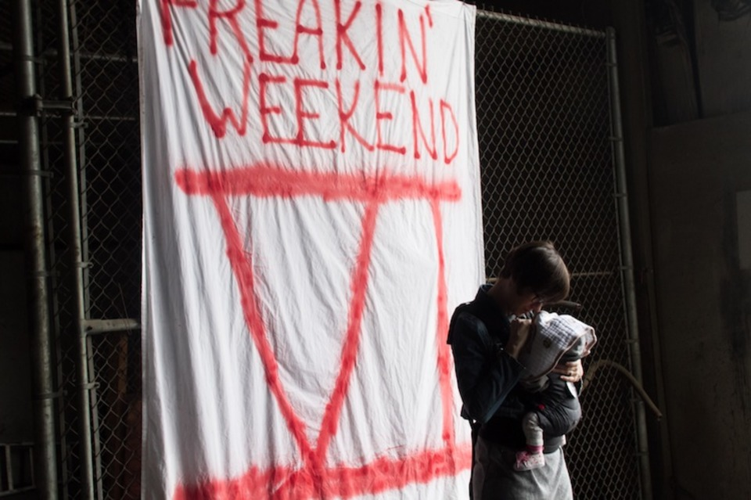
Indeed, Candice — a onetime Grimey’s employee — served as something of a den mother to many local rock ’n’ roll youngsters, attending their shows and making them comfortable during long recording sessions at Battle Tapes. But Candice was more than just a figurative mother. When she died, she left behind a young daughter.
“Beyond her love of music (which was immense; almost all-encompassing), Candice found her favorite thing ever in our daughter Exie,” Jeremy told the Scene. “Proud, delighted, fortunate, in utter love with this being we were so lucky to have, after being so afraid she’d never get to have at least the one child she wanted more than anything.”
Jean Shepard
1933-2016
Grand Ole Opry star, country legend
By Margaret Littman
Jean Shepard, born Ollie Imogene Shepard, might have had just one official No. 1 song in her long career (“A Dear John Letter,” a duet with Ferlin Husky), but she had many other top accolades in the genre she loved. When she died in September, country music lost a performer, but her strong voice keeps playing.
In 2015 Shepard marked 60 years as a member of the Grand Ole Opry. She’s the only woman to have reached the half-century milestone so far, and at the time of her death, she was the longest-running member of the Opry.
Parts of her life, too, read like an old country song. She married fellow country star Hawkshaw Hawkins onstage. He was killed three years later in the same plane crash that killed Patsy Cline.
Fans loved her hits, including “A Satisfied Mind,” “Many Happy Hangovers to You” and “Second Fiddle (to an Old Guitar),” and more than 60 other singles. Even more, they loved her for speaking her mind. She was not a fan of today’s “candy-coated country music,” as she called it. When Blake Shelton called critics of his brand of country “old farts and jackasses,” Shepard soon retorted: “I guess that makes me an old fart. I love country music. I won’t tell you his name, but his initials are BS, and he’s full of it!”
Shepard continued to play and advocate for the honky-tonk music that made her a legend at the Opry and brought her to the Country Music Hall of Fame. When she died, her funeral was open to the public, allowing those who she inspired to pay their respects.
Leon Russell
1942-2016
Rock and Roll Hall of Fame member, master songwriter
By Tim Coats
I was doing sound on a gig with Leon. Edgar Winter was in the band. I think we were in Indianapolis. It was an outdoor show behind a bar, and the band had to walk through the bar to get to the stage. Leon hated doing that.
After the gig, I escorted Edgar back through the bar, when this guy grabs him and says, “I know who you are. You’re the Messiah!” He started quoting Revelations 1:14: “His head and his hairs were white like wool, as white as snow; and his eyes were as a flame of fire.”
I finally got Edgar back to the bus. Leon was up front in his recliner. I said, “Leon, did you know Edgar is Jesus?” Leon, with a totally straight face, looked at me and said, “I thought he was.”

Ralph Stanley and the Clinch Mountain Boys
Ralph Stanley
1927-2016
Bluegrass founding father, underdog
By Jon Weisberger
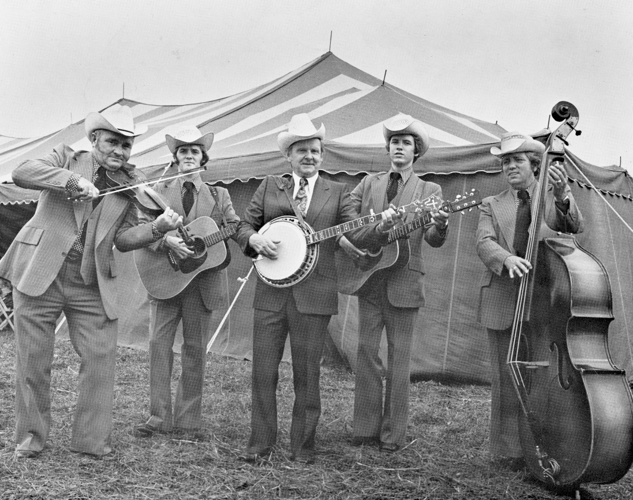
It’s hard to think of another career quite like that of iconic singer and banjo player Ralph Stanley, who died of skin cancer in June at age 89. Nearly 70 years from start to finish, his show-business path began with a bang in late 1946, when his guitar-playing big brother Carter picked him up at the Abingdon, Va., train station — the younger Stanley had mustered out of the Army after serving in occupied Germany — and took him straight onto a stage with a band Carter was already in.
As one of the very first bluegrass bands, The Stanley Brothers struggled to make a living from playing music for nearly 20 years before Carter’s death in 1966, building an extensive catalog of songs and recordings that inspired fierce loyalty from a too-small audience. Even so, the brothers’ legacy was strong enough to put them into the Bluegrass Hall of Fame right behind Bill Monroe, Lester Flatt and Earl Scruggs, who had forged the musical foundation on which the brothers built their own sound.
To those whose awareness of his work dates back no further than his spine-tingling performance of “O Death” in 2000 for the O Brother, Where Art Thou? soundtrack (and the Best Male Country Vocal Performance Grammy it won him), Ralph Stanley seems to have been something of a remote presence. But longtime bluegrass fans and colleagues got to know a different Ralph Stanley. For during the 34 years between Carter’s death in 1966 and the O Brother triumph, he and the musicians who worked for him were relentlessly touring a mostly hardscrabble bluegrass circuit, singing and picking for fans in cow pasture festivals, murky taverns and schoolhouse auditoriums.
The world at large should mourn Stanley’s death as the loss of a unique artist whose greatness resided in his ability to bring the sounds of his mountain home to those who might otherwise have never heard them. But to the bluegrass community, his death is also an occasion to remember what it was like when the world wasn’t ready to hear those sounds, and to pay loving tribute to the depth of feeling, the commitment and the pure and simple determination it took for Ralph Stanley to make them anyway.
Chips Moman
1937-2016
Producer and songwriter
By Edd Hurt
Talking to Chips Moman in August 2012, I figured he would reveal his secrets by indirection, and I should listen attentively. The Country Music Hall of Fame had invited him to visit and tell stories about his career as a record producer, songwriter and guitarist, and I interviewed Moman on the phone at home in Georgia before he traveled to Nashville. His laconic description of his relationship with the band he used to cut the music that came out of his Memphis recording studio, American Sound Studios, provided a clue to his aesthetic: “They brought a lot of ideas. They developed a style.” At American in the late 1960s, Moman and his rhythm section laid the foundation for Moman’s elegant style, which manifests itself on fascinating records by Bobby Womack, B.J. Thomas and Ronnie Milsap. Moman cannily stylizes the music he made with Elvis Presley at American — the Georgia-born ace session guitarist and producer allowed Presley to remain cool even when the songs got heated.
In fact, Moman struck me as decidedly cool even as he told me how much his 1962 split with Jim Stewart of Memphis’ Stax Records had hurt him. Deprived of his royalties for early Stax hits, Moman went to Stewart. “Well, the only thing I can tell you, Chips, is that we’re fucking you out of it,” Stewart forthrightly told Moman. It stung, but Moman went on to make great records and write hits — residing in Nashville in the 1970s and early ’80s, after Memphis began to fade as a recording center, he co-wrote Waylon Jennings’ 1977 “Luckenbach, Texas (Back to the Basics of Love).” Moman’s music came out of soul and aspired to pop. He died June 13 in LaGrange, Ga., one day after his 79th birthday.

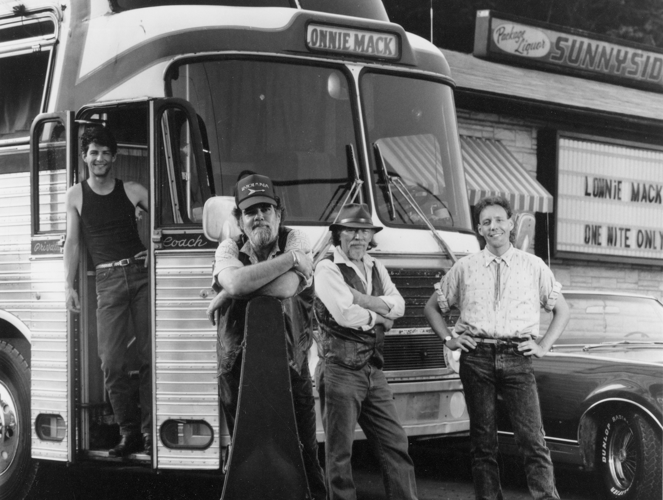
Lonnie Mack and band
Lonnie Mack
1941-2016
Songwriter and guitarist
By Edd Hurt
Lonnie Mack’s 1963 instrumental reading of Chuck Berry’s 1959 “Memphis, Tennessee” updated Berry’s original recording, which had hit in England without making much of an impression in the United States. From Indiana, Mack cut “Memphis” in Cincinnati at the end of a recording session with local R&B sensations The Charmaines, and his mutation of Berry’s tune made its way into the minds of guitar players everywhere. He played a Gibson Flying V guitar he equipped with a Bigsby tailpiece, which allowed him to employ weird vibrato effects. After he used the Bigsby on his 1963 instrumental, “Wham!,” the Bigsby tailpiece became known as the “whammy bar.”
Mack was an early exponent of Virtuoso Blues Guitar, a mode that would be more lucratively taken up by such fellow pickers as Michael Bloomfield and Eric Clapton and in later years by Mack himself, after convolutions of popular taste had once again landed him in the spotlight. “Memphis” contains a solo that students of popular music may compare with Bloomfield’s turn in the version of “Maggie’s Farm” Bob Dylan recorded at his performance at the 1965 Newport Folk Festival. Both solos predict the future of rock guitar, but Mack retreated from the spotlight after the late 1960s. His 1971 full-length The Hills of Indiana may be his strongest album — it’s wistful and all-American in equal measures, and he proved himself a credible soul-country-rock vocalist on the record’s title track. He was never the singer Bobby Bland was, but it didn’t matter. He sings well on his 1963 version of the Bland-associated “Farther Up the Road,” and there was always his guitar to fall back on. Mack died in Smithville, Tenn., on April 21. He was 74.
Remembered ...
John D. Loudermilk, country songwriter who wrote “Tobacco Road,” member of the Nashville Songwriters Hall of Fame.
Courtney Blooding, producer, songwriter and former manager to singer Charice.
Paul Booker, guitar player, mainstay for decades in Nashville’s underground scene.
Clifford Curry, soul singer and longtime Nashville resident best known for his 1967 hit “She Shot a Hole in My Soul.”
Andrew Dorff, Country songwriter who penned No. 1 hits for Blake Shelton and Kenny Chesney.
Holly Dunn, Singer-songwriter behind country hits “Daddy’s Hands” and “You Really Had Me Going.”
Charlie Fite, R&B singer and longtime fixture of the Jefferson Street music scene.
Bob Goldstone, vice president and partner at music distribution, management and marketing company Thirty Tigers, with clients including Jason Isbell and Patty Griffin.
Alex Hartness, guitarist and co-founder of Nashville punk band Bad Cop.
Hubert (Hoot) Hester, fiddle, guitar and mandolin player who founded Western swing ensemble The Time Jumpers.
Leon Jackson, Nashville dance music promoter and proponent.
Marion James, “Queen” of Nashville’s R&B and blues scene, who looked over and promoted its legacy for decades.
Sonny James, Country Music Hall of Fame member known for 1957 No. 1 hit “Young Love.”
Scotty Moore, Former guitar player for Elvis Presley and member of the Rock and Roll Hall of Fame.
Joe Moscheo, music industry executive, Gospel Music Hall of Fame member and backup singer and keyboard player for Elvis Presley.
Steve Young, songwriter known for “Seven Bridges Road” and his contributions to the outlaw country movement.



