

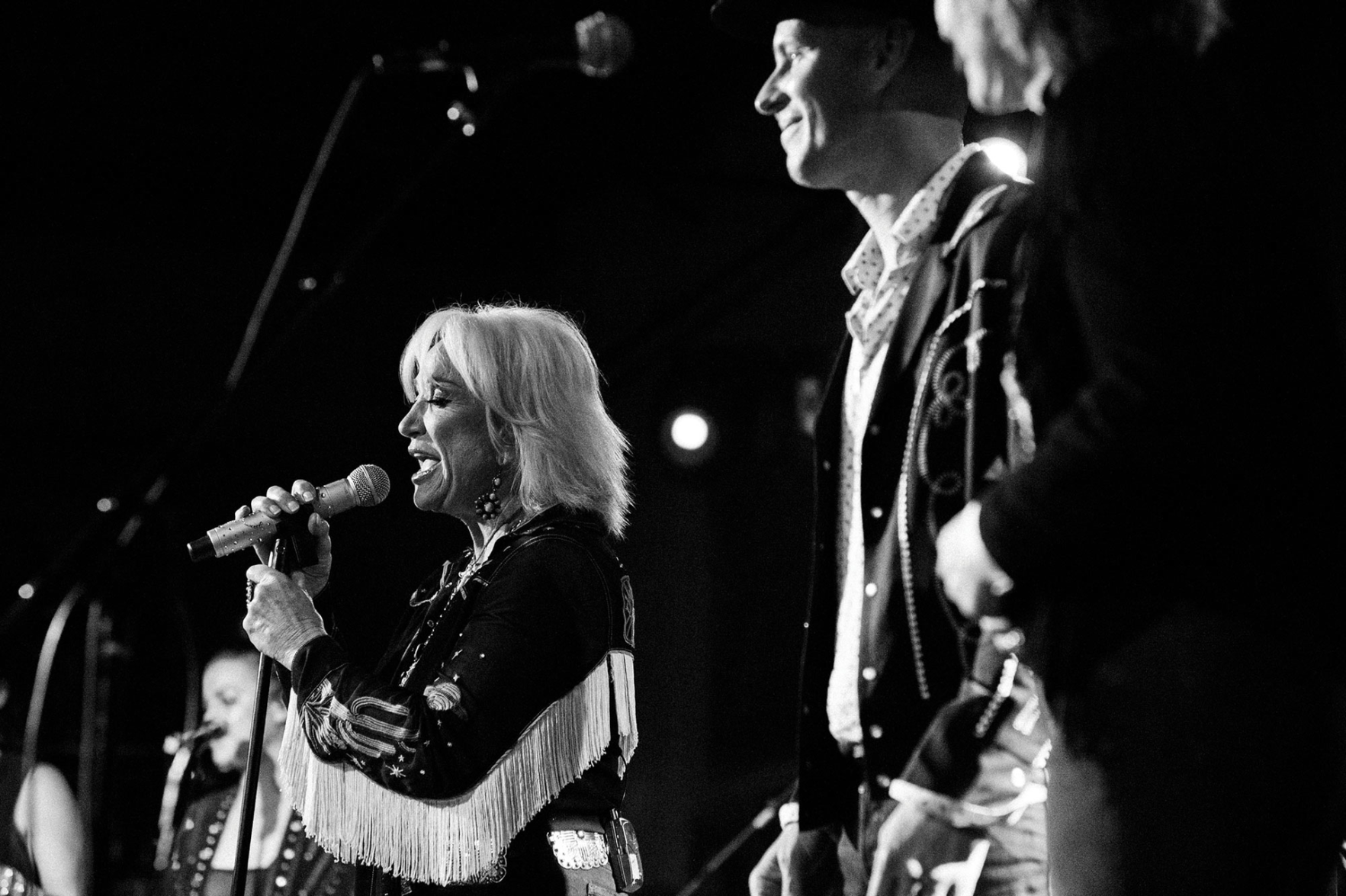
Tanya Tucker at 3rd and Lindsley for AmericanaFest 2019
At press time, only one of Nashville’s independent music venues — venerable songwriter hangout Douglas Corner Cafe, which is the subject of a remembrance in this week's issue — closed permanently due to the pandemic. It’s taken enormous effort and ingenuity to keep it that way since March, when practically the entire live entertainment economy was shut down. The folks who run independent venues are encouraged by the news of vaccines being approved for emergency use and are optimistic about a potential return of live music in 2021. But the span of time that they’ll have to remain closed (or open for a very limited audience) presents a gauntlet of challenges.
“In a world where you can’t make a plan past a day, you can only speculate,” says Ron Brice, owner of long-running Nashville venue 3rd and Lindsley. “We’ve got a plan that hopefully gets us through the next four or five months. If [reopening] comes sooner, that’s great. If it comes later, well then we’ll just bite the bullet and keep on doing it.”
3rd and Lindsley is one of few clubs in town that already had seating for a significant portion of its audience, making social distancing possible inside. They’ve held shows for sold-out crowds of around 160 people, less than 25 percent of their standing-room capacity of 750. Like other venues, the business is in survival mode, a state that it can’t maintain indefinitely.
After this issue went to press, a new pandemic financial relief package made its way through Congress. While it is far from perfect and many specifics remain unclear, it does include money earmarked for live music venues, per the Save Our Stages Act endorsed by the National Independent Venue Association. Venues form a network across the country that can't get back to anything like business-as-usual until many clubs can open; a tour doesn't make financial sense if an artist can't play in several markets. Saving as many as possible is vital.
In the summer, a group of 15 independent venues called Music Venue Alliance Nashville received an allotment of $2 million in CARES Act funds via Metro Council. That was a huge help, notes Exit/In owner Chris Cobb, but venues are rightfully at the back of a very long line for getting more. The Nashville Convention & Visitors Corp helped MVAN organize a streaming music fest called Music City Bandwidth, and Two Rivers Ford launched a merch campaign called Drive the Music. Both of those endeavors generated significant donations. The organization has received enough in donations that it was able to disburse money to member venues in mid-December, and is in the process of beefing up its own merch line.
“We keep approaching the end of the runway where we’re going to crash, and then it gets extended,” says Cobb, a charter member of both NIVA and MVAN. “We’ve repeated that, I guess about four times now. We’ll see if we’re able to again.”
Most venues have hosted at least some livestream shows. Todd Sherwood and Travis Collinsworth, co-owners of Five Points staple The 5 Spot, spent much of 2020 turning the room into a livestream studio. In late summer, they shifted to a pay-per-view model, streaming most shows via the StageIt platform. It’s been a qualified success.
“The money raised on each show is similar to Nashville’s daily COVID cases,” says Sherwood. “Some days there is a huge spike in ticket sales, some days it is real low, but it’s an upward trend with a much higher average than previous months. It will not replace the bar business that had a 20-person staff.”
When case numbers eventually dwindle and restrictions relax, there will still be an uneasy period before both go away completely. Mike Simon is programming manager at City Winery, which has socially distanced seating and a full slate of precautions in place to minimize the possibility of an infected guest transmitting the disease. He praises his staff and the majority of guests for their diligence in reducing, if not eliminating, the risk.
“There have definitely been some instances where guests pushed back on wearing masks,” says Simon. “And we’ve seen some people not wanting to do a wellness check at the door or to give us their name, and so we’ve had to turn them away. The bottom line is that if you’re not willing to wear a mask or to do a wellness check before entering our building or wine garden, then this is not the experience for you. Our ability to continue to operate in this very limited capacity depends on every person following the rules.”



Post a comment as anonymous
Report
Watch this discussion.
(0) comments
Welcome to the discussion.
Log In
Welcome to the discussion.
Keep it clean. Please avoid obscene, vulgar, lewd, racist or otherwise abusive language. Comments featuring hate speech or threatening or violent content will not be tolerated.
PLEASE TURN OFF YOUR CAPS LOCK.
Be truthful. Don't knowingly lie or mislead.
Be proactive. Use the “report” link on any comment that violates our comment policy.
Share with us. We'd love to hear your feedback.