
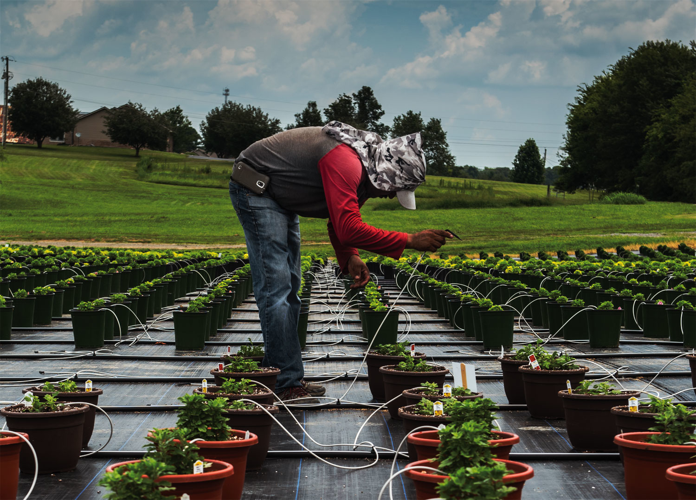
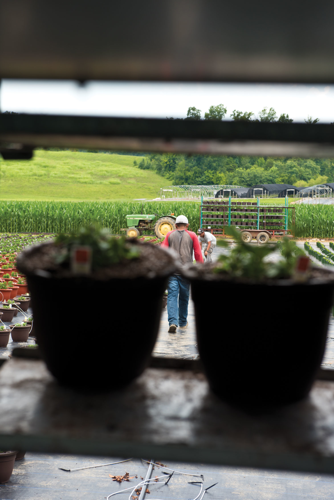
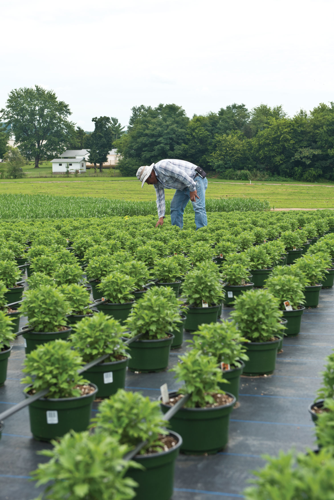
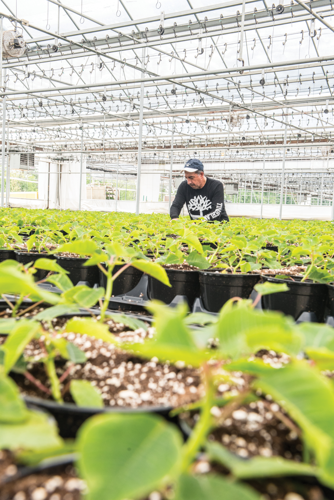
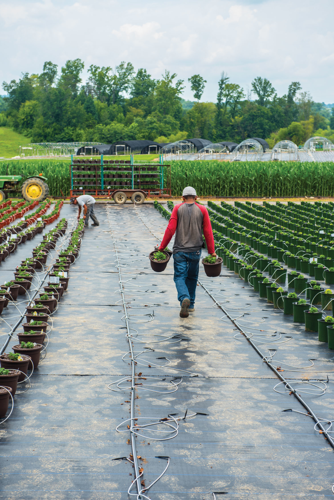

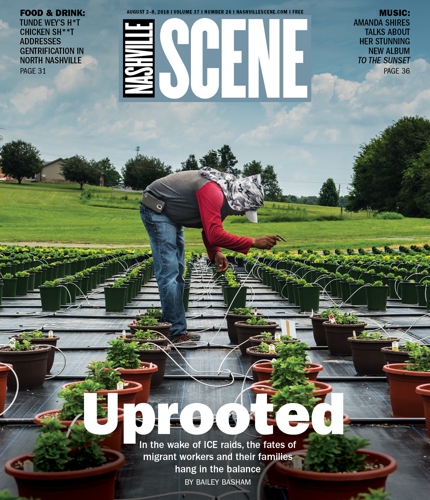


H-2A visa workers at Pope’s Plant Farm
On the morning of April 5, Alberto Librado got up early, dressed for work and said goodbye to his wife Aneth and their three children before walking out the door. None of them knew it then, but he wouldn’t be back home for a month.
Nothing seemed out of the ordinary that day. Librado greeted his co-workers at Southeastern Provision, clocked in and got started on the day’s pallets. At the Morristown, Tenn., meatpacking plant, Librado operated the forklift, moving supplies around the facility and unloading goods from incoming trucks. Many of his co-workers had more gruesome jobs — jobs like removing nails from cow hooves, operating machinery to detach the skin from the cows’ faces and squeegeeing blood off the floor after the animal had been processed for sale.
Librado has called Tennessee home for the past 14 years. He first came to the States from Mexico when his family fell on hard times. He had family in Tennessee, and moved here in hopes of making money to help support them. Agriculture is one of Tennessee’s bedrock industries — according to the University of Tennessee’s Institute of Agriculture, the industry pulls in almost $40 billion annually. For many like Librado, coming to America to work in agriculture is a means of survival.
Librado remembers the day of the raid well — the day when one of his worst nightmares was realized. It felt to him like just another day at work, until he heard the helicopters. He was outside the facility that morning, and was one of the first undocumented workers detained. Ultimately, 97 people at the East Tennessee facility were detained on April 5.
“There was two helicopters that arrived,” says Librado. “I was driving the forklift, and I saw ICE, the police and the National Guard. Everything happened quickly.”
Librado was arrested and taken to a holding facility because there was no space in the detention facility in Louisiana. Tammy Spicer, a spokeswoman for Immigration and Customs Enforcement (ICE), says of the 97 undocumented workers who were arrested, 10 were arrested on federal criminal charges, one was arrested on state charges, and 86 were arrested on administrative charges.

Alberto Librado
President Trump ran his campaign on promises of increased ICE presence in areas populated by Latinos, and the mass deportation of those in the United States illegally. As of December 2017, arrests by ICE had increased by 30 percent over the previous year.
In small communities like Morristown (about 50 miles northwest of Knoxville), Trump’s policies remain popular. Trump won 61 percent of the vote in Tennessee, and his approval rating has remained steady. As of April, 56 percent of Tennesseans approved of how Trump has handled his job as president. Many in the South remain hopeful that he will restore American jobs, lower taxes for the working class and make good on his promise to make Mexico pay for a wall on the southern border of the U.S.
But for some in the state, hope surrounding Trump’s future policies is slim.
Families with roots in Morristown for more than 20 years suddenly felt unsafe driving to work or sitting among their neighbors in the church pews on Sunday. Kids stayed home from school. Now farmers across the state worry that it will become even harder to find labor to harvest their crops.
Tennessee has an estimated immigrant population of more than 320,000, and farming and commerce account for nearly 12 percent of Tennessee’s economy. According to the Economic Policy Institute, an estimated 1.42 million temporary foreign workers were authorized in the U.S. in 2013. The U.S. Department of Labor says nearly half of U.S. farm workers are undocumented immigrants.
In Hamblen County, about 11 percent of the population is Latino. In fiscal 2016, Morristown, which is Hamblen’s county seat, was the city with the highest number of requests for temporary agricultural employment (H-2A visa workers) in the state.
A recent study by the New American Economy, an organization of mayors and business leaders that supports immigration reform, found that in North Carolina, only 268 of the state’s nearly 500,000 unemployed residents applied for the 6,500 available agriculture jobs. More than 90 percent of those who applied were hired, but less than 70 percent of those hired showed up on the first day. Of those who came to work, only seven people worked for the entire growing season.
Wade Munday is executive director of Tennessee Justice for Our Neighbors, an organization that provides affordable legal services to immigrants and educates communities on immigration issues. He says the jobs migrant workers take in small farming communities are often jobs that American citizens don’t want.
“Studies have shown that there is virtually no native population in the U.S. that is working on America’s farms,” says Munday. “And in the case of Morristown, the punishment most severe fell to the workers who were taking jobs that not many other people in the community would have taken.”
Harvesters, packers and farmers in agriculture-heavy states like Florida, Georgia, North Carolina and California say the local economy is carried by migrant workers, and any disruption in the flow of workers coming in on H-2A visas could have adverse effects on the industry. In recent years, migrant farm workers have become increasingly difficult for farmers to find — tougher immigration policies and increased border regulation have blocked the already dwindling number of migrant workers interested in coming to the United States.
“Agriculture for a long time was the backbone of Tennessee’s economy, and a lot of counties were focused on that industry to drive them,” says Justyn Settles, who works with Conexión Américas’ Tennessee Migrant Education Program. Settles’ role is to identify and recruit migrant families for the program, which provides economic, academic and community support services. “I think out here, there have been some counties who have been able to advance and move past that. It’s heartbreaking to hear farmers who have been doing this for 60 years say this is their last year, because they may not be able to hire people anymore, but people in the communities are just hunkering down.”
When ICE raided Southeastern Provision in April, many in the community worried that help would become scarce in Tennessee as well. But some Tennessee farmers feel less alarmed.
Walt Dickson of Smoky Mountain Farm in Knoxville says he’s been working with the same migrant workers for years and doesn’t expect that to change anytime soon.
“It’s been a fantastic year for corn and beans, I can tell you that right now,” says Dickson. “There’s dark silk on the corn, and the beans are way up high. We’ve got the same guys we’ve always had out there picking. They’re probably out in the corn right now.”
According to the Tennessee Department of Labor and Workforce, the number of H-2A workers coming to the state this season is up — from 3,944 to 4,159 in a year’s time. That’s a 5.5 percent increase from 2017 to 2018.
Will Pope of Pope’s Plant Farm in Greenback, Tenn., says the increase in H-2A workers in the state makes sense, considering the increased pressure on Hispanic families in small farm towns.
“It seems that if the farms and greenhouses can no longer rely on a local workforce because of increased pressure from ICE and a lack of traditional farm workers, then they might need start to look into programs such as H-2A,” says Pope. “For us, late March, April and May are our busiest months, as we are trying to finish planting and trying to ship out so that we can replant in the same place for our second turn. That requires us to bring in seasonal help.”
Pope, who has been employing H-2A workers for the past 20 years, relies on migrant farm workers to get through peak planting and harvesting season.
The Immigration and Nationality Act was created in 1952 in response to a need in the U.S. for labor. The act introduced a temporary-worker category into the U.S. Department of Labor’s distinctions — the H-2 worker. Many of the agriculture jobs our grandparents and their grandparents performed fell vacant as people pursued more urban and service-oriented occupations, and that left farmers suffering. Farmers needed laborers, migrant workers needed income, and a years-long relationship was born.

An H-2A visa worker at Pope’s Plant Farm
“The way it works is the employer files a petition with the state agency and the federal Department of Labor, who have to approve the terms of the job,” says attorney Caitlin Berberich, manager of Nashville’s branch of Southern Migrant Legal Services. “After that, immigration [officials] would review it, and the employer would get an approval of the number of workers listed in the order. There are workers who move around from state to state sort of subcontracting, but that worker would ultimately be bound to only work for the employer who petitioned for them to come to the U.S. They’re only authorized for the specific state they apply in.”
Berberich explains that since the program’s inception in the ’50s, Tennessee has relied heavily on H-2A workers for farm labor.
“The Southeast has relied more on the program than other parts of the country that have access to a more stable undocumented labor force,” said Berberich. “The effects of things like raids would be an increased usage of the H-2A program, because if you can’t find local work, you would look to something like the H-2A program.”
Conexión Américas’ Settles says the uptick in H-2A workers in Tennessee makes sense — despite large raids by ICE, families still have to put food on the table and buy school supplies and diapers. If that means coming to the States for work and entering communities that have been negatively affected by raids, then so be it.
One woman who has lived in Morristown for 21 years says that after her husband was arrested, she and her family have faced dire struggles. He was detained for two months, and without a means of income, an already stressful situation became almost unbearable. The woman has asked not to be identified for fear of jeopardizing her husband’s August court date.
“We haven’t been able to stabilize ourselves because he’s not able to work,” she says. “I had to borrow $10,000 because that’s how high his bond was set, and we’ve been struggling ever since. When he started [at the meatpacking plant], he was making $6.50 an hour. After nine years there, he was making $11 an hour. He just started working with a friend for 12-hour shifts at $100 a day, and before, it was a steady paycheck. But now it’s up to the supervisor to give him the check whenever he wants to. We’ve been struggling to keep up with our bills.”
She says every time she leaves the house, her six children are scared she won’t return. Stephanie Teatro, co-director of the Tennessee Immigrant and Refugee Rights Coalition, says she’s seen the same fear among the families she works with.
“The trauma of separation doesn’t subside just because someone is released,” says Teatro. “One father who was in detention for six weeks, his daughter starts to panic when he leaves the room because the certainty that she’ll be able to see her dad again is completely gone. This idea may have been a hypothetical before, but now people have a deeper understanding — because people they go to church with or see in town are there one day, and gone the next.”
Settles, who works daily with families moving across the country for work, says that fear is widespread, but it’s become the new normal for many migrant families.

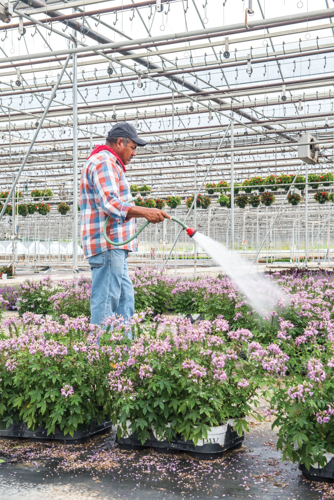
An H-2A visa worker at Pope’s Plant Farm
“One day your family might be together, and the next day you might not,” says Settles. “You’ve got to keep doing what you’ve got to do to survive. One worker told me they knew a crew from Georgia that was not coming up because they were afraid of more raids, but others told me there’s no difference working here compared to other states — they said if ICE is going to find you, they’ll find you anywhere. That seems to be the attitude that a lot of people have had so far. A lot of crews have become more afraid of coming around so much over the last five years, but there’s no greater risk being in Tennessee than in other states.”
Teatro says she felt a shift in the community in the days after the raid. TIRRC set up shop in St. Patrick’s Church in Morristown, engaging in “know your rights” education with the migrants in the community and arranging for powers of attorney to be set up for the families who were affected.
For the families in town who were not affected and didn’t understand what was happening, Teatro says TIRRC’s efforts focused on putting the raid into a broader context.
“It was this idea of folks who just went to work like they had for years and years, and that were just sort of taken one day,” says Teatro. “Helping people see that this raid wasn’t an exception, that this is a reality of mass-deportation rhetoric, helped to answer some of the basic questions the community had. It’s a small town. Everywhere I went getting coffee in the morning and getting dinner in the evening, everybody was talking about what happened. Outside of the families themselves, there was an absence that was felt.”
It took almost a week for Librado to be transferred to the detention facility in Louisiana, and once there, he was kept for a month before he was released on bond. He tried to speak to his family over the phone as often as he could. He remembers how the phone calls never really reassured his youngest daughter, Jeylani. To her, his promises to return began to feel hollow.
“My daughter would say, ‘Where are you, Daddy?’ ” says Librado. “She is 3, and she got mad at me, because she felt like she was being deceived. I kept telling her I’d be there the next day and the next day. Sometimes she would hang up on me because she was so mad. She used to say, ‘It’s not funny, Daddy.’ There is so much suffering involved, and it’s the children that suffer the most.”
Librado is currently waiting for his court date, at which he will learn whether he is able to stay in Tennessee. But for now, all that matters is that he is with his family.
“Being with them just feels normal for me,” he says. “I acknowledge that I’m not from here, but I’m ready for whatever fate awaits me. It’s really upsetting to have to tell my story, but at the same time I have to be ready. Before they take me out, I’m trying to reach out to my neighbors and let them know what is going on with families like mine, so they can plan for any event that is similar to what is happening to me. There is no guarantee that I will be able to stay — right now, I am trying to have them cancel my deportation, and I’m trying to get a work permit so I can support my family and do what is right for them. But if we have to, we’re ready to all go. Until then, we’re going to continue fighting for our rights.”
For many of the families waiting on their court dates, the next few months of stability are something to celebrate.
“The people in the community understand how important the role the meat-processing plants play in the broader economy, and they understand the contribution of the folks who were working there,” says Teatro. “In talking to people, it often came down to, no matter where you stand, most people could agree that Morristown was not better off after this raid. The families’ participation in the community is going to continue to be severely undermined, but people aren’t going to stop working, and they aren’t going to flee the state.
“Life continues to go on. The families will continue to work. They have to.”

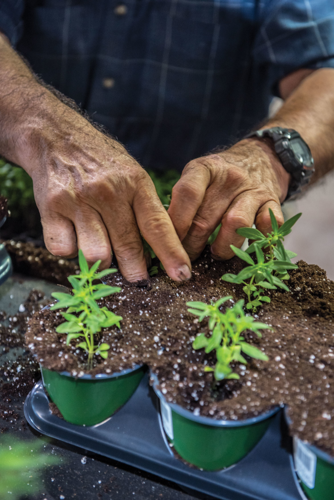
An H-2A visa worker at Pope’s Plant Farm



Post a comment as anonymous
Report
Watch this discussion.
(0) comments
Welcome to the discussion.
Log In
Welcome to the discussion.
Keep it clean. Please avoid obscene, vulgar, lewd, racist or otherwise abusive language. Comments featuring hate speech or threatening or violent content will not be tolerated.
PLEASE TURN OFF YOUR CAPS LOCK.
Be truthful. Don't knowingly lie or mislead.
Be proactive. Use the “report” link on any comment that violates our comment policy.
Share with us. We'd love to hear your feedback.