

As the Metro Nashville Police Department implements a greater police presence throughout Metro Nashville Public Schools, some community members are worried about how that could affect students.
Critics of school resource officers — armed and uniformed police who receive special training to work in schools, and who were already present in middle and high schools before this year — cite the disproportionate rate at which students of color and those with disabilities are arrested in schools. Though the overall increased police presence throughout MNPS doesn’t change much for middle and high schools — some of which have to share SROs while the city looks to fill 22 vacancies — the increased attention is shining a light on the role they play.
Both MNPS and MNPD maintain that school resource officers are not to be involved in disciplinary matters within the school system. MNPD’s SRO Standard Operating Procedure states that duties include providing safe environments, building community with students, reporting guns and helping with safety plans. SROs can get involved when criminal matters arise, including situations with assault, drugs and guns. The standard operating procedure states that they can apprehend people on school property, and they are also responsible for “preliminary investigations of all incidents reported at his/her assigned school(s).”
The MNPS Student Handbook describes students’ rights and the policies and procedures surrounding them. The section regarding personal rights, for example, reads that it is a violation of personal rights “to deter the free exercise or enjoyment of any rights or privileges secured by the Constitution or the laws of the State of Tennessee whether or not performed under the color of law.” The handbook also states that students have a right to “have school staff or an administrator present when police are called, and have a parent or guardian notified when they are questioned during a police investigation with the exception of those situations that involve child abuse or neglect.”
Students and their parents should know their rights, how to exercise them and how they could change in a school setting. For example, the Fourth Amendment, which protects against unreasonable searches and seizures, is somewhat loosened at schools, as vehicles and lockers on school property could be subject to searches.
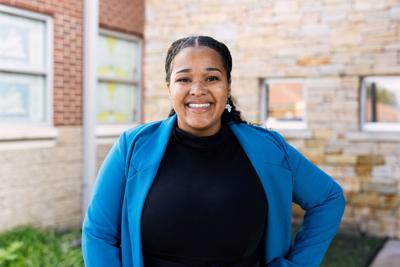
“I don’t think that negates them needing to know their rights and still knowing exactly what to say in a situation like that,” says Courtney Teasley, a local attorney and former MNPS student.
Teasley runs a law firm, and she serves as chair of the NAACP Nashville Branch’s Legal Redress Committee, as well as chair of the Equality and Justice Committee for the Tennessee Association of Criminal Defense Lawyers. She’s an executive board member for the National Action Network’s Nashville branch and was campaign manager for Khadija Babb, who was recently elected Division V Criminal Court judge. She’s worked with high school students on mock trials and given “know your rights” seminars to college students. The Scene met with Teasley not long after she appeared on a recent panel at the Southern Movement Committee’s Youth Justice Town Hall.
Teasley thinks the best place for students to start learning and exercising their rights is in schools with SROs. “I think the biggest thing is to teach the students … what is a criminal offense, what your rights are when you are a suspect — meaning when somebody thinks you did something — and quite frankly, [teach them that] you don’t help anybody prosecute you.”
If an SRO starts asking questions or making accusations regarding criminal activity, “Ask for a lawyer and be quiet,” says Teasley. She also notes that students don’t have to indicate who their lawyer is right away — they can simply say they want one.
The ability to ask for a lawyer doesn’t apply when talking to a teacher or school administrators. But if a student confesses a criminal offense to a teacher, that teacher could tell an SRO, who could use that information against the student. Teasley says that when students are being accused of criminal activity by a teacher, they should ask for their parents rather than a lawyer.
“When it’s time to tell your mom, you’d almost rather not tell mom because you may get your butt beat,” says Teasley. “So you might just go ahead and talk to the principal, but that could have consequences.”
“We [may] automatically jump on the kid because we feel like it makes us look bad as a parent that they’re getting in trouble, or that they’ve been accused of this,” says Teasley. “I’m saying remove … the emotion from it. Actually go in and listen with your child to what the teacher is saying they did.
“Listen and then ask questions,” Teasley continues. “Why do you think they did that? What’s the evidence? What facts do you have to show that my kid did this? What led you here? What was the investigation process? And talk to your child about it outside of the eyes and ears of the other people. See what they’re saying, see exactly what happened, and then use your knowledge to think and say, ‘Hmm, if this could potentially lead to criminal prosecution, maybe I should get a lawyer involved. Or maybe I should hire a lawyer for an hour [or] 30 minutes. Just have a consultation and see if there’s anything I need to be worried about.’ ”
Teasley cites legal resources including the NAACP Legal Redress Committee, the National Action Network and the Black Nashville Assembly. The American Civil Liberties Union of Tennessee also has resources regarding students’ rights.
It’s “cheaper to hire a lawyer for an hour than it [is] to hire them for a criminal case,” says Teasley.



