

This article is a partnership between the Nashville Banner and the Nashville Scene. The Nashville Banner is a nonprofit, nonpartisan news organization focused on civic news and will launch later this year. For more information, visit NashvilleBanner.com.
Talk with a Nashville public school teacher for five minutes, and the first thing that strikes you is the amount of commitment it must take to do the job right now.
The list of major obstacles for teachers is daunting: global pandemic, remote learning, the skyrocketing cost of living, a confidant of the governor assailing their education, Uvalde and school security issues, crushing poverty for some students, unfilled teaching positions, high turnover, and burnout. Toss in a payroll snafu by Metro Nashville Public Schools, in which many teachers were either not paid or underpaid at the beginning of the school year, and you begin to understand the incredible amount of stress teachers are under today.
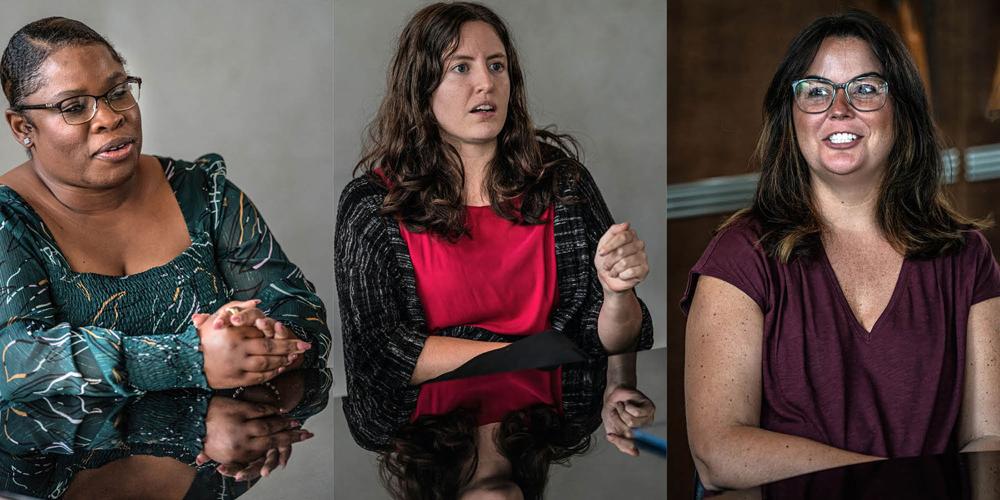
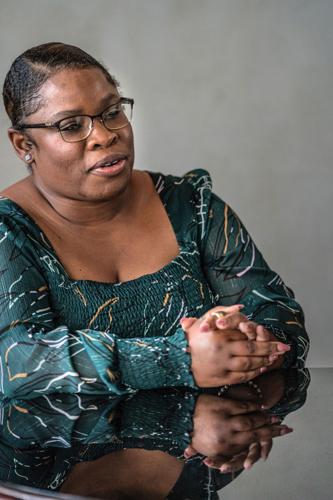
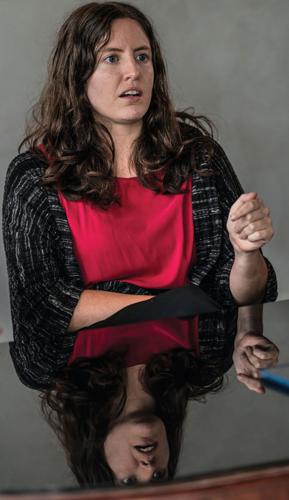
We invited three educators to talk about their experiences in detail: Quanita Adams, a math teacher at Pearl Cohn High School (17 years of experience); Kelly Ann Graff, an English language arts teacher at Thurgood Marshall Middle School (three years); and Natalie Vadas, a special education English teacher at Murrell School (14 years). And in spite of their candor about the problems they face, all three emphasized how much they love their jobs and schools.
“This is not Metro-bashing,” says Adams. “This is just coming from educators who are passionate about what we do. Because if we didn’t care, if we didn’t love our district, we just wouldn’t be here.”
So let’s start at the beginning. Why did you want to become a teacher?
Quanita Adams: Oh, you know, when you’re playing, and then you have all of your imaginary friends lined up and you’re teaching them all this made-up stuff that you hear or that comes to your mind because I had really great teachers. And so I would mimic that at home with imaginary people. And I never thought that that’s where my career would take me. But when I finished college — I had a degree in psychology — my mentor said, “You should be a teacher. If you’re a teacher, you’re always going to have a job.” And she knew my background. And she was like, “I just want you to have stability.” And so I’ve been teaching ever since I graduated from college.
Kelly Ann Graff: My middle school English teacher told me that I was going to grow up and be a teacher. And I was so mad at him. I was like, “I’m a punk. I’m an artist. That’s not for me.” But when I got into high school, I was working for the Baltimore Shakespeare Factory. I was teaching at their summer camps, and just seeing the students get so excited about something I cared so deeply about. And to just see how my passion and my excitement made them invested in Shakespeare as 10-year-olds was really, really exciting. I want to do a job where I’m doing something for my community. And teaching just happens to be the skill set that I have.
Natalie Vadas: So I didn’t go to college originally to be a teacher. I went for communications, because I didn’t know what else to do. And then at one point, I started subbing, and I said, “Well, I don’t hate subbing, and I know how we treated subs. OK.” And then I reflected back, and I was like, “Oh, I had a big whiteboard in my room as a kid. I played teacher, and I made my sister sit there, and I was always the teacher.” And that’s probably why she went to Notre Dame.
I fought it. But deep down inside, I don’t think you can become a teacher. I think you are a teacher. There’s something innate in you. If you are a good teacher, like you’re born a teacher, because it’s not like you can just teach English — you can teach whatever. I’m also good at teaching my friends’ kids how to cook or I’m really good at teaching them how to garden, like I can just teach skills. I can break them down. I don’t know if that’s because I’m also a special ed teacher. I’m very good at breaking down whatever task it is, even if I’ve never done it before. I’ve gone from teaching preschool special ed up to high school.
Natalie had a really interesting tweet pinned on top of her timeline. She wrote, “A few weeks until school starts and the panic of not filling teacher positions is getting some tread. We all warned you. This has been coming for years, low paid morale, and getting thrown everything and then some on our plates. Are you listening now? It’s beyond a crisis.” Did MNPS listen?
Vadas: I’m waiting? I got a LinkedIn [notification] earlier, and it was like $14 to $34 an hour to fill these positions. It was just a recruiter to fill all these positions in the Nashville area, that was looking for a special education teacher. And I was like, “That number is offensive.” Fourteen dollars an hour to fill a special ed position? I have two master’s degrees, I wouldn’t sneeze for $14 an hour. And I think it’s just offensive on so many levels that you’re not seen as professionals, we’re not seen as people who are skilled at our jobs, not only as teachers, but then you add in the specializations, the other tests special educators do on top of it, the paperwork and the skills that we need to have because we have to abide by the law. And then, as you know, we have this group of parents that are like, “Yes, we should be paying teachers more.” Then start advocating for that.
[Compared to other states] Tennessee is, I think we’re making 23 percent less than our similarly educated peers. I am more highly educated than most of my peers, but I can’t afford to go out to dinner. How sad is that? Fifty percent of my income goes to renting in what used to be a low-income apartment duplex. Why? Why can’t I afford to live in places where I teach? I don’t want to live 45 minutes away, because we get back to school if we have events. What am I supposed to do? We’re just not seen as professionals, and in what other profession would that fly? Is it because it’s typically a women-led profession? So I just find it all very offensive. And now they’re just like, “Oh, wow, our class sizes are big. What should we do?” We told you, and now they’re like, “Oh, teachers are leaving to go to tech jobs.” Yeah. Because we can do all these things because we’re very talented people.

Quanita Adams
How is staffing at your school?
Adams: We have high turnover rates. We’re in 37208. And so whatever the news articles say about 37208 [editor’s note: the ZIP code has one of the highest incarceration rates in the country], there’s an inequity in our school, like we probably have a 60 percent new staff. We have young, inexperienced, Teach for America teachers, and our school, in the district, we’re in the bottom. Our students are slated to be “below basic” on all of their tests.
I’ve worked in lots of schools before in different counties. And when I came into Metro, it’s really heartbreaking to see the lack of care for our school and our students. They’re marginalized. Probably 98 percent African American. We don’t have an experienced staff. I am one of the most experienced people in the building. In terms of teaching in classrooms, we probably have three or four teachers that have 15-plus years. Everybody else, two to three years of teaching. And our students are supposed to do well on tests?
Classrooms are vacant. Of course, we get asked to take over other people’s classes when they’re not there, because my planning time isn’t valued as a professional. “Oh, you don’t have anything else to do. You can watch someone else’s class.” But I’m still held to an expectation of getting those scores up, making sure that the kids know how to read and write even though they’ve had new teachers for the last four years.
I want to speak to what Natalie said about, she can go anywhere to teach. And sometimes for women of color, that’s not true, because we’re going to be placed in schools where the kids look like us. And that’s hard for my career, you know, I have to tread a thin line, and I don’t do well with that. So this is supposed to be my tenure year. Now, I’ve been working at the school where our kids have been below basic for like four years ever since I’ve been there; I’m not going to be able to get tenure. So the district has to make a decision: Do I fire you or give you tenure? And that’s hard. That’s hard to say our kids are going to do well. Because I care about the community and look like the community. And because we don’t have the resources, we don’t have the experienced teaching staff. And we keep telling our kids they’re “below basic.” No, I think the practices that we put in place are below basic.
Graff: This year, my principal made the goal to have every single teaching position filled, and he succeeded. When we opened, every position was filled — insofar as teaching staff. We’re still short support staff, which has just incredible ripple effects throughout the building. But we’re getting there. So this year, I had the pleasure of looping up with our students. So I taught seventh grade last year. And this year of teaching the majority of the same students in eighth grade — we historically have a hard time keeping eighth grade staffed at my school. So like last year, we had two teachers leave during the school year. And it feels like an honor and a challenge to be put on the eighth-grade team.
One issue that I thought of when you were reading Natalie’s tweet is that the district knew that they were going to have to hire so many new people this year, because of all of the people who had to take early retirements because of COVID and who have passed away — I lost co-workers to COVID. And so they had tons of vacancies to fill. And yet there were teachers who were put into these positions who weren’t getting paid until Friday. [Editor’s note: MNPS has had issues getting new or transferred employees paid at the beginning of this year.] So I recognize that HR had a huge mountain of paperwork to get all of these new employees in, but that is your job.
Vadas: Some still don’t have access to a lot of things right, especially special ed teachers. It’s illegal.
Graff: One of my co-workers worked in Nashville schools before, but is new to our building, new to the public school system. Teaching eighth grade, which we know is a challenge. He didn’t have a laptop, he didn’t have curriculum. He had no resources on his first day of teaching. And he didn’t get paid for a whole month.These are things that push teachers out. These are the reasons why teachers leave during the school year, because their basic needs are not being met.
Vadas: And then when you’re told you’re going to get your raise on July 1, people change their place of living. They may change their retirement allotment. And now they tell us it was supposed to happen this check or the next check, or maybe they don’t have answers. So now people are overdrawn on their accounts, taking on credit card debt, extra jobs. So like, on top of that. They can’t tell us when we’re gonna get paid? So to start July 1, we did this [personal development course], we should get paid on that. And for some of us, that’s thousands of dollars difference between our steps.
We don’t get paid enough to begin with. And we keep touting like, “Oh, we’re the highest-paying district in Tennessee.” That’s great. It’s like you’re winning the Toilet Bowl. It’s the Super Bowl, but it’s still garbage. Like, yipee! We top out with a doctorate 25 years at, like, $84,000? Should we be excited and cheering that? No, it’s pathetic.
Graff: And also, one thing that Quanita was saying earlier is now that we’re the highest-paying district in Tennessee, it is hard to go to other districts because that means taking a pay cut. You are stuck, also being a queer teacher in Tennessee, where we have state laws designed to get queer teachers fired and to isolate queer students into oblivion. At least I know I have the school board to support me if anything happens. But I can’t teach in a lot of places in Tennessee. I will be taking a pay cut, it’d be going back into the closet. It would mean having to be an inauthentic self in front of my students.
In a relatively short time, Nashville has gone from being one of the most affordable major cities to being a relatively unaffordable place to live. Do you rent or own? Where do you live? Could you afford to buy a house in this market? Does that have an effect on hiring teachers and on your professional path?
Adams: So I’m a mom too. And I rent. I thought just being a single mom, it would be so much easier, just for me to rent, and no, I can’t afford it now. My goal has always been to give my kids a decent place to live. I remember how I grew up, and it was just always my goal: We’re never gonna live in the housing projects. That’s not bad. You know, people need that. But I have a goal. And I wanted to give my kids something. My mom got a Habitat [for Humanity] house. And I was like, “I kinda want that, but I gotta do better.” And we were finally able to get a nice three-bedroom. It’s beautiful. I’m like, “OK, I’m making just enough money. This is great.”
It’s still a stretch, but then my rent goes up the same amount that my raise goes up. So when I renewed my lease, and then the insurance [from the school district] goes up. And, you know, I talked to my landlord, and I was like, “Hey, let’s not do that. Let’s not go up. Why is my rent going up?” And he said, “Well, we want to match the property around us now.” Well, this apartment complex has been here for 30 years. That one’s brand-new. So you want me to pay 2022 prices for 1990s apartment features? That’s not affordable.
And so I felt like, “What am I working hard for?” Why did I set these goals for my children, for them to feel like, “Mom, are you struggling? Why teach? Mom, stop teaching. You’re smart enough to do a lot of things, Mom, why be here?” And it’s a passion that I have. I’ve been teaching for 17 years. And that is hard. And there’s not affordable housing — I’m hanging on by a thread. So every time Metro says they’re gonna give a raise, and then you’re like, “Whoa, there’s some relief,” and then they wait. And you don’t know, and you don’t know what it’s gonna look like on your check. Because you don’t know if they’re going to raise insurance. And that is hard, to make everyday-living decisions when my check doesn’t match. It’s really hard.
And we say affordable housing … affordable for who? What does that mean? How do you protect the citizens of Nashville? Because what I see happening is we say, “Metro teachers are the highest paid.” But if you’re pushing out the people who are already here, then who are you giving this money to now, who’s getting the highest pay? It’s not going to be me, because I can’t afford to live here. If something were to happen to my kid, or my car would break down, it would not be a great situation for me.
And so I am concerned that I serve this community, I provide a service to our students. I stay after school for games, I get to school early to watch other people’s children, I don’t have time to watch my own children. But I cannot afford to live in the city, even though you’re asking me to take care of the children of this city.
Vadas: I can’t even afford to have my own children if I wanted them. I mean, that’s the reality check that I’ve had to have myself. It’s exactly what you said. It’s hard that you have to choose between something you’re so good at and passionate about, and trying to afford to live.
Because half of your paycheck, and then utilities and electric and food, is going to just the place you’re living in. And you’re just trying to take care of, you know, helping other kids. Our school is all these kids full of trauma. I got a job offer from a company, and they were ready to hire me on the spot. But then I think of my kids that come from huge trauma backgrounds, with these kids at Murrell. And it was like it was the first week of school. I just bonded with some of these kids, some of them come out of residential care. Some of them come out of such horrific experiences, and it’s like, I can’t walk out on them. Right now, I can’t be another person to walk out on them. I can’t do it.
So it’s just like something needs to happen. It’s like you said, there’s the haves and have-nots here, but at some point something has to give, because who’s going to teach these children? Who’s going to work at the coffee shops here? Who is going to answer the phones at the restaurant? Who’s going to run the city? Because they say all the time like these people in these high-rises, they make money, they do jobs. I would love to know what they do and if they need assistants. I just don’t know.
Maybe I should move back [to New Jersey], but I can’t even afford to move back home. So I don’t know what the answer is. Something’s gotta give or we’re gonna all implode. And we’re just gonna watch it burn down or something. But at the end of the day, the kids still need to go to school. So I don’t know, it’s just very hard. And now you’re just sitting there, counting your pennies, and hoping to God ...
Adams: It feels like there’s something easy to do. Give us a stipend for rent. Out in California, they build teacher communities; make that happen. In the meantime, make sure that we’re provided for. You’ve got money to build stadiums, you’ve got many to do lots of things.
Vadas: I can’t even imagine being a single mom, I can’t. I can’t. I don’t know how you do it.
Graff: I give all props to the single moms doing this as teachers, because it’s me and my dog. And so many of our co-workers are single mothers.
Gov. Bill Lee and Hillsdale president Larry Arnn were caught on video and received a lot of criticism for Arnn’s statement that “teachers come from the dumbest parts of colleges.” Do you feel like the governor supports teachers?
All three: No.
Vadas: Isn’t Bill Lee’s wife a teacher? Did I read that somewhere? [Editor’s note: Maria Lee was a third- and fourth-grade teacher and studied elementary education at the University of Maryland.] So I don’t know what’s up with her when she sits next to him still. But I would love to invite Larry Arnn into my room and see if he thinks anyone can teach.
But to the point of where are we educating teachers? I think to some degree, that’s not incorrect.
But when you look at policy as a whole, like teacher colleges, for years, were pushing the readers-and-writers workshop framework, you have this whole way of teaching reading and balanced literacy. It was pushed everywhere. And this goes with Pearson, this goes with all the big publishers that get into the schools and push this narrative. And then the pendulum swings the other way. Now we’re in the “science of reading,” which is teaching them the spelling patterns, discreetly and distinctly teaching them, “This is the spelling patterns. This is the phonics behind it.” This is why you have to teach them how, where I actually picked up on it as a kid, you guys might as well. But if you’re not that natural person that will pick up on it as you go. You need to be taught in patterns.
And that’s why everyone’s like “these kids can’t read.” Yeah, because we never taught this huge chunk of kids that didn’t actually pick up on it. And that’s why our reading scores are so low. But if you look at it as a nation, yeah, they’re low. They weren’t doing it. We hadn’t been. But that’s because when you look at the curriculum that everyone pushed for so many years, that’s what they pushed. It wasn’t because of the teachers, it’s because of the Pearsons or whoever pushed down on us. And that’s what we had to teach. It wasn’t that the teachers were doing a poor job, we had to teach what was given to us — because that’s what the district wanted, whether it was Nashville or wherever you were, that’s what we had to teach.
They keep bringing Teach for America and all these other programs, and then they complain about what they’re getting out of it. You kind of pulled them off the street. But it’s like, you’re just trying to fill bodies. And then you’re complaining about test scores and that they can’t read; like, what have you been doing for years?
Adams: They’re not talking about the craft of education, right, talking about the state’s investment in education. That’s how I looked at [Arnn’s comments].
Vadas: It’s more than just the state, it’s the nation at this point. It’s so underfunded. And it’s been for years. And now they’re like, “Oh, no!” What do you think has been happening?
Graff: To me, it’s a piece of the de-professionalization of teaching, which is rooted in anti-intellectualism, classism and misogyny. To tell a field that’s largely working-class women that they are the dumbest people to come out of their college …
[Arnn] has a vested interest in the de-professionalization of education. He’s opening up charter schools that he wants to staff with the cheapest staff possible. In this situation, it’s to make it as streamlined, as cheap as possible. They want schools to look like that in Tennessee, where they can do and say whatever they want and have no community accountability. It’s scary to me, it feels like private schools in the desegregation era.
Vadas: I’ve never been in a school [like Murrell] with so many people that have multiple master’s degrees and doctorates.
Adams: We spend all of our money giving it to schools. We spend money to do our craft, that’s, you know, if I want to make a decent living, I get to take out a lot of student loans. I won Teacherpreneur [a program from the Nashville Public Education Foundation], and it was like $10,000. And I’m so sad to say, you know, that just provided a couple of months of relief.
Vadas: That’s why I did Promising Scholars [a summer program].
Graff: If you make it five years, you get to your next step raise, the economy has moved way past 2.4 percent [inflation].
Vadas: The cost-of-living [adjustment] needs to be at least 10 [percent]. At the end of it, our insurance has gone up nine.
Graff: I’m dipping into savings every single month. I’m in the red every month.
Vadas: What savings?
The National Assessment of Educational Progress is commonly called the country's report card. NAEP released a study a few weeks ago on the effects of pandemic and learning and found that the country had regressed in key areas or kids hadn't hadn't continued a progression like you normally would consider. What have you seen in your classrooms?

Kelly Ann Graff
Adams: We just keep pushing people that don't have what you're expecting them to have. You just kept moving. We were supposed to take a break and figure out what needed to happen. And we were supposed to adjust in our curriculums and standards and our practices, we had an opportunity to do that. We could have done it in a safe place from our homes, we could have added professional development. I know that was new for everybody. Now, we just walked back into the exact same thing. There is no “What do we learn from [COVID]?” and “How do we move forward?” “How can we still give our students social and emotional learning support?” We just went right back into it, and we're still being held accountable. When you know, if we're talking about loss, we lost time that we have really built something amazing.
Vadas: OK, maybe they didn't quite hit every math standard for the grade. What did we accomplish during virtual teaching? My experience was my students, who were special ed kids on a computer, learned tech skills or they [became] tech savvy. They can work in Word or PowerPoint. Before that they couldn't function on a computer. These kids in kindergarten can navigate these computers and have these 21st-century skills that parents don't even realize they can do. And they're just worried about meeting whatever standard. These standards are always unattainable. Do we realize that they keep making these tests so unreachable for these students? Because if they don't make them that we can't always reach them, who's out of all this money? The big testing corporations. That's why we're never 100 percent proficient at anything. Is anyone ever?
Graff: All right, when we say learning loss, these tests are arbitrary. And to me, that was insulting to have students come back into the building to take a test …
Vadas: Comparing apples to oranges.
Graff: One thing that also was illuminating to me, that I need to touch on, is just how my first year of teaching as a certified teacher was 2020. I worked as a resident teacher before that. And just how much superfluous work we have to do as public educators. Part of my job is to get to work, you know, be there at 8:30 a.m., and direct traffic in front of the school every day rain or shine. We do recess. We've got posts. We're supposed to have a duty-free lunch. But sometimes, to make that happen, I have to lock my door because students will find their way up to my classroom. And they want a comfortable place to be, because they know that our classrooms are those places. So they come seeking safe places.
[During COVID] I didn't have to defuse fights, I didn't have to prevent fights. I didn't have to report possible escalations, I got to just focus on my craft as an educator. Like, what is the standard? What do my students need to be able to meet this standard? And how can I support them along that journey? And I was so blessed for that to be my first year and to come into the school building in February, already knowing my students also set me up well. Do I think we should have been back so soon? No. We were constantly being hit by quarantines. And that made it harder to keep students on pace with each other, when a student would have to isolate.
I know we've moved on from that. And it's still going on. I had COVID two weeks ago. I got it almost immediately this school year. And I had to take a week off the third week of school, so I'm already behind on the curriculum for this year.
The kids, from these past two years, what do you think the long-term effect is going to be on them?
Vadas: I don't think there will be a long-term impact. OK, so maybe they're not reading at grade level in second grade? I think they will catch up, because I think they're so much further ahead on other things. Do I think, if we're talking about the big picture, were some kids left behind because they were lost, or because they didn't have internet access? Yes. I don't want us to forget there were some people left. There were some kids physically lost. Yes, that did happen. I don't want us to forget about those students. Because that is a huge piece of the puzzle that we could not control. The nation could not control.
And I think when people are talking online, they're like, “We should have just been back in school.” There was a global pandemic going on killing people. We also have rights as humans to be safe at work. That is a right. So like, yeah, you want your kids to be back. But like, there's a huge, loud group of parents that said, “You should have just been back immediately.” No, I would like to be safe at my work. I think I should be safe at work every day.
But I think there may be some impacts on social-emotional [issues], more than academic pieces. I think that has been a long time coming. I think when we moved first grade into kindergarten and second grade into first grade, we have made these kids into kids that don't know how to share, how to talk to one another. There's no reason that a kid needs to read in the first grade. No reason. And we've just made kids into kids that don't know how to talk to one another. They don't have to. There's no social emotional piece. And now we're trying to fix it on the back end, in fifth, sixth, seventh grade.
Graff: I feel like the social and emotional piece is very — where I've seen students like they're really learning how to be in a classroom. Some students are now learning how to be a middle schooler.
My certification is in secondary English language arts. So I'm trained on how to teach higher-order thinking and critical thinking, critical writing analysis. I'm not qualified to teach foundational, like, reading skills. But this has been a problem since before COVID. That's not new. I think that's a failure in teacher preparation programs. That we're not preparing teachers for the reality of a diverse classroom. Diverse in the skills they are coming in with. Like, we know about scaffolding and making it like individualizing things, but actually teaching the skill of reading.
Adams: I think the human condition is to adapt. We can't lose that Nashville does not look like Nashville did 10 years ago. We're still humans, and we adapt. I don't think we lost anything. I think we gained an opportunity to see something new. Like TikTok is hilarious. Facebook, we learn how to socialize. It's just different. We learned that we are adaptive creatures.
Vadas: If we were just looking at formal school, they miss things, but look at all the other things they learned how to do. And like, part of our craft, when we're allowed to do it … my high school students, we were on Flipgrid, we used to do science. One time, I asked them to go around their house and show me friction. And one of my students put his socks on and slid across his kitchen floor and videoed it. And then he put his sneakers on to try it. And then they shared it with each other. And it's just like, we did these cool things. We got to be in each other's homes. And they got to see my dog, they got to see my bedroom, they got to see the plant that was growing behind me. So it was actually a really cool experience. If you were the teacher that wanted to make it cool, the kids wanted to come to my class. But if you just wanted to try to make Virtual Teaching your classroom, it didn't work. But if you wanted to make something awesome, my kids loved it. They had a great experience, and then their parents got to see it. Some really great things happened during it. But that's not what anyone wants to volunteer. And it's really frustrating when you read about it.
Graff: Imagine having 15 minutes of quiet decompression time [now] in between each class.
Adams: Oh, that was heaven.
Graff: And for students to be able to have that time to transition between like, “OK, I was doing math. Now I'm shifting into English class.” Instead of worrying about, “Oh no, am I going to run into that person in the hallway,” I had students be incredibly vulnerable. In online school, by being on the computer, their guard was down. And instead of putting on a performance at school, they were honest. And sometimes I even had to check in with students just being like, “Hey, are you comfortable? Like just so you know, like, there are 25 people in this team's meeting right now? Are you comfortable continuing this conversation?” Because I was the only person who had my camera on, they felt like they were just talking to me sometimes.
They would come back and they would draw me pictures and write me letters and give me Mother's Day cards when they were eighth graders when I didn't even teach them anymore. But because we had that time and online school where we really got to know each other, and just be there for each other and check in on each other.
Adams: That's a beautiful thing, especially when we talk about social-emotional learning. I get to see every child's house. Now when we talk about all connecting and knowing their background, I'm not speculating. I'm seeing what's happening. I’m not judging parents, but I can say, "Hey, let's try to get food for this family." You know, I can make a connection that doesn't seem punitive, that being poor is not a crime. That is not a crime. Having to work all day is not a crime. I work all day. Sometimes I don't get to see my kids before I go home and go to bed.
Sometimes I would say, “I need everybody to turn on the cameras for 30 seconds. I just want to see your faces.” How powerful is that? It's not judgment. And those are the pieces that we missed out that we went back to Little House on the Prairie mode. Everybody's sitting here looking at the chalkboard and silent. I think we had an opportunity to do something different, like we've never done this before.
The kids in Uvalde went back to school last week. Did you ever think that active shooter preparation would be part of your job or be part of school life?
Graff: I was in high school when Sandy Hook happened. So like kindergarten, that happened? Yeah. I remember being in high school when these threats started out. So I think it always was part of my conception of what it is like to be a teacher. I was in first grade when 9/11 happened. I was in Maryland, close to D.C. And, yeah, it's just always been part of my concept of what it means to exist in a public school.
Vadas: I think it was really hard coming from up North. I think our school drills up there were more serious than when I moved down here, I had a very hard time. First time we did like the lock in/lock down. And I locked the room down. And they were just like, “We did a lock in which is different. You keep teaching.” I didn't know there was a difference.
We had a drill last week, I was trying to stress to the students — dealing with behavior students, and you know, they're like laughing — you never know if this is going to be real. And I'm very sad that this is our reality right now. I said, "But we are going to act like every drill is real." I said, "We are not going to laugh through them, because we are going to practice and get this right. Because on that day, God forbid this ever happens, I want you to know what to do. And we're going to be prepared." I said I would protect you.
Adams: First, I want to just say that the ownership of these tragedies is on the person that does it. The person in Uvalde is the owner of the chaos and the owner of the hurt. I was very emotional, but it's like, “How did this person get into school?” [Laughs] That was my very first question. Because what we did was we jumped from this tragedy to talking about gun control. Wait a minute, hold on, let's back up. How do you get into the school? Maybe we need to start closing the entrances.
I was at Overton, about 2006-ish, and one of our students had a gun. And he had another teacher in the room, and you cannot prepare mentally for that. I am not, you know, SEAL Team Six, I cannot prepare mentally for tragedy.
And only at that moment, you have some systems in place, we had practiced little things. And it was like, “We're just gonna wait, we gotta wait this out. We gotta be safe.” That's all I can offer. I couldn't offer anything. I don't have a gun. I don't want a gun. I cannot offer anything, but to be here for you right now. And the kids say, “Would you save me? Would you protect me?” And my answer is, “I would do for you what I want somebody to do for my child. I want to make it home for my kids. I want my kids to make it home for me.” And I think that we lose focus of that.
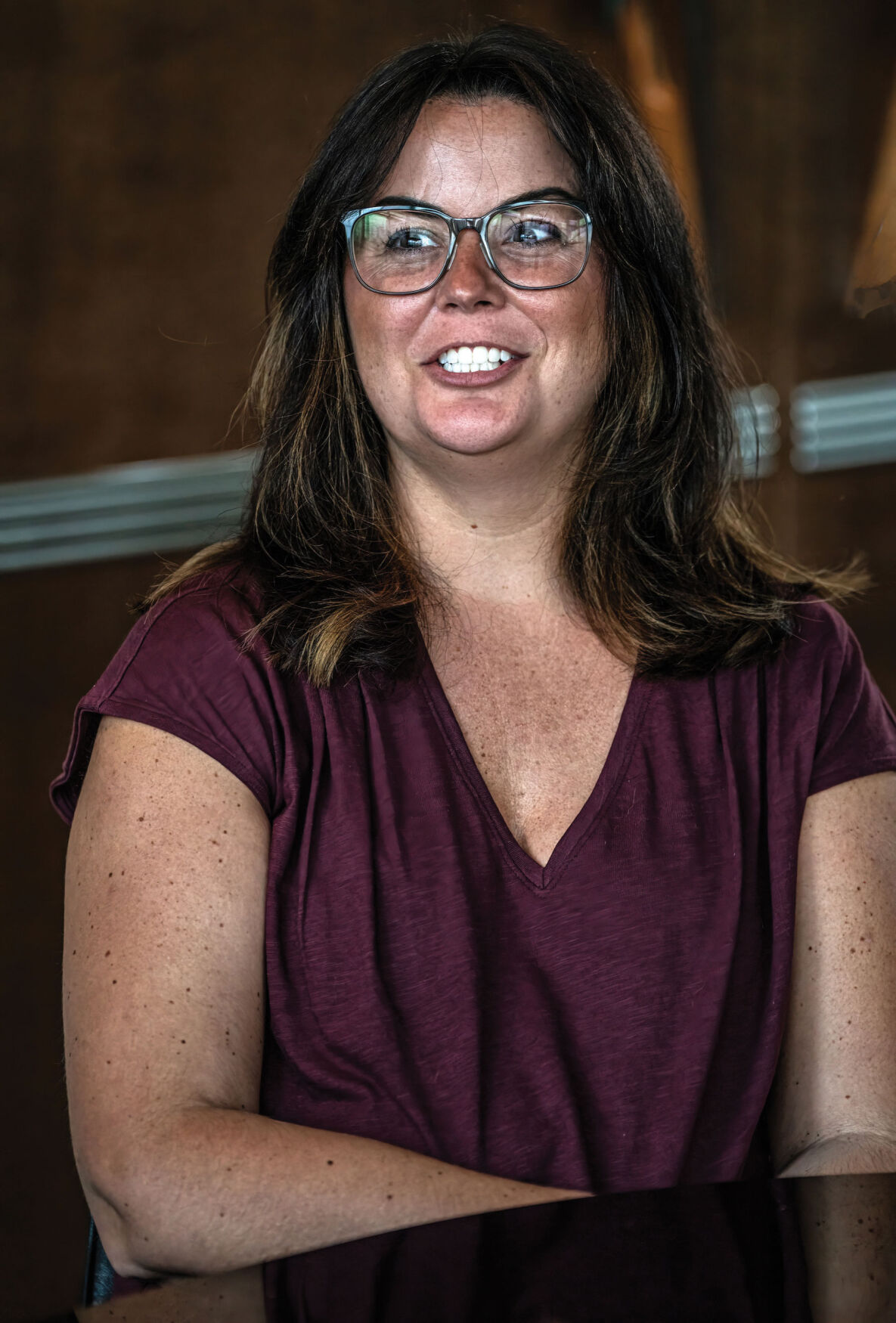
Natalie Vadas
Something that came up in the school board races this year was a candidate who came out in favor of arming teachers. Would you want to carry a gun? Do you think teachers should carry guns?
Adams: I don't want to carry a gun. That [can be] accessed by kids, right? That's not what I want to do. I just want people to own it. I'm not trying to kill anybody. I just want to place blame where the blame is due and hold stiffer punishments.
Graff: I think about students who have a negative relationship with a teacher, and who are already afraid of a teacher, who already feel uncomfortable walking into that room. And imagine how terrifying it would be to walk into a space and the person in power in there is armed. And you know that the two of you butt heads. I want my classroom to be a place where students feel welcomed, where they feel excited to be, where they feel comfortable enough to let down their guard enough to be brave enough to learn to put themselves out there. And I feel like introducing a gun into that situation will do nothing to make my classroom a more supportive place. If the state wants us to have a productive classroom, introducing a gun is not going to make it a more productive place.
There are the procedures that my co-teacher and I had to sit down at the beginning of the year and come up with procedures for an active shooter. Like, yes, we have the school wide procedure, but how can we make it as safe as possible within our classroom? What's going to be my job, what's going to be her job? Where's the safest spot within this classroom for 25 students? And these are awful conversations to have. They're emotionally taxing conversations to have and then to have to bring a student who's so upset, who's so stressed out, sometimes I have to walk them through this safety procedure. "I've got your back." Like, "I will do everything in my power to protect you. And here's the evidence of it, here's what I am going to do." Because the students bring these fears to the classroom.
Vadas: Yeah, I mean, especially working with students with high trauma, behavioral issues — you know, having a desk thrown at me multiple times a week, not necessarily at me — we are de-escalators. We are trained to remove objects from hands, where I'm going to assume neither of you are. [Adams and Graff agree.] And that's part of my job, we are trained in a specific way to be able to put our hands on kids and remove objects, if needed, to contain them, if needed, safely for the benefit of ourselves and others and themselves. So factor in a gun that is completely opposite end of the spectrum of what we're trying to do for their own mental health. It just is complete. … What is that going to do? Also, if we have students who take things — which we do — what do you do, lock it up? OK, how is that going to benefit us if I’ve gotta go unlock it.
Adams: The one thing that I concern myself with is I know that gun violence and police brutality and things like that I would worry for my child, I would worry for my little Black boy. As he gets a little bit older, he's not allowed to be upset. Is this a teacher that doesn't see that? Oh, “He's upset. I felt fearful for my life” [and used his gun]. That is not OK. I trust educators to do their job. But in this space, you have permission to harm my child. [Teachers] are not law enforcement — I mean, they don't have permission — but you're not law enforcement. You are going on feelings. But that thing is scary, for me and for my little Black boy because what he faces on the street, I hope he doesn't have to face that in the classroom.
Graff: In Knoxville, a [student resource officer] killed an unarmed student in the bathroom. And the next day we had a drug and weapons search in my classroom where my like seventh-grade students had to take off their hoodies and take off their shoes — their comfort items — and get searched by an SRO. And are you just seeing how vulnerable and scared they are? During these searches that disrupt my class, that dysregulate my students, that dysregulate me.
As Quanita was saying, almost all of my students are students of color. And their experience with an SRO, I think, is very different than a lot of white adult policymakers are assuming. So we assume that if we introduce SROs, if we arm people who are within the school, students will feel safer and will feel more comfortable. When really, they see their community members. They see people who look like them being murdered by police — who look like SROs. They look like police because essentially they are.



Post a comment as anonymous
Report
Watch this discussion.
(0) comments
Welcome to the discussion.
Log In
Welcome to the discussion.
Keep it clean. Please avoid obscene, vulgar, lewd, racist or otherwise abusive language. Comments featuring hate speech or threatening or violent content will not be tolerated.
PLEASE TURN OFF YOUR CAPS LOCK.
Be truthful. Don't knowingly lie or mislead.
Be proactive. Use the “report” link on any comment that violates our comment policy.
Share with us. We'd love to hear your feedback.