
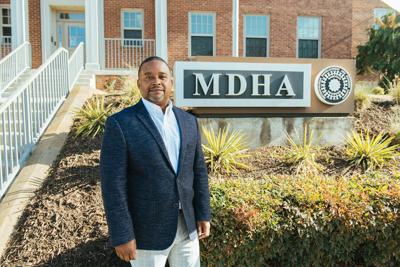

Earlier this year, Nashville’s Metropolitan Development and Housing Agency announced the creation of its Resident Services Department, designed “to identify, prioritize and provide services and resources” for Nashville’s public housing residents. The first director of the new department, Eugene Spencer, came to Nashville from a similar position at a housing agency in Maryland.
The Scene sat down with Spencer to discuss his role. This interview has been edited for length.
How is this similar to your previous job?
It’s similar because we’re serving the same demographic of people. We serve people who are at income levels of 30 percent of [area median income] and below, and that’s generally throughout the country when you talk about public housing or affordable housing. The difference here, though, is that the population is larger. The need is more intense, and there’s room for more opportunity where there’s more need. I want to be able to implement sustainable programming, sustainable new ideas. So that’s why it’s different. There’s more of a challenge here. The people are the same. The demographic is the same. The challenge is larger.
What are those challenges?
Where you have a larger need in a population, that is harder to penetrate the culture of what creates that condition. When you have a generation of people who have grown accustomed to living on incomes that are $15,000 — or in some instances $0 — you get accustomed to living that way of life, and you don’t think that there’s anything else attainable. It’s hard to penetrate that community. It’s hard to build hope and trust. That’s where the challenge is. It’s not so much creating the opportunity. There’s opportunity around us [that abounds]. If you’re looking for opportunity, it’s there. It’s those that don’t believe in the opportunity that’s around them. So the Resident Services Department, then, has to not only present the opportunity, but they have to get people to buy into what’s available to them.
Why is specifically having the Resident Services Department now the answer to that problem?
Well, because you have staff that are available every day of the week, and you have staff that have the responsibility of reaching out constantly to residents. We build one-on-one relationships. We have responsibility. We’re there on a five-days-a-week schedule. The residents get accustomed to coming to us, and that builds trust. That builds pathways to opportunity.
What made this the time for that to happen in Nashville?
I think the change in leadership sort of prompted this — [MDHA executive director] Dr. Troy White’s vision of where the agency is going. Providing more affordable housing, but also building strong communities and strengthening neighborhoods — that’s all a part of his vision. And you can’t do that necessarily unless you have a Resident Services Department within that helps complete that mission. As I said, it’s really hard to do when you work with outside service providers.
What does it take to develop the department?
Fortunately, when I came in, there was already a groundwork of partnerships in place. It’s my job to nurture those partnerships, to grow those partnerships. What we are currently in the process of doing is creating a couple of one-stop centers, if you will, that will create job training, opportunity, educational opportunities, and make it available to our entire portfolio. Homeownership is another pillar of what we will be offering in Resident Services. To get started, we have to foster these partnerships that we have in place.
What does each day look like as the leader for that department?
As the captain of the ship, so to speak, for the department, it’s my job to go out and establish relationships all the time. To make sure that people in the community throughout Nashville know who we are, what we do, and help them understand how they can partner with us, how we can work together to complete what our mission is. So later on today, I have a meeting with someone from the mayor’s community safety office. We have a lot of the same goals in terms of providing safety and resources to some of our community. So it’s my job to to get out there and make sure that people understand that we exist and let them know what we do. It’s also my job to go out there and look for resources in addition to just partnerships, to look for funding and ways that we can grow our presence, grow our staff. It’s my responsibility to make sure that everyone within my department knows what their responsibilities are, what their core duties are, and make sure that they’re doing that, talk with residents to find out how they feel about the services that we’re providing. And always be responsive to what the needs are.
You grew up in public housing. How does that better position you to do this job today?
Well, I don’t have limited expectations about what people can do. I’ve seen it firsthand. I’ve done it myself firsthand. Also, this might not be the correct way to term it, but I don’t have a fear of interacting in our communities. I walk the grounds. I like to interact with people. I don’t have any reservations about that, and I understand the culture. When I meet people, sometimes I understand what body language says or understand what the unspoken sentiment is just by meeting people and meeting their children or seeing their homes, seeing how they’re living. I can understand their culture because I lived in it for a long time. That’s very important, because that provides a connection with people. People can see it in my eyes. They can feel it when they meet me, and I think it creates trust. Ultimately, you can’t do your work if you don’t have the trust of the residents, because they won’t interact with you.
Why do you think there’s what you described as a fear of public housing communities?
Generally speaking, our communities in a lot of instances are sort of isolated. When you hear stories about an incident that may happen in one of our communities, of course, it’s something that creates fear in people. Folks would rather deal with a community from afar if they don’t understand it or have not been to the community. So I think when you deal with a community that has been isolated for a long time, there’s a fear because there’s no familiarity with it. There’s no direct relationship with the community. But you have to be immersed in the community, meet the people to disperse that fear. If you meet people who live here and you talk with them, you understand that everyone’s the same everywhere.
Do you see the Resident Services Department as a way to change that isolation to help the community?
I do. Because part of our goal and job along with the communications department is to make the personalized stories, those success stories, make people aware of what’s going on. Make other neighbors aware of goings-on, which builds hope with them as well. But once you illuminate what’s going on, it creates a bridge between this community, other communities, and people gain more interest about what’s happening. They want to help. They want to be a part of it. So yes, Resident Services is a big part of that.
Summarize what you see as the future for Residents Services in Nashville.
Opportunity and equity for all residents is what we’re shooting for here. What I see for Residents Services in Nashville is creating a platform that will perpetually provide those opportunities and always bring in additional support to create opportunity and equity. We want folks to sometimes purchase homes and move out of MDHA communities, or sometimes we also want them to make a step and be able to afford a workforce development type of housing situation. Other times we don’t necessarily expect individuals to raise income, but we expect them to raise their standard of living. All of those instances fall under opportunity, and it falls under creating equity for those families to have a higher standard of living.
Is there anything else that you would want people to know about Resident Services or about what you do here?
I want people to know that the residents who live in our communities are part of Nashville. We are one large community. Nashville is going through a tremendous growth transformation. So our communities and our residents, we hope to provide them with that same level of growth and transformation as the city grows. That would be my message. That we want to be a part of the transformation of Nashville as well, and Resident Services will be working hard to provide those opportunities and level of equity to get people to the same level that others are within this metropolitan area.



Post a comment as anonymous
Report
Watch this discussion.
(0) comments
Welcome to the discussion.
Log In
Welcome to the discussion.
Keep it clean. Please avoid obscene, vulgar, lewd, racist or otherwise abusive language. Comments featuring hate speech or threatening or violent content will not be tolerated.
PLEASE TURN OFF YOUR CAPS LOCK.
Be truthful. Don't knowingly lie or mislead.
Be proactive. Use the “report” link on any comment that violates our comment policy.
Share with us. We'd love to hear your feedback.