
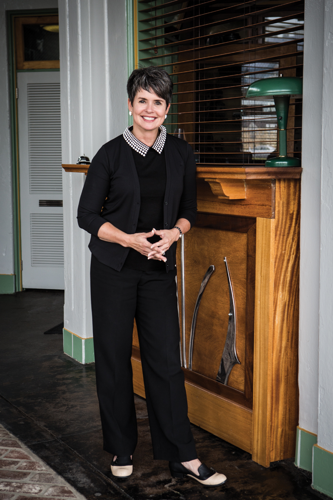


Demetria Kalodimos was a picker when being a picker wasn't cool. When she was a kid in Chicago in the 1960s, her father would pile the family into a car on Tuesday nights with flashlights. It was trash night, she remembers, and you never knew what you might find out there in the dark — furniture, fixtures, a bike just thrown away.
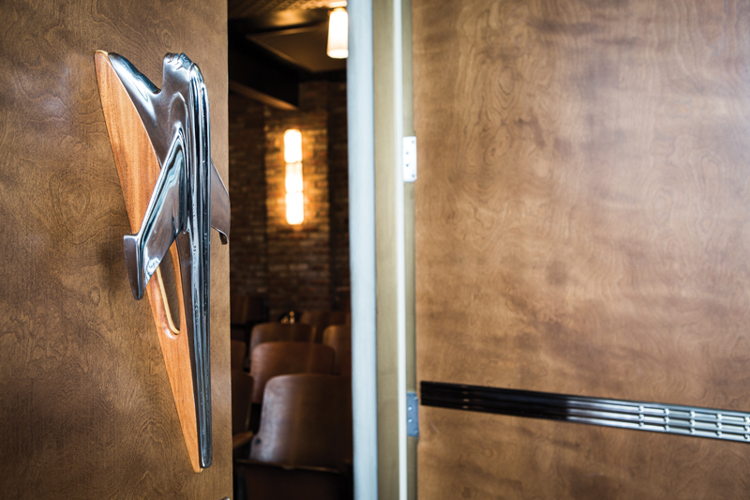
The decor in The Filming Station — her headquarters away from WSMV-Channel 4, where she's celebrating her 30th year on the anchor desk — honors her dad's picking instinct, applying his throw-nothing-away practicality with a transformative eye. It's a place where baby-moon hubcaps serve as wall fixtures, hood ornaments become door handles, and junked autos prove a veritable Bed Bath and Beyond of decorative flourishes.
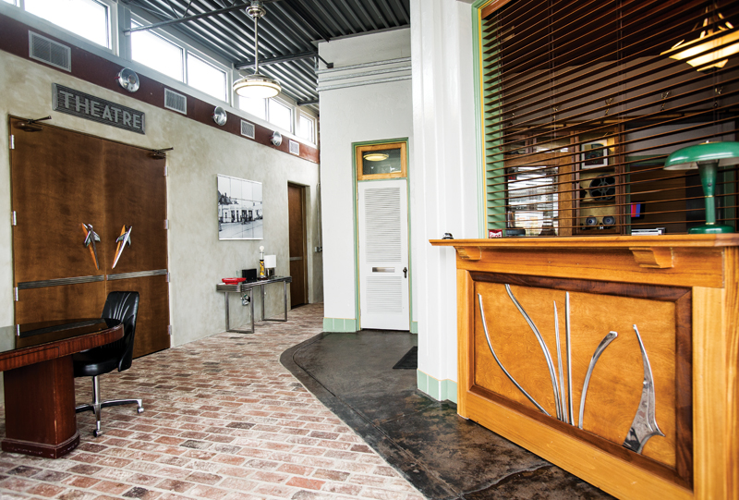
"They came off a Plymouth," Kalodimos says, indicating the flat, fanned-out chrome strips that form an almost maritime pattern in her lobby. She pried them off the car herself, "chrome crazy," in a junkyard knee-deep in Johnson grass: "The price I paid was chiggers so bad I almost had to go to the ER."
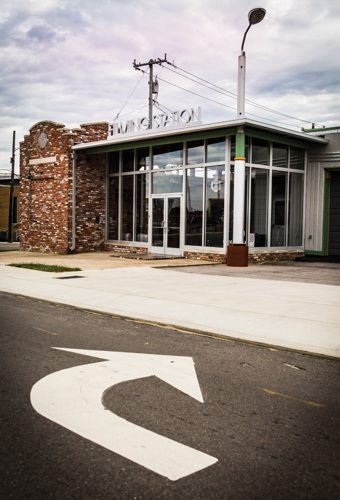
Kalodimos comes by her gearhead fascination through her father, who owned a filling station early in her childhood. "I was literally born in a gas station," she says. The space she's commandeered just across the roundabout from the Music City Center is itself a former fueling station built in 1935. It became the city's first Volvo dealership in 1951, then briefly a soul-food joint and God knows what else.
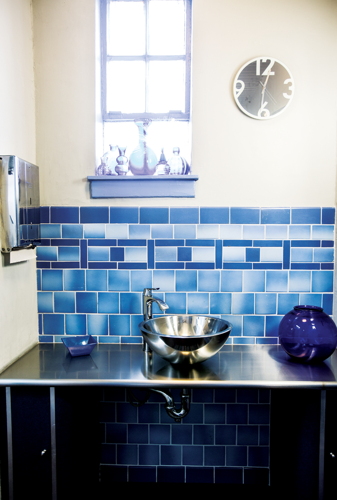
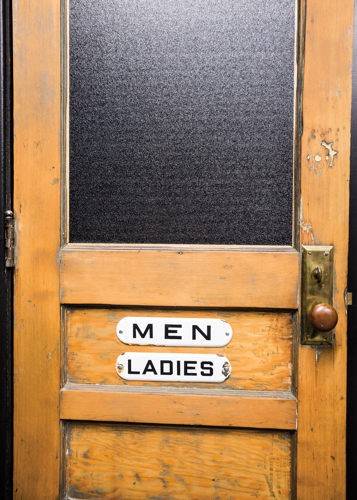
"I think it must have been a massage parlor at one time," she says. "It had way too many bathrooms."
Today it serves as office and studio space for Genuine Human Productions, her documentary and production company. It's also a compact multi-purpose facility capable of hosting concerts, taping broadcasts and screening and editing films, with a cantina-like courtyard for event space. Nashville outlaw Chris Gantry recently recorded a live show inside, and Kalodimos is currently cutting a pilot there she directed for a Spanish-language show called Saboreando Nashville, hosted by Jael Teme, a recent Lipscomb grad from Buenos Aires. She's pitching it to Univision.
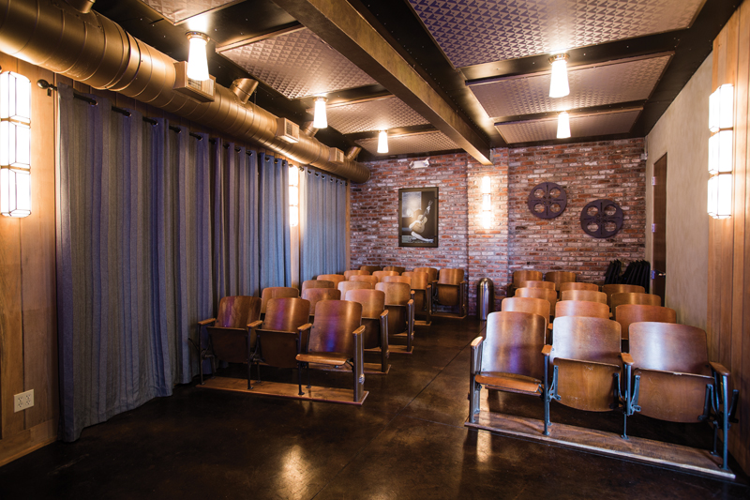
The facility gleams, and yet it's so densely inlaid with repurposed items that a walk-through leaves guests playing a constant game of I Spy. Those handsome metal fixtures in the screening room? Panels off a Wurlitzer jukebox. The lighting grid in her studio? She had it rigged from the garage-bay struts — and it's hung with a light that amusingly reads "WTVF." That nifty material covering all her (reclaimed gas-station) furniture? Boat upholstery — cheap and durable.
Putting this together required help from a network she's amassed over the years of free-spirited, sneakily creative Music City bohemians — the type she celebrates in her documentaries, and the kind in short supply in gentrifying It-City Nashville. People like Olde Worlde Theatre Company founder Richard Stein, who did the courtyard's brickwork, and wizardly musical carpenter Bill Schleicher, who she says shares her eye for inventive reuse: "We're dangerous as a duo."
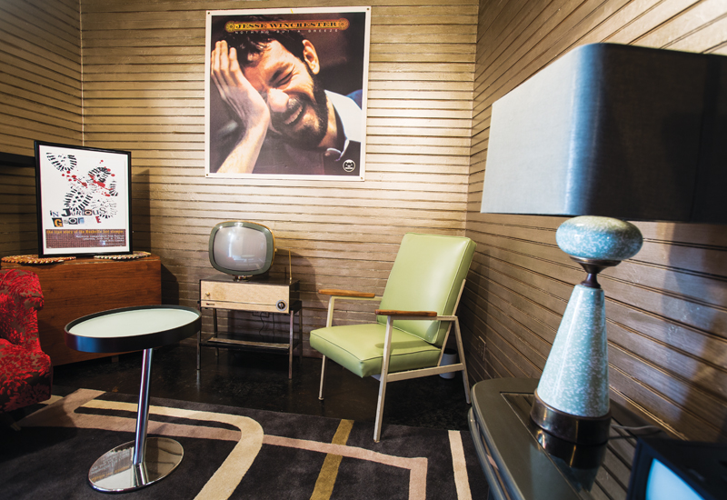
She conducts the tour in an immaculate ensemble — barefoot. (She broke a heel, she informs her visitors, in language not suited for broadcast.) She points out the '59 Philco Predicta TV, the target-shaped outdoor "O" rescued from Dickerson Pike's East Side Beer Market, the theater seats copped from an Old Hickory Masonic Lodge for $10 a chair. She's perhaps proudest of the theater's milk-glass light fixtures, worth about $600 apiece. One still bears "$6.59" in crayon — the price she paid at Goodwill.
The public will get a chance to see this next month, when The Filming Station hosts a production of Twain and Shaw Do Lunch. It's an original stage play by Chambers Stevens — aka Steve Chambers, star of a popular '80s WSMV youth campaign — that dramatizes a meeting between Mark Twain and George Bernard Shaw. Yes, The Filming Station, this Swiss Army Knife of a facility, is a black-box theater space as well.
The trick to picking, Kalodimos says, is not to look for the thing you're seeking, but to let your eye wander and see what it picks up. She's keyed in to a small army of fellow pickers, antique-shop owners and other enthusiasts on the prowl for fascinating items — such as the folding table she owns that tucks away its own Danish modern chairs. That inevitably brings on more leads, more items, more imaginative uses, in a city that's often far too comfortable throwing away its past.
"Then it's hard to sleep," she says.

The Lobby at The Filming Station


theater


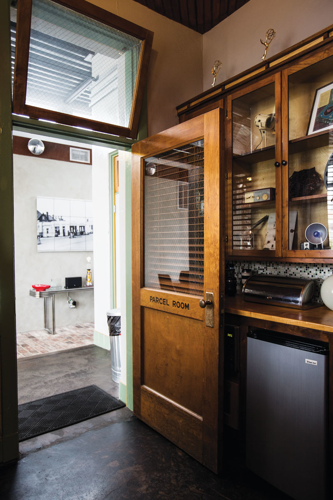
The Green Room


Demetria Kalodimos



Post a comment as anonymous
Report
Watch this discussion.
(0) comments
Welcome to the discussion.
Log In
Welcome to the discussion.
Keep it clean. Please avoid obscene, vulgar, lewd, racist or otherwise abusive language. Comments featuring hate speech or threatening or violent content will not be tolerated.
PLEASE TURN OFF YOUR CAPS LOCK.
Be truthful. Don't knowingly lie or mislead.
Be proactive. Use the “report” link on any comment that violates our comment policy.
Share with us. We'd love to hear your feedback.