

Dr. Gangrene
Once upon a time, ways to watch a horror movie at home were as limited as escape routes from a vampire's crypt. There were no tapes, no discs, no DVR, no cable or satellite. Computers? You mean those room-sized gizmos with the blinking lights in old Outer Limits episodes? Not likely. And relatively few people had the patience for projectors and bedsheets. That left essentially one option — live broadcast TV.
Even then, viewers were captive to the whims of local programmers, eager to fill blocks of afternoon and late-night airtime with flotsam from the studio vaults. But fans had friends to guide them into the wilderness of what would be called "psychotronic cinema" — the gaggle of cut-rate ghouls and low-budget vampires known as horror hosts.
The first horror host was Vampira, played by Hollywood actress and pin-up model Maila Nurmi on KABC-TV in Los Angeles in 1954 and 1955. Even if she hadn't taken part in the pie-plate invasion of Edward D. Wood Jr.'s Plan 9 From Outer Space, she'd be assured a place in the pop-culture pantheon for pioneering the horror-host format: late-night screenings of old horror movies interspersed with campy skits and smart-aleck interaction with the films.
That concept would translate to local TV markets across America starting in 1957, when Screen Gems began marketing Shock Theater, a syndicated package of 52 classic horror films produced by Universal Studios. Screen Gems encouraged local markets to create their own hosts, and before long, local newscasters, weathermen and other station employees found themselves slapping on greasepaint, fright wigs and capes.
Thus was born a new type of hero for America's youth. And Nashville eagerly joined the ranks of the horror-host haunted.

Dr. Lucifur
Dr. Lucifur: The Sophisticated Doctor
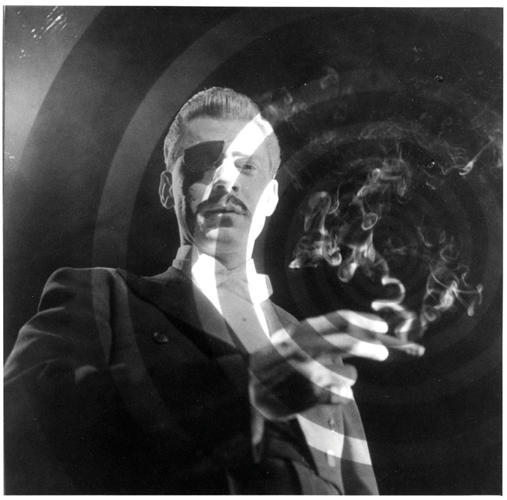
Nashville's first horror host, Dr. Lucifur, debuted on WSIX-Channel 8 (now WKRN-Channel 2) in the summer of 1959. The good (or should that be bad?) doctor was portrayed by Ken Bramming, an announcer for WSIX who had already been doing the voice-over introduction for the Friday-night showing of Shock Theater since its debut on Channel 8 in November 1958. For Dr. Lucifur, Bramming mixed a bit of Bela Lugosi with John Carradine and Vincent Price at their most charming. He created a dapper, silver-haired, suave Transylvanian host dressed in white tie and a black tuxedo, with a black eyepatch and an obvious affection for fine tobacco.
A filmed black-and-white intro and outro would run each week with the movie, and the breaks during the actual film would be performed live in the studio. Dr. Lucifur would rarely be seen during the live portions. Instead, much like the short-lived The Continental series parodied by Christopher Walken on SNL, the show was shot "subjectively" from his viewpoint as he interacted with a supporting cast of ne'er-do-wells, including Granny Gruesome, Frantic Freddy the Hipster and Baron Von Sloucho.
The skits that Bramming and his compatriots performed rarely had anything to do with the night's feature. They ranged from spoofs on current events (like Dr. Lucifur's campaign for the presidency of Transylvania in the fall of 1960) or parodies of popular TV shows of the day, such as a Batman take-off that featured Nashville restaurateur Mario Ferrari as an Italian-spouting caped crusader.
During the first few years of the show's run, Shock Theater was consistently the highest-rated program on Friday and then Saturday late nights in the Nashville viewing area. Ratings continued to be good, but by 1967 both Bramming and WSIX-TV felt the show had run its course. They pulled the plug that spring, with Bramming leaving TV for a career as a radio announcer.
Bramming would return as Dr. Lucifur for a brief run on the short-lived first incarnation of Channel 17, WMCV-TV, between October 1968 and November 1969. From then on, he would revive the character on an annual basis for Halloween airings of Orson Welles' 1938 adaptation of The War of the Worlds on radio station WAMB. Bramming passed away on July 7, 1997, but his deep baritone can still be heard every day in the station IDs for WAMB ("Beautiful Music in the Night").

Sir Cecil Creape
Sir Cecil Creape: Did Someone Call?
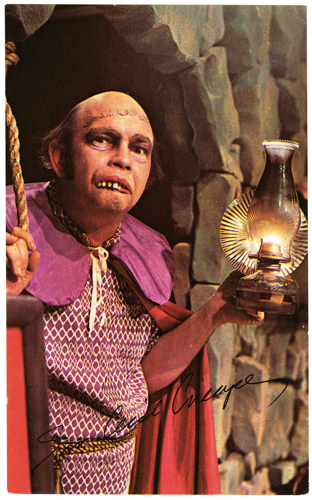
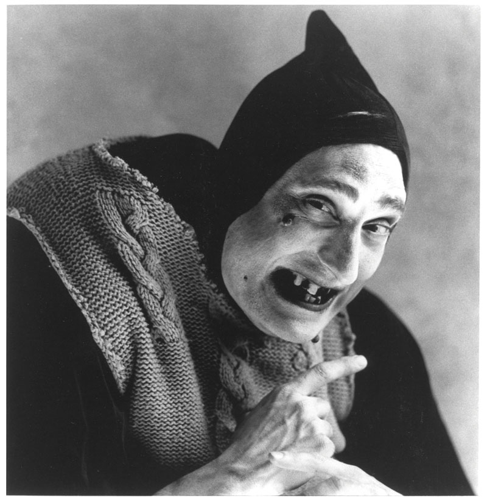
In September 1971, Creature Feature took to the air on WSM-Channel 4, and a Nashville legend was born. Sir Cecil Creape (pronounced "Ses-sill," not "See-sill") was an unlikely TV star: a balding, portly hunchback with dentures from hell and an accent like a Southern-fried Boris Karloff. But from the moment he came clumping down the stairs "deep within the catacombs" beneath the WSM studio, and onto the televisions screens of Middle Tennessee and southern Kentucky, he was a graveyard smash.
By that time, WLAC-Channel 5 had snatched up the local broadcast rights to the Universal horror films for its afternoon movie program The Big Show. So WSM had to resort to less stately but weirder and wilder fare like I Bury the Living, From Hell It Came, and The Hypnotic Eye. Such oddball films, combined with well-written and produced scripts — and the remarkable charisma of Sir Cecil himself — made for a late-night ratings blockbuster.
Overnight, talk of Sir Cecil Creape and his signature greeting "Did someone caaaall?" was everywhere. He soon appeared on the cover of the Tennessean's Sunday Showcase section and at live events. WSM even created a Sir Cecil Creape Fan Club, which offered a poster and a cardboard mask perfect for terrorizing younger siblings, and the Boy Scouts of America Middle Tennessee Council issued a special "Sir Cecil's Ghoul Patrol" patch.
WSM added to Sir Cecil's popularity by making his true identity a top secret. Many of WSM's on-air personalities were suspects, including weatherman and future game-show millionaire Pat Sajak (who worked on scripts for Creature Feature). But the true identity of Sir Cecil was a man normally behind the cameras at Channel 4, film editor Russ McCown. A native Nashvillian and Vanderbilt graduate, McCown was a regular in local theater and a collector of antiques, which he used to decorate the set of Creature Feature (along with, for unknown reasons, a photo of station political analyst Floyd Kephart).
One aspect of the show that wasn't a mystery was the voice that provided the pre-recorded intro each week — a rambling spiel of gobbledygook about "the human brain-box" and the horrors contained within, as the camera focused on a human skull. It was none other than Ken Bramming, the familiar voice of Dr. Lucifur. Sir Cecil would often mention his friend the Doctor, and Bramming eventually would return to the role in special guest appearances on Creature Feature.
Although Sir Cecil Creape was a star, the program's days were numbered. In the fall of 1973, WSM moved the show from its prime spot at 10:30 Saturday nights to Saturday afternoons. Although many kids followed Sir Cecil to the afternoons — and in fact some probably got to see the show for the first time — it soon lost most of its teenage and adult audience and ended its run in December 1973.
WLAC-Channel 5 would later launch Suspense Theater in the mid-'70s, hosted by "The Count of Five" a vampire character played by Bob McGehee. But the show and character never caught on, perhaps in large part due to the slate of movies — although it gave local audiences one of their few chances to see Dear Dead Delilah, the Agnes Moorehead-starring 1972 horror movie shot in Middle Tennessee, which to date remains the sole film producing credit for the legendary Cowboy Jack Clement.
But the story wasn't over for Sir Cecil Creape. In 1983, Russ McCown was working for The Nashville Network, and the fledgling cable channel needed cheap programming. With public domain movies such as White Zombie, Dementia 13 and The Terror available for free, Sir Cecil's resurrection was a natural. The Phantom of the Opry made its debut on March 13, 1983. Sir Cecil's lair was now located beneath the Opry House, but little else had changed from the glory days of Creature Feature. The show ran until December 1985, and while it never caught on like Sir Cecil's first incarnation, it did make history as the first horror-host program to appear on a nationwide cable channel.
McCown would continue to revive the character through the early 1990s with occasional appearances on TNN's Nashville Now show and at live Halloween appearances at Opryland. Russ McCown passed away on Jan. 3, 1994. At his funeral, a framed picture of Sir Cecil Creape was placed on his casket.

Humphrey the Hunchback
Humphrey the Hunchback: Humphrey Has a Hunch
By the time the '90s rolled around, local TV entertainment programming had largely gone the way of the dinosaurs. Competition with cable channels, an explosion of popular syndicated talk (and freak) shows, and the invasion of infomercials put the final nails in the coffin for most horror hosts. But the growth of small UHF "fourth, fifth and sixth" network affiliates opened a small window for Horrorhosticus maximus to stalk the airwaves again.
In 1996, Humphrey the Hunchback debuted on WNAB-Channel 58, then Nashville's WB affiliate. The Horror Movie of the Week (later renamed Frightmare Theater) ran Saturday nights at 10:30, where Humphrey hosted low-budget horror fare such as C.H.U.D., Jason Goes to Hell, and the original Halloween films.
Barry McAlister had originally created Humphrey for a K.T. Oslin video, and he managed to sell the station on giving the character his own humpday. Shot on practically no budget, many of the Humphrey segments were filmed in the station's mechanical room, at Fort Nashboro, or anyplace else that presented no extra cost.
Even though McAlister wasn't originally from Nashville, Humphrey seemed almost an homage to Sir Cecil Creape, continuing the tradition of a hunchback with horrifically bad dental work (but with more physical energy and scripts loaded with constant cult movie and pop culture references). Humphrey met his end in 1998, alas, when WNAB decided to drop all locally produced programming.

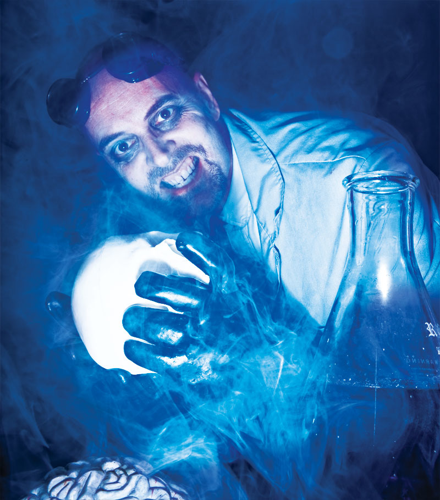
Dr. Gangrene: The Doctor Is In(Sane!)
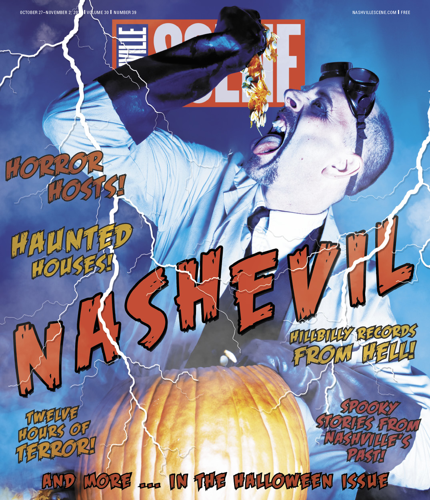
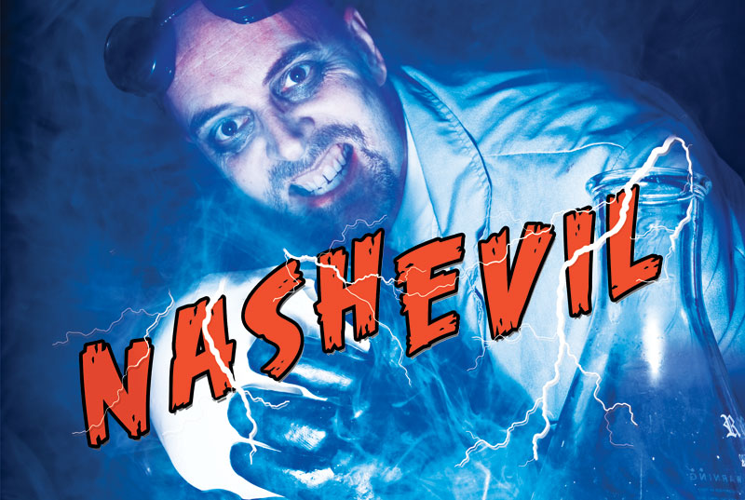
Nashville would not have to wait long for the next horror host to appear. In 1999, Chiller Cinema, hosted by Dr. Gangrene from his lab on "Shackle Island," began a long run on Hendersonville's public-access cable channel. The show quickly expanded to include Nashville community access and self-syndication to community-access channels in other states. A few years ago, he eventually made the jump to broadcast television.
Portrayed by writer and artist Larry Underwood, Dr. Gangrene was one of the first of a new generation of horror hosts that began appearing on community access channels and web broadcasts across the country in the late '90s and on into the new century. Underwood created the character as an obvious tribute to his hero Sir Cecil Creape. He even wears the "Sir Cecil's Ghoul Patrol" patch that he received as a Cub Scout in the early '70s on the front of his lab coat.
Now appropriately in its 13th season, the show has undergone a variety of format changes and titles. The cable shows were primarily half-hour episodes that mixed slapstick comedy, interview segments with a variety of horror writers, artists, collectors and musicians, and excerpts from movies. He continued this format when he made the jump to broadcast television in 2003 for a short run on UPN affiliate WUXP-Channel 30.
Dr. Gangrene also hosted a few public-domain movies while still on cable, but the full-time change to hosted movies came in 2005 when he moved the program to WNAB. He began hosting the station's late-night horror movies, changing the show's name to that old favorite Creature Feature.
In its current incarnation on Channel 58 at 1 a.m. Sunday, Dr. Gangrene Presents, the show has returned to a 30-minute time slot with the good doctor cutting up old episodes of early '60s TV chestnuts One Step Beyond and Boris Karloff's The Veil. All the while, he injects the usual prescription of cornball jokes, slapstick humor and greasy grimy gopher guts (or a facsimile thereof).
The Gangrene empire has also expanded with a variety of projects. Every October, he produces an annual "Horror Hootenanny" spotlighting local and national horrorpunk bands. His website, ChillerCinema.com, offers regular blog posts on horror movies and horror-rock bands, and features a special section on the history of Nashville and other Tennessee-based horror hosts. This year also saw the DVD release of The Dreadful Hallowgreen Special by Alpha Video — a co-production with horror host "Penny Dreadful" from Boston's Shilling Shockers.
The glory days of late-night live TV may be gone. But at least a few hardy ghouls still manage to keep the rubber bats at bay, step lightly over the cardboard tombstones and provide us with a really bad pun or two. As long as they're here, the tradition un-lives. And so, in the immortal words of Sir Cecil Creape: "Good night ... sleep tight ... and don't let the beddy-bugs bite. ... "
Special thanks to Larry Underwood, Jeff Thompson and John Hudson, whose research and writings on Nashville horror hosts supplied much of the information for this article.




