
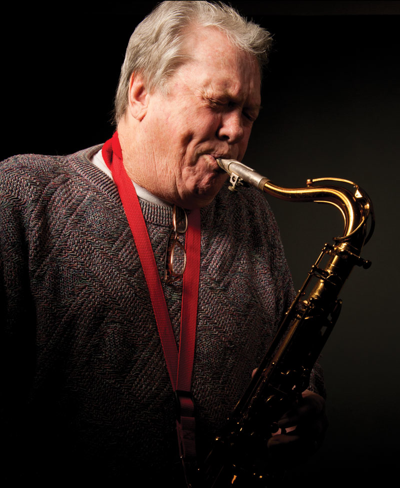

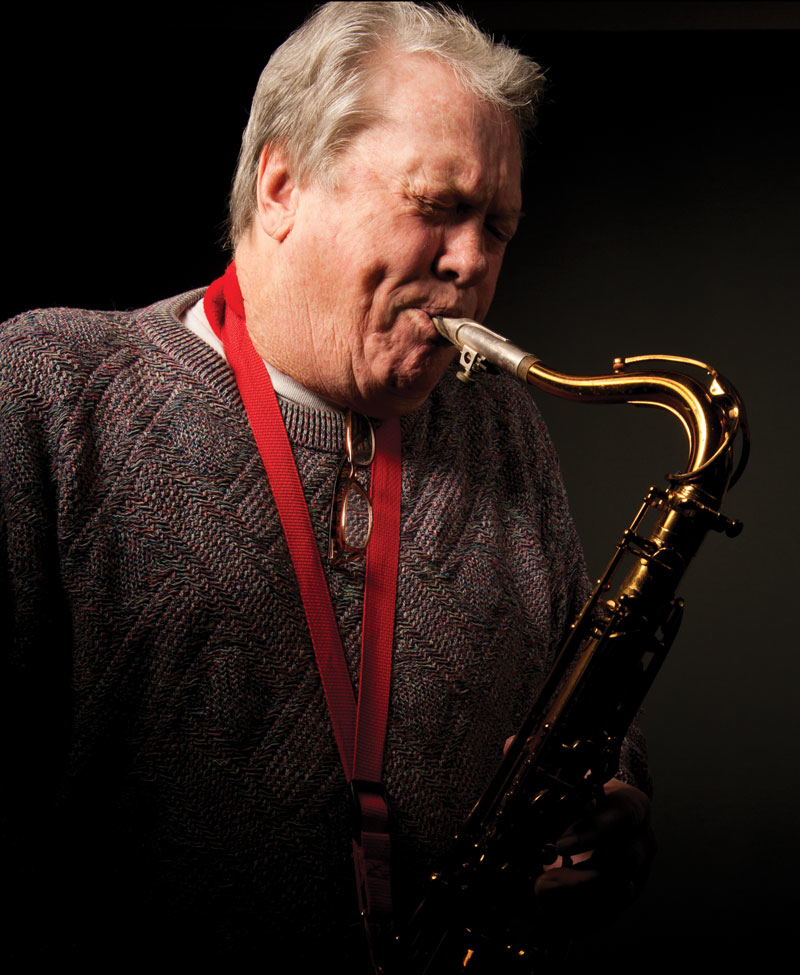
Bobby Keys,
who died Tuesday in Franklin, was among the most prominent of a group of instrumentalists who helped define the sound of rock music in the late 1960s and early ’70s. A saxophonist influenced by the work of fellow Texan King Curtis Ousley and blues harmonica player Little Walter Jacobs, Keys made his mark as a sideman for The Rolling Stones. His dirty, slippery tenor-sax solo defined The Stones’ 1971 track “Can’t You Hear Me Knocking,” and he toured with the group for most of their career until illness caused him to cancel plans to travel with them to Australia and New Zealand earlier this fall.
But Keys was much more than a gun for hire. On “Can’t You Hear Me Knocking,” which may be his signature performance on record, he grounds the long instrumental break with licks straight out of the Texas roadhouses that honed his craft. Keys did some of his best-known work with the Stones — he played on 1969’s Let It Bleed and “Honky Tonk Women” single, as well as on 1971’s Sticky Fingers and 1972’s Exile on Main St. (That’s his lewd, cackling solo gunning the motor on “Brown Sugar.”) In an era when rock musicians self-consciously looked back to ’50s R&B and soul for inspiration, Keys provided a link to their unselfconscious original impulses.
Keys was born Dec. 18, 1943, in Slaton, Texas, a town near Lubbock, on the same date as Stones guitarist and partner-in-mischief Keith Richards. He began his professional career as a teenager. As he told The Austin Chronicle’s Margaret Moser in 2006, “I first went on the road with The Rolling Stones in the year of our Lord 1969. But my grandfather gave me away to a drummer when I was 15 years old.”
In fact, Keys’ grandfather signed papers that gave drummer Jerry Allison (of Buddy Holly’s band The Crickets) legal guardianship of the young saxophonist, who had already met King Curtis in Lubbock. After touring Canada with rock singer Buddy Knox, Keys embarked upon his career. He first met the Stones at a 1964 Texas show, and hooked up with the band again in 1969 during a break in a Los Angeles recording session with white-soul singers Delaney and Bonnie Bramlett.
Keys played saxophone on the songs that resulted from the Delaney and Bonnie sessions that made up their 1969 Accept No Substitute — The Original Delaney & Bonnie & Friends. On the Bramletts’ superb “Get Ourselves Together” and “When the Battle Is Over,” Keys blended in with a group of musicians that included bassist Carl Radle, guitarist and pianist Leon Russell and trumpeter and trombonist Jim Price. But it was Keys’ work on the Stones’ “Live With Me” — the first track he cut with the band — that established him as one of rock’s greatest saxophonists.
Over the next few years, Keys played with the Stones on the road and in the studio, and he bonded with Richards, whose exploits with the saxophonist became part of rock lore, from golfball-shooting incidents to a gig missed lolling in a bathtub of Dom Perignon. Perhaps most famously, the two pitched a television from a hotel-room window in a 1972 prank captured by filmmaker Robert Frank for his movie Cocksucker Blues.
As an in-demand saxophonist, Keys played on great records by Harry Nilsson, John Lennon, Carly Simon and many others. He’s all over Nilsson’s best LP, 1971’s Nilsson Schmilsson, and he performed the memorable solo in Lennon’s 1974 single “Whatever Gets You Thru the Night.” On all the recordings he did as a sideman, Keys brought true rock ’n’ roll sensibility to the material. Much like New Orleans session pianist Mac “Dr. John” Rebennack, Keys kept his regional identity without ever sounding like a throwback to an earlier era.
After moving to the Nashville area in 1992, Keys kept a low profile in a music scene that never had much use for R&B-influenced saxophonists. But he played a series of memorable shows in town with a band called The Suffering Bastards that included like-minded Nashville musicians such as Georgia Satellites guitarist Dan Baird and drummer Brad Pemberton.
Keys also attended a 1994 George Jones recording session for that year’s The Bradley Barn Sessions with Richards, who sang with Jones on a version of Dallas Frazier’s “Say It’s Not You.” As Keys told the Scene’s Adam Gold in 2012, “That was quite a trip, seeing George and Keith in the same room. They hit it off right away, although they were like two old dogs sort of walking around in a circle, seeing who was going to do what first.”
I saw Keys play with The Suffering Bastards at a 2012 Mercy Lounge show as opener for Drive-By Truckers. Keys announced each song in the voice of a benevolent carnival huckster and played his signature licks on versions of Wayne Carson’s Box Tops hit “The Letter” and, of course, the Stones’ “Can’t You Hear Me Knocking” and King Curtis’ “Soul Serenade.” During that show, I knew I could relax — I was in the hands of a master.
In 2012, Keys published his autobiography, Every Night’s a Saturday Night: The Rock ’n’ Roll Life of Legendary Sax Man Bobby Keys, which included a foreword by Richards. It tells the story, but the records he made complete his tale. An avid golfer and model-airplane enthusiast, Keys mellowed in his later years but remained unpretentious. As he told Adam Gold in 2012, “I just play into the microphone. Where it goes is beyond me.”



Post a comment as anonymous
Report
Watch this discussion.
(0) comments
Welcome to the discussion.
Log In
Welcome to the discussion.
Keep it clean. Please avoid obscene, vulgar, lewd, racist or otherwise abusive language. Comments featuring hate speech or threatening or violent content will not be tolerated.
PLEASE TURN OFF YOUR CAPS LOCK.
Be truthful. Don't knowingly lie or mislead.
Be proactive. Use the “report” link on any comment that violates our comment policy.
Share with us. We'd love to hear your feedback.