
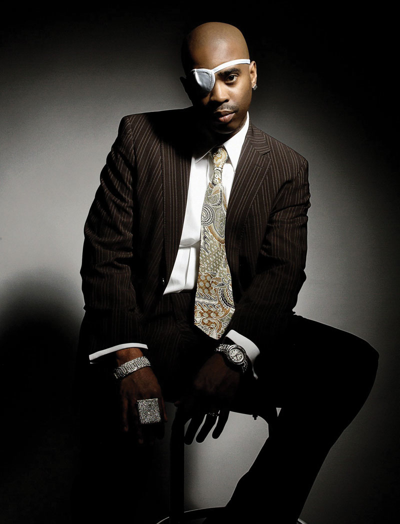

1988 was the greatest year for hip-hop. Well, you could make probably make that argument for any year half a decade before or after 1988 — this is the height of hip-hop's golden age we're talking about. But for many budding music fans, myself included, 1988 was the year. Yo! MTV Raps hit the airwaves, De La Soul and Biz Markie were just months away from the pop charts, Public Enemy and NWA were ruling the underground — halcyon days, for sure. But for those of us with a jones for narrative and an ear for the literary in music — even if we wouldn't identify these characteristics within ourselves for another decade or two — there was only one record that mattered: The Great Adventures of Slick Rick.
Twenty-six years later, it's hard to imagine a life before The Great Adventures, but it's almost impossible to overstate the effect that it had on a bookish, nerdy 9-year-old from the suburbs. While the shock waves of hip-hop had yet to hit my elementary school halls, it was easy to tell that this record was different. My cousin Kurt popped it into the boombox — a clandestine listen on a family vacation while our parents were out, due of course to the "Parental Advisory" sticker on the cover and our collective fear of punishment — and Great Adventures was immediately enthralling. From the moment Slick Rick says, "Excuse me, can I have your attention? There's just a few things that I've got to mention" on album-opener "Treat Her Like a Prostitute," to that very last exhortation to "lick the balls," Great Adventures had me all the way through.
But it wasn't just a juvenile affection for the prurient — in all honesty, I had no idea what a prostitute was, even if the word "balls" did and will always elicit a giggle from me. There was something more, something important, something that would shape the way I listened to music for the rest of my life: storytelling. More than any rapper before or since, Slick Rick's rhymes weren't just raps, but rather full-on stories with complete narrative arcs, rich characters and, barring his lapses into misogyny, a strong sense of morality. If the true test of great literature is its ability to take the reader and immerse him or her in a world not their own, then Great Adventures is truly great literature. Rick's Hemingway-like clarity and Stan Lee-like energy when telling stories made an experience completely foreign to me feel as familiar as strip malls, soccer fields and cul-de-sacs.
If another sign of great literature is its ability to become part of the common vernacular, to become a cultural touchstone and universal point of reference, then we are going to have to put MC Ricky D right up there with Dickens and Dostoyevsky. Without even including his breakout track with Doug E. Fresh — the all-time beatbox party jam "La Di Da Di," which features the best bubble-bath reference ever — Slick Rick has been sampled, quoted and interpolated into more songs than just about any artist in rap history. He's been sampled by everyone from Nas to Goodie Mob, from Jay Z to Montell Jordan. He's been covered by Snoop Dogg and Black Star, and if I were to list all the rappers who have alluded to his lyrics or dropped a direct Slick Rick quote, I'd have to list ... well, all of the rappers. Like, all the rappers ever.
Slick Rick's impact was — is — enormous. You can still hear him at every old-school hip-hop party on earth and in the voice of every young rapper who values craft over flash and seeks to create art rather than rattle off commercial endorsements. And while his catalog post-Great Adventures has been sporadic — partly due to a stint in lock-up for attempted murder and the British-born MC's long-running immigration issues — his importance to the art form and his place in rap's journey from outlier party music to fine art has never wavered. And there's one reason for that: masterful storytelling. It seems like such a simple thing, but in an era where ham-fisted lyricism is the norm, it makes Great Adventures even more important.
Email Music@nashvillescene.com.



