
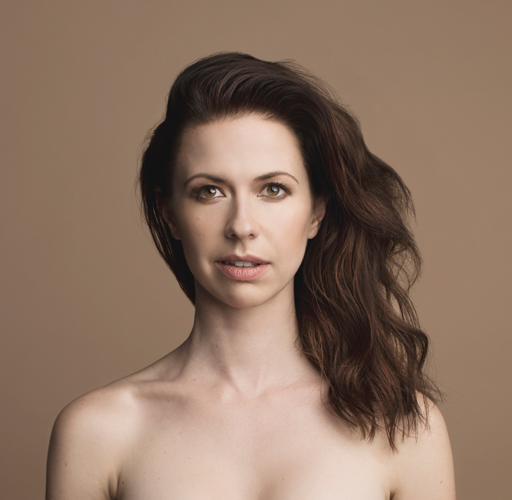
Joy Williams has a lot of history in Nashville. There are folks here who had a hand in signing, marketing, publishing, plugging, promoting and booking her as a teenage Christian pop singer, who then put her efforts into writing and recording indie pop — some of it for TV and film — before going all in as one-half of the immensely popular, theatrically intimate folk-pop duo The Civil Wars, with former foil John Paul White.
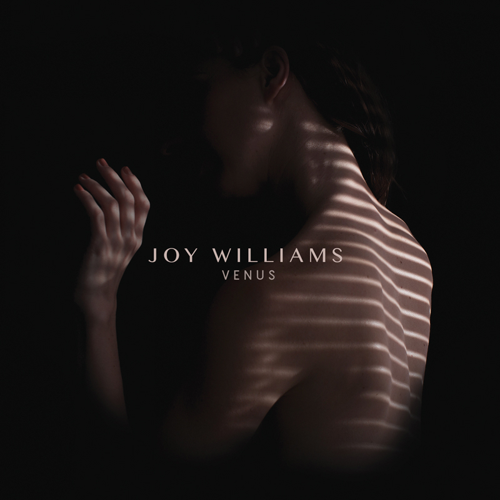
Since that project came to its bizarrely abrupt end, Williams briefly switched to a female singing partner, harmonizing with Haley Williams on the introspective one-off Paramore single "Hate to See Your Heart Break." But the real activity happened beyond the spotlight, where Williams went about co-writing six- or seven-dozen confessional songs for her heady new solo album Venus. She began the process here in Nashville, collaborating with Civil Wars producer Charlie Peacock and other pro writers, and wrapped it up in Venice Beach, Calif. — where she and her husband/manager Nate Yetton had relocated with their son — with smart songwriter and pop-star whisperer Matt Morris.
Williams' vocal attack — all billowy phrasing and breathy crescendos — isn't fundamentally altered now that she's standing alone, and her songwriting still aims toward emotional catharsis. The difference is now her voice is elegantly cocooned in crystalline synth parts and down-tempo programmed beats, and she's no longer representing the feminine side of a performed romantic drama, but owning her desires. "Part of this [new] record," she tells the Scene, "is 'What can I undo? Where the things that I live my life by have caused me shame or kept me quiet, what happens if I systematically start dismantling those things?' "
This is the third distinct artistic identity you've had by the age of 32. The essence of you is still intact, but you're so different when you're from 21 to 25, and 25 to 30. I think before I was really concerned about making sure that I was [putting my] best foot forward, giving it my all, but making sure I didn't ruffle any feathers. And I think this time, for me, after everything I've gone through, I'm just more OK with how messy everything is and how messy I am. I'm more interested in the broken pieces and how people move through those, because I had to move through my own.
Even though the imagery is broad and open to interpretation, I also feel like I'm hearing your perspective on your experiences. I had to fight hard for that, because I spent the last chapter collaborating in a way where it was like, "How do we collectively make a perspective happen? How do we represent this archetypal feminine? How do we represent this archetypal male dynamic?" It wasn't that mathematic, but it just seemed to be that way. ... [This time] was that I had that group of creative souls that were really great active listeners to collaborate with. And I had people that were there to lovingly kick my ass and be like, "Don't be so afraid to say what you actually feel. Don't cloak it in so much metaphor. Just say it."
It did seem like The Civil Wars was made up of two personas in tension. You were the effervescent, feminine, sanctifying presence to John Paul White's dark, tortured Southern gothic. Do you feel like you're undoing that narrative with your solo work, especially when you sing about the "good woman" and the "jezebel"? Maybe I am. I mean, I think I wanted to reclaim my own voice again. In doing that, I feel like I had to scare myself in the things that I was saying. If I started feeling like, "Oh my gosh. I feel like I'm jumping off of a ledge of vulnerability," then I knew I was doing something that I probably needed to do. I think, too, over the past couple of years, there's been so many rumors, and I've been called so many things.
Have you actually been called a jezebel? Oh, that's [not even] the half of it. The rumors are far more exciting than what actually happened, but I have felt at times people really name me in a way that I don't feel like is true. But to be a woman and to be sensual, and to be expressive, and to be loving, and to be weak and strong and scared and a fighter, and to move forward is something that's important to me. But I feel like that can be misinterpreted just as much as [the duo] was. But at least this way I'm speaking up for myself, in a new way. I'm not so afraid of fitting into an archetype as much as I'm concerned about being myself.
You've said you'd come to recognize that you were part of creating The Civil Wars' myth of intense, doomed romantic intimacy. In hindsight, how do you feel about the role you played in the entire narrative? I want to be respectful. I want to be myself, but it's a really hard thing when you're not on speaking terms [with your former collaborator], even though I'd made attempts. It was a really difficult; it still is a really difficult thing. And I think a lot of it was that I was always so afraid to say something that would be misinterpreted. ... I felt like I was constantly having to be really [careful] in my word choices, and it was exhausting. It's still frankly exhausting. It gets me sad and mad less, because I feel like I've just come to terms with a lot of things in my life. ... I'm feeling even nervous talking to you about it now, because I feel like here's the deal: If I say too much, then I'm a bitch. If I don't say enough, then I'm a bitch. One way or the other, the narrative goes, I'm either protecting somebody or I'm not being honest, when to me, transparency with boundaries is an adult thing.
Do you feel it's possible to assume a new artistic identity without invalidating one you had before? Absolutely. I do. All of my faith-based music career is almost all up online. If I wanted to, I could go back, and it feels like I'm looking at my high school yearbook, but with audio. I feel like everybody could relate to what that moment feels like. It's like, "Yeah, that was where I was then." I can look at 18- or 19-year-old Joy and have compassion, and also shake my head at points. ... And then going into The Civil Wars. It's all very well-documented online. And I look at that and I go, "God, I am so grateful, and I had so much fun." I unlocked something within myself by being a part of that duo. I gave myself permission, finally, to feel like a woman.
As opposed to ... As opposed to a girl. And that was such a great experience for me. I got to make music that I would've never made on my own, and that, conversely, I don't think John Paul would've ever made on his own. So I'm bringing that songwriting muscle, and that strength of my own femininity into this season too. ... I feel like a lot of times as women, we still have that sense that we need to be pleasing, and we need to leave a good taste in everybody's mouth. You can be strong, but not so strong that it's disconcerting. You can have ambition, but don't have too much, because then you'll be losing something.
Email Music@nashvillescene.com



