
Family gatherings can be occasions for reflection and levity, and they can also fracture along lines of divergent personalities. In country music, no single figure is more storied than Hank Williams, whose late-’40s and early-’50s recordings helped define the genre in its modern guise. As the Country Music Hall of Fame and Museum’s ambitious new exhibit Family Tradition: The Williams Family Legacy demonstrates, the singer’s influence isn’t merely a musical matter. If country is partly about the ways individuals confront history and tradition, the story of Williams and his wives, son, daughters and grandchildren illuminates deep truths about fame, the music business and the nature of human relationships.
Curated by The Hall of Fame’s Carolyn Tate and Michael McCall, Family Tradition retells the familiar story of Hank Williams, whose 1953 death from a drug-related heart attack remains a troubling reminder of the dangers of success. Like Elvis Presley, Williams revolutionized the music business and inspired countless singers, songwriters and hungry country boys. Williams’ influence can be heard in the high, hard singing of half-forgotten figures such as Texas honky-tonker Frankie Miller and in the more familiar tones of Faron Young and George Jones.
Still, as McCall—a writer and editor at The Hall of Fame, longtime Nashville music journalist and frequent Scene contributor—explains, the exhibit strives to put into larger context the contributions of all the Williams family, who have lived in the shadow of tragedy, fame and litigation for a half-century. With a dizzying array of over 200 artifacts that range from homey to gaudy, the exhibit portrays the Williams family as quintessential Americans whose drive and creativity have helped shape world culture.
“About three years ago, Carolyn went to Hank Jr.’s house, looked through his stuff, and was doing some preliminary thinking about it,” McCall says. “And it came to be that, last year, we seriously wanted to do something, and we got to thinking. Why not tell [the family’s] story and include Hank Sr. and Hank Jr., and then the third generation?”
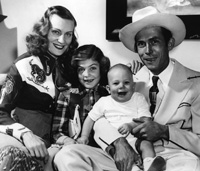
Encompassing a wide swath of musical and personal history, Family Tradition tells the story of Williams’ first wife, Audrey Williams, whose determination and business acumen helped define the family’s legacy after the singer’s death. Hank Jr. talks movingly about his mother in a series of videotaped interviews that visitors can view throughout the exhibit.
“For Hank Jr., a lot of the process was looking back at his mom and realizing she was a single mother who was really driven and worked very hard,” McCall says. “He said, ‘She did more shows than my dad ever did, you know?’ ” (Divorced from Williams in 1952, Audrey Williams got the couple’s Nashville house in the subsequent settlement. The exhibit features items from their Franklin Road home, including family photos and a Capehart-Farnsworth black-and-white television.)
For Tate, whose extensive résumé includes planning and designing the interior of Memphis’ Stax Museum of American Soul Music, the challenge was to make connections. “It was my responsibility to find an interesting story and interpret it, look for new information,” she says. “This family is the most iconic, marvelous family in country music.”
As for the family members themselves, Tate says they quickly warmed to the notion that each had a unique contribution to make. “A lot of them are, very understandably, guarded,” she says. “But they really shared a lot, and were very candid with us. It’s a huge story, huge fortunes, huge tragedy and huge pathos and trauma. But at the end of the day they were the most fundamentally ordinary family.”
They were indeed an ordinary family, as the many haunting photos attest. But Hank Jr. entered the music business early, so the exhibit features his pink lamé jacket, worn in the days when he was a teenage sensation known as Rockin’ Randall. On the other hand, his half-sister, Jett Williams, had a far more tortuous route to recognition by both the world at large and the family itself.
Born just days after Williams’ January 1953 death and adopted by Williams’ mother the following year, Jett Williams was named Antha Belle Jett by her mother, Bobbie Jett. Later adopted by Wayne and Louise Deupree, a well-to-do couple in Mobile, Ala., she went by Cathy Louise Deupree before discovering her identity. In 1987, her life changed drastically when the Alabama Supreme Court ruled she was entitled to a half-share of her father’s estate.
“When I did take that step into the Williams’ world, it was a bit overwhelming,” Jett says. “But I was able to pass from one kind of a world into another. When you take on a public life—that is completely different. There’s a coin, and you have Hank Jr. on one side and me on the other side. He was born into it. Flip the coin, and I didn’t even know I’m a Williams. I think I’ve handled it very well, and I think I’m fairly grounded.”
Family Tradition also tells the story of Hank Jr.’s older sister, Lycrecia Hoover. “She had us drive out to meet her at the Cracker Barrel—neutral ground,” McCall remembers. “She kind of felt us out, and a lot of her questions were about Audrey. When we made it clear that Audrey was a big part of the exhibit, she was receptive.” (The exhibit also features interviews with Shelton, who now goes by Hank III, and with Hank Jr.’s daughters Hilary and Holly.)
McCall sees differences between the experiences of Jett and Hank Jr. “[The story of] Jett has less darkness with it,” he says. “She became a performer after she knew who she was. So it wasn’t that it was forced upon her. She wasn’t pushed onstage by somebody.”
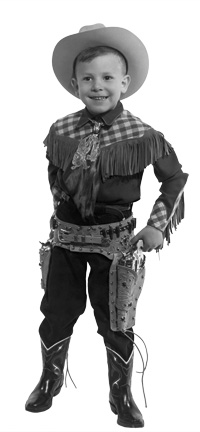
On the other hand, Hank Jr. became a professional early on, winning awards from the Country Music Association in the late ’80s and selling millions of records. The exhibit is especially strong on Hank Jr.’s early career, so visitors can view his child-sized Nudie suit, video clips from the early ’60s and press clippings that describe his 1960 Grand Ole Opry debut.
“People don’t look at Hank Jr.’s influence on modern country that much, or at Hank Sr.’s influence on music beyond country,” McCall says. “In the long run, I think Hank Jr.’s influence has been a lot stronger than Gram Parsons’ on contemporary country. A lot of it comes from pride of place. Hank Jr.’s a regular guy who goes hunting and fishing with his family, and doesn’t care about wealth and status.”
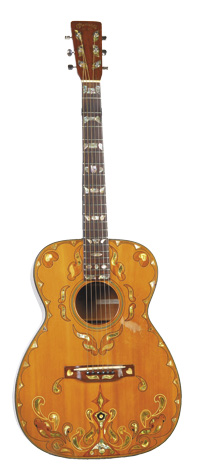
Among the items Hank Jr. contributed to the exhibit are a couple of instruments he had been holding onto for years. “Last week, he came in and brought me his father’s fiddle and his father’s original 1944 Martin D-28 [guitar],” Tate says. If there’s a note of pride in that statement, it’s justifiable. The exhibit is a rich slice of history that doesn’t shy away from tragedy. Yet it suggests that the bonds of kinship transcend the struggles the Williams family has endured.
“Life doesn’t change,” Jett says. “You get married, you have divorces, you have problems, whatever. Yes, it has a tragedy to it. It also has, I think, a happy ending. The legacy is still going on, and all the generations of the Williams family are proud of who we are and what we’re doing.”