

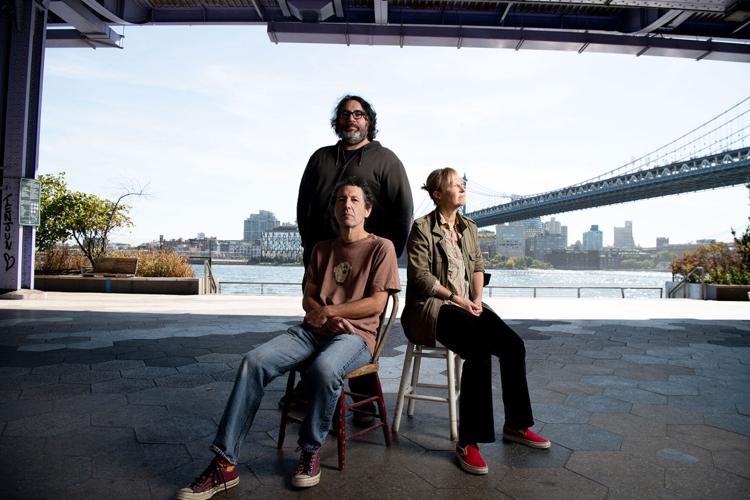


Formed in Hoboken, N.J., in 1984, Yo La Tengo has not only long surpassed the average life expectancy of an indie-rock group, but also continued to find new ways to spin its singular, hypnotic, fuzzed-out sound. No two YLT albums sound quite alike, but the way the trio — which solidified its lineup of singer-drummer Georgia Hubley, singer-guitarist Ira Kaplan and bassist James McNew circa 1992 — plays with their influences and techniques and reaches out in new directions is a grounding source of comfort for their legion of fans. They’ve practically become a genre unto themselves.
On 2015’s masterful Fade, Hubley, Kaplan and McNew vibed out with a vengeance, adding a new pillar to their deep catalog alongside two earlier consensus fan faves, both of which were recorded in Nashville: Painful, which turns 30 in the fall, and I Can Hear the Heart Beating as One, released in 1997. Since then, Yo La Tengo’s efforts have erred on the mellower side, as with There’s a Riot Going On, the tour for which last brought them to Music City in 2018, and the quarantine-era, ASMR-like We Have Amnesia Sometimes — records both best enjoyed prostrate, over headphones or between a nice set of speakers.
With all that’s happened since those Basement East shows five years back, the moment feels right for a more rock-leaning Yo La Tengo record, and with This Stupid World, McNew, Kaplan and Hubley have answered the call. From the long-form opener “Sinatra Drive Breakdown,” which is all moody motorik grooves and gnarled, dissonant guitars, to “Aselestine,” which is among several sublime tracks on which Hubley takes the mic, to the ambient closer “Miles Away,” the nine-song LP feels like reuniting with an old friend. The making of it, however, marked at least one first for the veteran band, bassist McNew tells the Scene. In contrast to records like 2002’s all-instrumental The Sounds of the Sounds of Science — written for a series of short nature films and mostly recorded with their Music City go-to producer-engineer Roger Moutenot in an abandoned bank building on the East Side — no fourth person was involved through most of the process.
“We made this record ourselves — recording, engineering, mixing — which was different, and really fun,” McNew explains, speaking via phone from a tour stop in San Francisco. “‘Sinatra Drive’ was born of a hastily recorded jam. Played it once, and there it was. There was lots of combining archival recordings with new tracks recorded from scratch. Once we got rolling and got the mics set up — to a place where we could just kinda go, track whenever we wanted — we were off. It was really fun, and hard — solving problems ourselves all day long, making it up as we went along. Spontaneous and satisfying.”

McNew points to a stylistic influence you might not expect for the YLT oeuvre, but makes total sense when he puts it in context. He highlights the way the work of Derrick Carter, a DJ who helped shape the contours of house music, crept into his playing on Stupid World.
“I like repetitive music, and for me, it doesn’t get more desirable than what he does — these trance-like, psychedelic qualities,” says McNew. “[Carter] has been at it since he was a kid, and continues to make amazing music now. He’s someone I’ve listened to a lot these past couple years — deep diving, and staying there.”
For the well-traveled trio, the forced break from touring in 2020 and ’21 naturally lent perspective on what the road can give you back.
“During that stretch, there were people, places and things you wondered if you’d ever see again,” McNew says. The bassist will celebrate his 54th birthday this July on tour in Japan — home of the Boredoms, a band “who’ve been around almost exactly as long as Yo La Tengo has … and while they don’t put out as much stuff as we do, have an uncompromising vision of art and music and what they believe in [that] I’ve always found deeply inspirational.”
The sentiment extends to Nashville. The band’s frequent visits led them to bond with local legends Lambchop, and their many sessions with Moutenot were instrumental in finding their trademark sound.
“It’s always a homecoming. Add up all the time we’ve spent working [in Nashville] and it’s probably a couple years of our lives as temporary citizens. We can drive around without a map, get from neighborhood to neighborhood. That’s a cool feeling — a home away from home. No other city feels like that. Other than maybe the town where I grew up.”





