
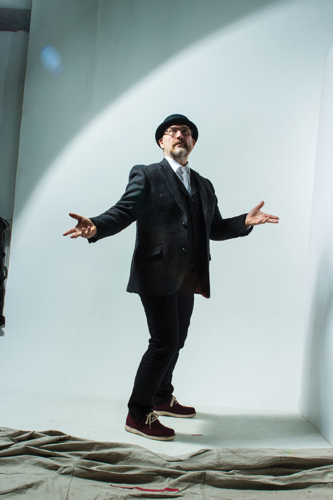

Singer-songwriter Colin Hay and his band Men at Work were at the epicenter of the MTV explosion of the early 1980s. In the video for the 1982 single “Who Can It Be Now?” Gen Xers by the millions saw him cling to his “childhood friend” (a Fender amplifier) as the outside world threatened to encroach through his closed apartment door. Later, after his pop stardom faded, Hay relocated from the Land Down Under to L.A. He kicked drugs and alcohol, toured the world as a journeyman solo artist for the better part of two decades and had an unproductive songwriting session with enigmatic wig-wearing pop sensation Sia — someone Hay has known since she was 2.
Hay’s connection to Nashville dates back to his early-’80s heyday, when Men at Work launched their first U.S. tour at the Grand Ole Opry House. It’s a show the Aussie-by-way-of-Scotland remembers well, in part for the sizable armed police force as much as the young fans who filled the venue and didn’t dance. Now at 63, Hay is on Nashville multi-genre gem label Compass Records, home to Americana standouts Darden Smith and Mike Farris, bluegrass artists the Infamous Stringdusters, The Bankesters and John Cowan, as well as Hay’s wife, the eclectic Cecilia Noël, among others.
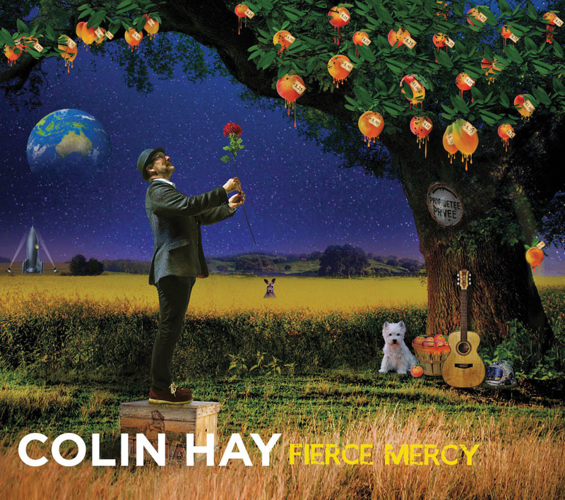
Hay releases his 13th solo album March 3. Fierce Mercy, especially the songs he co-wrote with Michael Georgiades, explores fear and hope at a depth only fearless songwriters who’ve spent six decades on the planet can reach. It’s a delightfully introspective record that feels as honest as it does intimate. Hay masterfully attaches shimmering diamonds of hope and happiness to a backdrop of omnipotent bleakness, a combination familiar throughout his extensive body of work.
You’ve used climate change as a metaphor when describing the album title Fierce Mercy. In what way? Well, I think that we get all these signs from weather patterns all around the world, and they’re quite fierce in their nature. But there’s still something merciful about it as well. It’s not like the planet has said, “You’ve screwed up!” and spits us out. In other words, we still have time to do something about it. It’s a difficult situation now, because we still have a lot of people who think that it’s not man-made. And those people are now in positions of power, which is very distressing.
Does that keep you up at night? It doesn’t keep me up at night. I’ve been concerned about these things since the ’70s, so it’s not a new thing. But it’s getting more and more extreme. As far as me personally, I’m in the last trimester of my life; I’m in my 60s. As far as climate change is concerned, it’s probably going to be much more of a problem in 25 or 30 years or 50 years than it is now, if indeed the path we’re on remains intact.
There’s a lot of fairly dark introspection throughout your songwriting going back to your Men at Work years, from paranoia to introversion and insomnia. Fierce Mercy is also a deeply introspective album. Is your mortality something you were cognizant of while writing these songs? Yes, I think so. I also had a songwriting partner, Michael Georgiades, and he’s 70 years old. I think a lot of the tunes come across as being a bit mournful and as you said, introspective, and I think that’s the way they came out. But it never seems that way when you’re writing the songs and making the records. … When Michael and I are together, there’s a darkness there in that you realize that you’re getting closer to the end of your life. It comes upon you very suddenly. Time starts to fly by, and you can actually visualize that it’s going to end at some point, and that has an effect on everything you do. I think my natural state is quite melancholic with bouts of hopefulness.
Do you have to manufacture those bouts of hopefulness in your songwriting? It comes naturally to me. Like, I woke up this morning feeling pretty hopeful. Not just for me personally, but for the world. I mean, [the day after President Trump’s inauguration] was an amazing day as far as hopefulness goes, with all those women’s marches across the world. That was something that was inspired and inspiring, and it made me feel hopeful.
You recorded part of the album in Nashville, using Nashville-based musicians such as guitarists Doug Lancio and Audley Freed. Jim Hoke sits in on several songs. Why did you decide to record part of the record here and part of it in L.A.? The main reason for coming to Nashville was to record the strings on the record. And we thought, as long as we’re here, maybe this could use a little guitar, and this could use a pedal steel, and this could use some beefy organ. So we brought in some fabulous musicians. A lot of the record feels to me, dare I say, Californian in nature, with sprinklings of Nashville throughout. Recording in Nashville [in general] has been quite egoless for me. These musicians respect the song, and they add some beauty to it. It’s a lovely thing.
Men at Work’s first North American concert was at the Opry House in Nashville. You commented from the stage on the number of armed police officers there. Do you remember that show? Very well. It was one of those places that felt very conservative to us, because they didn’t let people stand up and clap and dance. And coming from Australia, that was what we were used to. This was kind of a sit-down/Grand Ole Opry setup. The security people were very upset. I encouraged people to get up out of their seats if they wanted to.
There’s a documentary out about you titled Waiting for My Real Life. Are there ways you’re still waiting for your real life? Not really, I don’t think so. But there are some moments that I think to myself that I haven’t done something that I’d like to do. Making records and touring is a very horse-and-cart thing to do. My niece — not my blood niece, but Sia — said to me years ago when she came to L.A. that she’s going stop going out on the road. She turned that idea on its head, wrote incredible songs and became very successful. So when you ask me about my real life, sometimes I ask if I should get off the road and go do something else. Should I write more? Should I get into different types of productions? But I don’t simply because of the fact that I spend seven months on the road each year. If I give people a good night out for two hours, that’s not such a bad life, and it makes me feel useful and gives me a sense of purpose.
When did you meet Sia? I met her when she was 2. I was friends with her mother and father. I used to play music with her father.
Have you ever written with her? We tried once, but it didn’t work too well, and we didn’t try again. But that was quite a few years ago. She came over, I don’t think she particularly cared for the chords I was playing at the time, and it didn’t really go anywhere. I would like to try again. We have very different ways of writing. She tends to work with tracks that are already laid down, so she has some kind of rhythm and chordal template to work from, where I tend to write from scratch and come up with things when there was nothing there. I think if I came up with something I thought was a really interesting idea and laid it down as a bed track, I could send it to her. We text from time to time, but she’s in a stratospheric success for the moment. She’s in that mode. I went to see her show at the Hollywood Bowl a couple of months ago. It was extraordinary.
You seem to be taking a long-lens look at your life these days. With that in mind, what has your life taught you thus far? Simple things, really. Figure out how you can sleep soundly, and I think that it’s really, really important to have kindness in your heart. I really believe that.



