

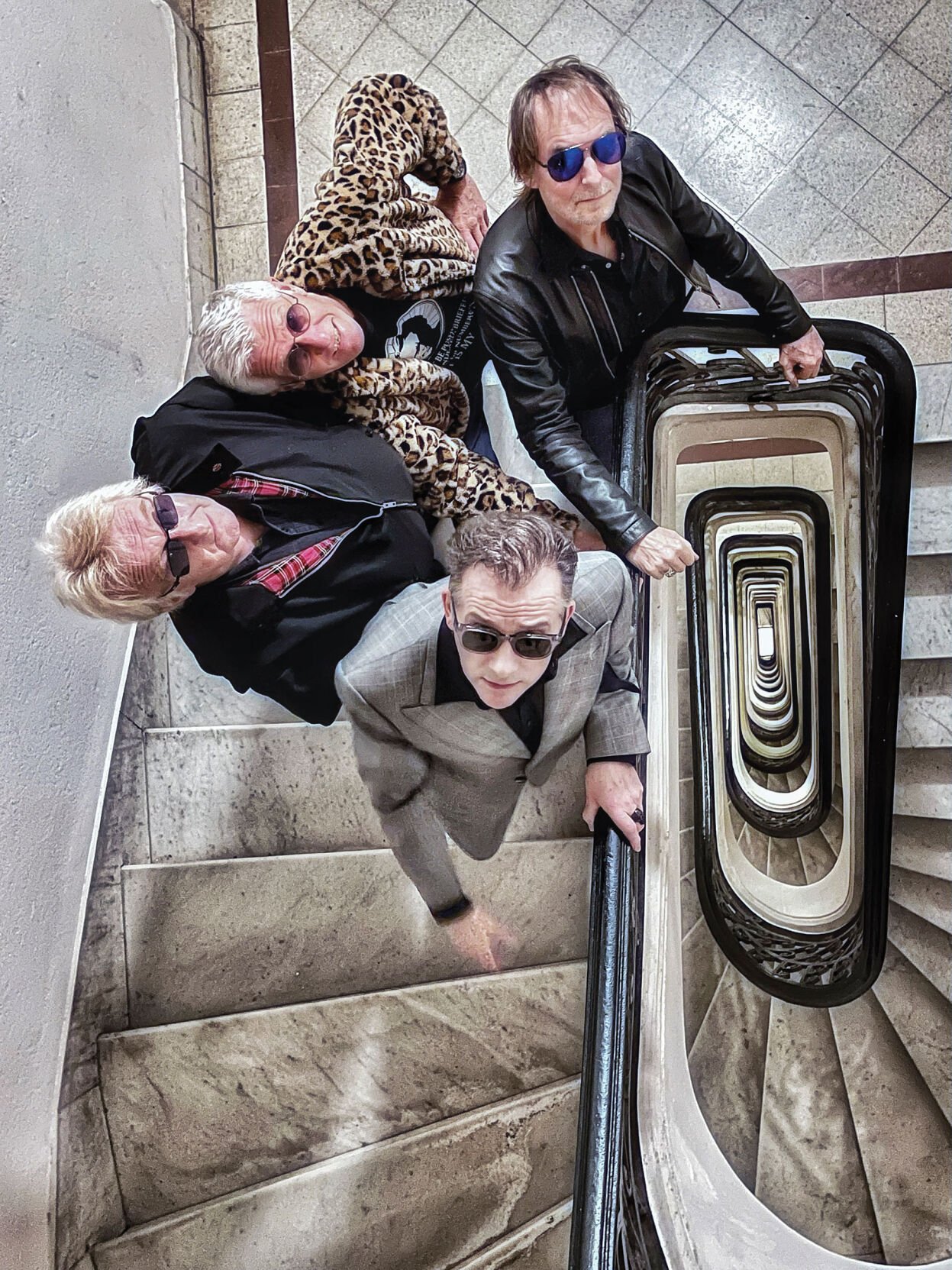
The Damned
As the well-known story goes, Malcolm McLaren — the eccentric manager of influential U.K. punk band the Sex Pistols — offered future Pistols frontman John Lydon an audition for the group he was assembling based on Lydon’s attire: a Pink Floyd shirt with “I Hate” scribbled on it. This anecdote is often used to bolster a lazy narrative that I’ve heard over and over: Punk was born in a vacuum and bubbled up in 1976 from the Bowery in Manhattan and London’s King’s Road, a mutant child who refused to have a past, a future or even a proper music lesson. Occasionally, this take includes respectful nods to punk’s Detroit godfathers like the MC5 and The Stooges, or the pop chart successes of the New Wave acts that came later. But while punk might reject a lot of what came before, it doesn’t ignore it.
The Damned are peers of the Pistols, who long outlived U.K. punk’s initial cherry-bomb flash, and their latest tour stops in Nashville this Friday at Brooklyn Bowl. (While the original incarnation of the Pistols imploded in 1978, the latest version is also touring this year. You might have read Lydon isn’t happy about it; he’s also on the road with his own post-Pistols group Public Image Ltd.) Unlike some of their contemporaries, The Damned were never shy about their love of ’60s musical influences. Released in October 1976, The Damned’s debut single “New Rose” opens with singer Dave Vanian asking, “Is she really going out with him?” as an homage to The Shangri-Las’ 1964 classic “Leader of the Pack.” Then drummer Rat Scabies fires off a hypnotic beat on his toms lifted right out of the surf-rock lexicon (see: The Surfaris’ “Wipe Out” and The Ventures’ “Walk Don’t Run”). Next, then-guitarist Brian James — who sadly died at age 70 in March — bursts into a frenetic rockabilly riff. And on the flip side of the single is “Help,” a high-octane cover of the Lennon-McCartney tune.
The recording sessions for the band’s debut Damned Damned Damned crystallized key components of the sonic signature of influential indie Stiff Records, and were produced by singer-songwriter and bassist Nick Lowe. He helped The Damned connect to the blues-boogie pub-rock sensibilities of bands like Dr. Feelgood, Eddy and the Hot Rods, and his own group of the time, Brinsley Schwarz. After Damned Damned Damned came out, The Damned made a single with producer Shel Talmy, best known for his work more than a decade earlier with The Kinks and The Who. You can easily mark those bands’ proto-punk sensibilities, and the same goes for glam. The Damned were the support act on what turned out to be glam icons T. Rex’s final U.K. tour before frontman Marc Bolan’s untimely death in a car crash, and T. Rex’s “Bang a Gong” became a staple of The Damned’s repertoire.
Ironically enough, Damned co-founder Captain Sensible, who has played bass and guitar for the band at different times, discusses their particular appreciation for Pink Floyd in the liner notes for Earmark Records’ 2002 reissue of The Damned’s second album, the often-passed-over Music for Pleasure. The Captain notes that Pete Barnes, who handled The Damned’s song publishing, also handled the catalogs of both Pink Floyd and its reclusive founding frontman Syd Barrett, who left early on. Sensible saw the Floyd both before and after Barrett’s departure, and greatly preferred the earlier version, saying in the notes that the group became “a bucket of shit” when guitarist David Gilmour stopped trying to copy Barrett.
The Damned were eager to see if they could use this connection to get Barrett into the producer’s chair when it was time to follow up their debut. While the effort didn’t pan out, they did get Floyd drummer Nick Mason. Music for Pleasure also features avant-garde saxophonist Lol Coxhill, who made his name playing on the experimental solo work of Soft Machine’s Kevin Ayers, another prog-rock favorite of The Damned. Perhaps nothing links the band to their acid-eating ancestors quite like their side project Naz Nomad and the Nightmares, formed in the early ’80s when Sensible had left The Damned for a time and they moved toward a goth-rock sound. The Nightmares’ sole album, 1984’s Give Daddy the Knife Cindy, was made to look like a soundtrack to a fictional low-budget midnight movie of the psychedelic era. It featured a couple of originals peppered among covers of ’60s garage-rock nuggets from the likes of The Seeds, The Human Beinz and The Electric Prunes.
Through dissolutions and reunions, nods to musicians from the primordial pre-punk era remained a constant for The Damned. To them, punk was less a rejection of the generation before and more an expression of disappointment with the self-indulgent navel-gazers that their forefathers had become — despite the U.K. having a more robust and connected grassroots network for outsider music in the ’60s and ’70s than even the United States. One thing is as true today as it was when The Damned played their first bar gig almost five decades ago: The last thing anyone needs is for rock ’n’ roll to get old and stodgy.





Post a comment as anonymous
Report
Watch this discussion.
(0) comments
Welcome to the discussion.
Log In
Welcome to the discussion.
Keep it clean. Please avoid obscene, vulgar, lewd, racist or otherwise abusive language. Comments featuring hate speech or threatening or violent content will not be tolerated.
PLEASE TURN OFF YOUR CAPS LOCK.
Be truthful. Don't knowingly lie or mislead.
Be proactive. Use the “report” link on any comment that violates our comment policy.
Share with us. We'd love to hear your feedback.