
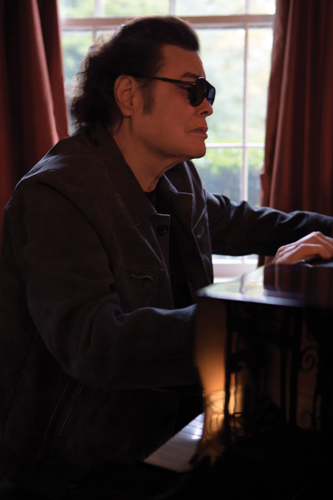
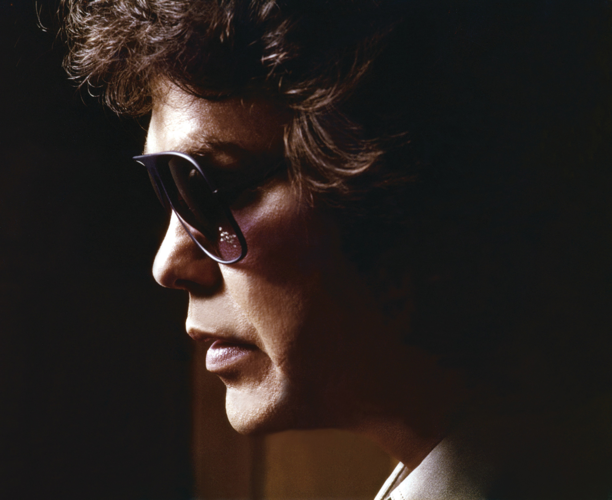


Ronnie Milsap
The convolutions of musical taste have lately rolled again in the direction of pop country. That means this is a good time for Ronnie Milsap to make some new music. The great master of pop-country-R&B crossover has, in fact, done just that. Next week, he releases a retrospective collection of some of his classic material, The Duets, in which he fondly gazes upon the past with help from famous friends like Dolly Parton, Kacey Musgraves and the late Leon Russell.
The Duets appears as Nashville musician Milsap turns 76, and he sings with the casual command he brought to his ’70s and ’80s work. Milsap’s latest music lands during a hyper-commercial moment in country that jibes with his artistic ambitions. His phenomenal success coexists with his artistry, which has always been a function of his taste in material. The Duets does a good job of recontextualizing one of country’s most gifted — and elusive — artists.
Milsap cut Duets in Nashville over the past three years with producer Rob Galbraith, who first met the up-and-coming singer in 1966, when Milsap was gigging in Atlanta as a disciple of R&B giant Ray Charles. Like all of Milsap’s records, The Duets attests to the singer’s sharp pop instincts. It presents Milsap’s complex persona, which is both ultra-normal and slightly plush in an off-kilter, post-Blue Velvet mode.
Talking to Milsap, I hear an ebullience in his voice that seems appropriate for a musician whose struggles and triumphs verge on the mythic.
“Every No. 1 leads to another number one leads to another number one,” says Milsap, who has racked up 35 No. 1 singles on Billboard’s Hot Country Songs chart in his half-century career. “But you’re really waiting for some song to come and just break it open.”
Before he came to Nashville in 1972 and broke his career open, Milsap had served a musical apprenticeship that seems unimaginable today. He was born Ronnie Lee Millsaps on Jan. 16, 1943, in Robbinsville, N.C., a hamlet in the Great Smoky Mountains. He writes in his 1990 autobiography Almost Like a Song: “I was born virtually blind and into poverty, abandoned by my mother, forced out of my home, and placed in the custody of strangers by the age of six.”
Raised by his father and his grandparents in a cabin lacking electricity and plumbing, Milsap became a fan of country and pop he heard via radio broadcasts on Knoxville’s WNOX and Nashville’s WSM, and he began taking violin and cello lessons when he was 7. He had limited vision in his left eye until he was 14 years old, when a teacher at the North Carolina State School for the Blind (now the Governor Morehead School) struck him in the face, which caused him to lose what little sight he had, as well as his eye.
By 1962 he was enrolled at Young Harris College in Georgia, intending to prepare for a law degree. He cut his first Nashville recordings, a set of demos, that year, and recorded a 1963 single, “Total Disaster,” with Louisiana-born producer Huey Meaux, who would later produce Texas rockers Sir Douglas Quintet and Tex-Mex vocalist Freddy Fender. He changed his name to Milsap after an Atlanta reporter misspelled it in a piece about him, and in 1964 he turned down a law-school scholarship to pursue music full time.
Had Milsap left the music business in 1971 — before he moved to Nashville — cultists would remember him today as a great, lost white-soul singer. His lustrous tenor voice enlivened Meaux’s 1966 production of “Ain’t No Soul Left in These Ole Shoes,” which soul star Major Lance had also cut. Released on New York label Scepter Records, for whom Milsap recorded in the mid-’60s, “Ain’t No Soul” became a favorite of British “Northern Soul” aficionados.
Galbraith, meanwhile, had been working his way through the University of Tennessee as a disc jockey at WNOX, and he had spun one of Milsap’s Scepter singles, 1965’s “Never Had It So Good.” Galbraith, who would move to Nashville in 1968 to pursue songwriting and record production, had gotten to know Milsap, who had in turn been tuning into Galbraith’s show for years. By 1965 Milsap had landed a job at Atlanta’s Playboy Club, where he refined his act.
“Ronnie used to listen to me when he was at Young Harris College,” Galbraith says. “We met and became friends, and I used to go down to Atlanta and visit him all the time. He did everything [in his performances]. He did The Beatles; he did R&B; he did Merle Haggard. He did all formats, and he could sing all of them equally well.”
Milsap’s approach to soul music was genial, which might have worked against him during his tenure in Memphis, where he spent the late ’60s recording for Georgia-born producer Chips Moman at Moman’s American Sound Studio. Working with Elvis Presley and Bobby Womack around the same time, Moman added formalist sheen to their records.
Moman and Milsap’s 1970 single “Loving You Is a Natural Thing,” written by tunesmith Mark James (who had penned Elvis Presley’s 1969 hit “Suspicious Minds”), sports brilliant guitar work and Milsap’s assured vocal. The record’s B side, “So Hung Up on Sylvia,” gingerly takes up the issue of race. “Colors are a drag,” Milsap sings, sounding like B.J. Thomas. “Oh, why didn’t God make everyone blue?”
Still, Moman’s production didn’t equal chart action, as Milsap says. “I always thought that if I could have gotten in the studio with just Mark James and me, I’d-a cut a better record on ‘Loving You Is a Natural Thing.’ I knew what I wanted the record to sound like, and Chips didn’t have that same idea. So I think a lotta stuff was left on the console down there at American.”
Like Mott the Hoople and fellow country singer Gary Stewart, Milsap achieved artistic credibility in the ’60s, but he was a ’70s artist waiting for the decade to commence. Milsap’s 1968 Memphis-recorded version of Dan Penn and Spooner Oldham’s “Denver,” one of the songwriting duo’s craziest psychodramas, lacks the intensity of soul singer Clyde McPhatter’s 1969 rendering of the song. Similarly, Penn’s production of Milsap’s 1971 self-titled debut album harks back to the ’60s and Penn’s work with The Box Tops.

Ronnie Milsap
What followed in the wake of Milsap’s 1972 move to Nashville was the country-pop crossover success he had always sought. He signed with RCA Records, and began cutting hits like 1973’s “Pure Love,” his first No. 1 country single, and 1977’s “It Was Almost Like a Song.” Milsap came across on record as a normal person whose songs alluded to inner struggles that were never made explicit, as in his 1983 hit “Stranger in My House,” written by Nashville songwriter Mike Reid. Unruffled even when delivering lyrics about the terrors of infidelity, Milsap created technologically advanced country music with infinite crossover potential.
The Duets pairs Milsap with a brace of especially sympathetic singing partners. Dolly Parton rewrites his 1980 hit “Smoky Mountain Rain” to emphasize the woman’s point of view, and country star Kacey Musgraves slips comfortably into Milsap’s 1981 song “(There’s) No Gettin’ Over Me,” perhaps the apotheosis of his easy-listening ambitions.
Musgraves’ lucidity pairs well with Milsap’s soulfulness, and his harmony singing on the track is masterful. For Musgraves, singing with Milsap was a once-in-a-lifetime moment. “We recorded it live, singing right to each other,” she says via email.
Meanwhile, Milsap duets with 23-year-old singer Jessie Key, a native of Glendale, Ky., who moved to Nashville in 2014 and began performing with Galbraith. Key lends her confident country-soul vocal style to Reid’s “What a Woman Can Mean to a Man,” one of Reid’s richest explorations of yacht-rock blues.
“I learned how it’s not about vocal gymnastics and acrobatics,” Key says about singing with Milsap.”It’s about singing something with grease and meaning it.”
The Duets makes a case for Milsap as a pop master. It’s also a compendium of songwriting by Reid and a host of other Nashville tunesmiths who helped create Milsap’s image. Milsap doesn’t unearth much deep-catalog material on Duets. (Still, there is a wealth of pop-soul-country oddities in his oeuvre, including the 1984 prog-meets-10cc tune “Suburbia,” which features Milsap’s electronically altered vocal, and the 1979 funk-disco workout “Get It Up,” produced by Galbraith.)
For Milsap, whose immense enthusiasm comes through in every word he speaks, it’s about getting his music across to people — a simple proposition for one of the era’s finest singers.
“I’m still out there,” says Milsap. “I don’t know why or how long. I gotta tell you, there’s nothing more satisfying to me than to be onstage with my band, and to get to sing and play. That’s as good as it gets.”



