
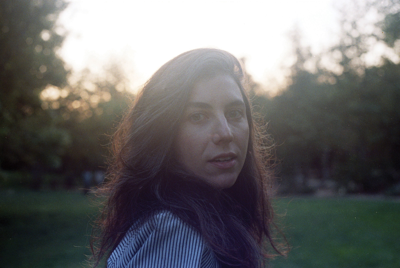


Julia Holter’s complex, mind-bending compositions are no doubt headphone masterpieces, with layers of orchestral instruments, electronic keyboards and more, unraveling across wild, dreamlike soundscapes. All the same, she tells the Scene that her music, especially her 2018 album Aviary, “really comes alive in the live shows.” It’s a good thing, then, that Holter is finally making her way to Music City this week, playing her very first Nashville show at The Basement East on Saturday with opener Ana Roxanne.
Aviary was one of 2018’s most acclaimed albums, earning rave reviews from outlets like Pitchfork and The Guardian for its scope, ambition and — complexity be damned — downright listenability. Holter released Aviary in October and says touring the album (with help from the band she recorded with in the studio) has broadened her perspective on the songs she labored over so carefully.
“Playing [Aviary] live with the musicians from the record — which is what we’re doing, and it’s the biggest band I’ve had — it’s very intense, and it does help me understand the songs in a different way, playing them so much,” Holter says. “I don’t think I’ve really had a record like Aviary where I’ve made so many of the songs all in one period. So it’s almost like I’ve had equal time performing them as I had writing them. It’s been very interesting.”
Holter wrote the bulk of Aviary between 2016 and early 2018, with two songs pulled from 2009. Listening to these pieces is an immersive experience, thanks largely to Holter’s commitment to building an expansive sonic world for her songs to live in. One way she did this was by playing with language in new ways. That began as an experiment on standout track “Chaitius” and gradually filtered through the rest of the album.
“I wanted to work with language where I kind of combined different languages so that it formed sentences that didn’t sound like any language,” she explains, “where the meaning became a little bit harder to decipher. I tried it, and it became this thing that felt really interesting, and I couldn’t believe it happened. Usually accidents are the best thing, but in this case it was a mix of intention and accident, and I really liked that. It was exciting to me that this world opened up that felt similar to what my musical, sonic vision was — and [my] poetic [vision] too. That was a big turning point for me, where the world started emerging.”
As a lyricist, Holter is especially inspired by film and literary writing. Aviary’s title comes from a line by Lebanese-American writer Etel Adnan, whose methodical and measured approach to the sonic quality of words Holter finds inspiring. Indeed, Holter writes more like a poet, choosing words for their rhythm and tone rather than their dictionary definitions.
“I don’t think we hear words in music in the same way we hear them when they’re spoken,” she says. “In that way, they become part of the music. So meaning is a complicated thing in songwriting to me.”
Sonically, Holter draws from an eclectic mix of influences, including 13th-century medieval vocal pieces, Tibetan chants, classical masters and modern chamber pop. She’s no doubt steering the ship when it comes to writing and arranging her music, but she also gladly incorporated the expertise of her band during recording. The process was a fluid one, with some songs like the aforementioned “Chiatius” being only halfway notated.
“There’s a lot of editing that’s done after we record,” she says. “I need time to take everything home with me once we’ve been in the studio, and edit things and add layers at home. … I don’t write with other people for the most part, but there are a couple exceptions on Aviary. In one piece, the bass player, Devin Hoff, recorded something remotely from New York when I was stuck on the song ‘Les Jeux to You.’ ”
Holter admits she’s probably “going too hard” with respect to touring Aviary, but she’s thrilled to bring her work to life for eager fans. You might think that performing such wide-ranging compositions is extraordinarily difficult. But you might be surprised.
“It’s actually the easiest time I’ve had moving the songs to the stage,” she says with a laugh. “People really respond to that. It’s a dense record, and people can really feel it when they see it happen live.”



