
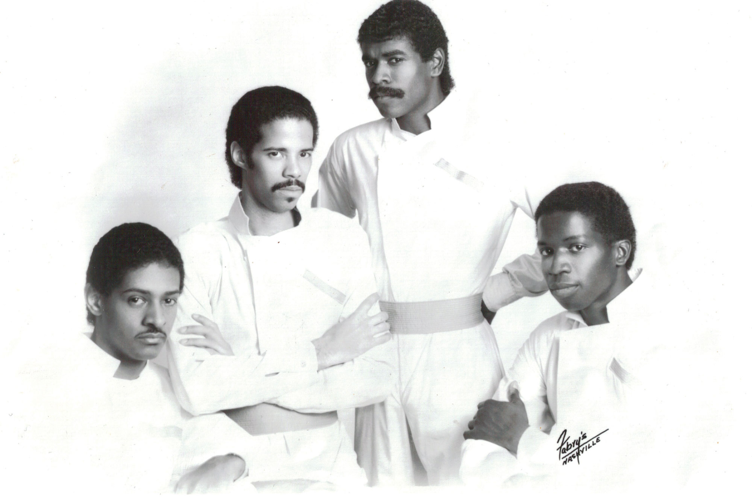



Autumn in the 1980s: Van Bradshaw, Darryl Jones, Randy Smith and Geo Cooper
Fans of early-’80s soul and funk fondly remember the Nashville group Autumn, even though they never enjoyed the national stardom they seemed destined to achieve. Their collective sound was eclectic and imaginative, merging elements of everything from vintage R&B and gospel-tinged soul to funk — even rock and classical — with improvisational flamboyance.
Autumn could easily shift from rhythmically frenetic, exciting and intense numbers to soothing, entrancing ballads. They had both a commercially viable and distinctively personal sound, one that reflected a Nashville R&B-soul-funk community that was then absorbing musical styles from other regions, yet still boasted its own special edge. Autumn’s core members initially came together as students, forming a fast friendship that convinced them they could create something musically unique thanks in part to their diverse backgrounds.
“We met while attending Fisk University in the late ’70s,” lead vocalist Darryl Jones remembers, speaking with the Scene via Zoom. “We were friends first, with a few of us in several other bands at first. We all came from different music experiences that spanned across genres such as classical, jazz, gospel, funk, rock and R&B. Then we started writing original music together in 1980 in the summer at Fisk. We began making demos in 1981, ’82, once we developed our own style and sound.”
The original lineup also included keyboardist Geo Cooper, vocalist Randy Smith and guitarist Van Bradshaw. They became enormously popular as a local and regional attraction, frequently playing at Music City clubs and demonstrating enough promise to eventually attract label attention. The group seemed poised to break out when their album Arrival was released in 1984 on Compleat Records, a Nashville label that also released music by disco legend Bohannon and country singer Vern Gosdin. But neither “Computer Touch” nor “Creepin’ (Ah-Ah There You Go),” Autumn’s two singles from Arrival, hit big. A personal favorite is their last single on Compleat, a ballad called “In Time (You’ll Be My Love),” which was released to little fanfare in 1985.
“We felt like we were really going to accomplish some great things,” says Cooper in an email. “However, we never did really see any of that money we were expecting, and we weren’t that happy about the promotion that we were getting.”
The band attracted some outstanding members who would later become bigger stars after departing the group, like vocalist Gary Jenkins. Unfortunately, Autumn never made that final step from area popularity to a consistent national presence.
Still, the band had a big-time supporter in songwriter Skip Scarborough, who wrote for such artists as L.T.D. and Earth, Wind & Fire. He also co-wrote Anita Baker’s 1988 “Giving You the Best That I Got,” which won the Grammy for Best R&B Song. Scarborough, who died in 2003, urged Autumn to hang in despite the turbulence of the music business. Since Earth, Wind & Fire was a huge influence on Autumn, they were thrilled to have Scarborough in their corner.
“Skip was always encouraging us,” Jones says. “He thought we had a good sound and some potentially good songs. We really didn’t pursue things with him the way that we should have, and at one point we ended up having a major dispute with him. We later made up with him. … When we look back on that — well, sometimes you have those differences. We were thrilled when he won that Grammy, and our time around him is something we’ll never forget.”
Autumn cut “Kold Krush,” the instrumental theme from the 1985 film Krush Groove, a comedy-drama about the music business starring Sheila E., Run-D.M.C., L.L. Cool J and other rising stars. They also recorded some sessions for Capitol Records in 1989, but no tracks were released.
Today, Arrival and the band’s ’80s singles have enjoyed renewed interest, thanks to the current popularity of classic music from other decades on specialty and satellite radio. Meanwhile, the bonds forged during their college days and formative years have proven very strong. Despite not releasing any new music for many years, Autumn’s members have not only remained friends, but have continued to collaborate on songs. Since 2012, they’ve been periodically getting together, and in recent months have frequently convened online to work on fresh material.
“People’s lives change over time, but we’ve managed to keep close,” Jones says. “We’ve scattered all over the place. Some of us are on the East Coast, others have gotten married. Yet the friendship and musical bonds are such that we’ve kept in touch. The amazing thing is when we’ve gotten together, we pick up right where we left off in terms of the group cohesion. I think in the right situation and with some luck, we can still make a hit or two. I know that there are people out there who remember us.”

Autumn in 2020: Van Bradshaw, Darryl Jones, Randy Smith and George "Geo" Cooper
Fans interested in hearing classic Autumn recordings can still get them on vinyl, though they’ll have to do some crate digging to find them — in person, or through collectors’ resources like Discogs or the massive Chicago record store Dusty Groove. Now there are plans to release a new Autumn project in 2021, a full-length LP. Before that happens, the band also hopes to do some gigs in the spring and summer, assuming things have gotten better in regard to COVID-19 and venues are able to reopen. Jones and the others are excited about their reunion, and feel that the time is right for a musical return.
“We’ve been trying to find a formula that works,” Cooper says. “One thing that you have to be careful about is not losing your identity while still trying to stay current. The big thing we found about the music business is that they’re interested in selling records, period. They’re not so concerned about building a sound, or authenticity, or that type of stuff. We have a live sound that we’ve honed and are proud of and want to get across in our music, but we’re also well-aware that we’ve got to find a way to connect across the board. We want to reach both new audiences and our old fans, and that’s the goal of this new project.”
“When you craft a project, you may write 80 or so songs, until a few of them speak to the messages you want to convey as a unit,” Jones adds. “Now that we have matured, we are exploring what shared life experiences we’d like to offer in the next project. My guess is that we will release up to 10 songs and target a fall release.”
When you listen in on an online conversation between the current members of Autumn, the easy banter and extreme closeness that’s shared after decades make it very obvious that they still greatly respect, admire and enjoy each other. When asked how they maintain that kind of chemistry after such a long time, Jones points to the group’s time in college.
“The bond we share definitely began from the Fisk experience,” he says. “Attending the same college, living and growing in a supportive atmosphere surrounded by professors and students all pulling for you to succeed was empowering. The bonds formed at an HBCU last a lifetime. So even though the years would go by, we would always get together at the Fisk reunions. Year after year, we were able to reconnect there, uplift each other and talk about the legacy in music we aspired to leave behind as a unit. We will always be friends first. Our music, influenced by many different styles, simply brings us together to communicate our experiences.”



