


chatterbird
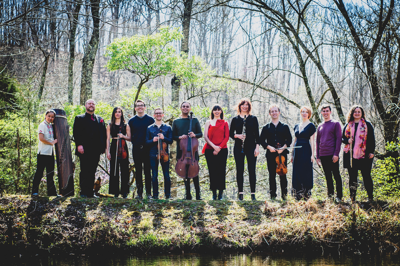
The summer of 2020 was a dark time for many of America’s performing arts organizations. With theaters and concert halls closed in the wake of a worldwide pandemic, many performers and organizations faced economic ruin. At the same time, the social unrest following the deaths of George Floyd, Breonna Taylor and Ahmaud Arbery was taking an emotional toll on artists, especially Black and brown people and members of the LGBTQ community. Celine Thackston, artistic director of Nashville’s alt-classical chamber ensemble chatterbird, was keenly aware of the stress facing her musicians, and she had an idea about how to address it.
“Artists everywhere were hurting,” Thackston tells the Scene. “I felt they needed a creative project to help them start the healing process.”
That feeling became the inspiration for a new series of concerts that the musicians themselves would curate. Chatterbird’s new Virtual Chamber Music Series debuts Friday, with performances streamed live on the ensemble’s Facebook page. These free, bite-size, musician-curated concerts, which will take place on Fridays at noon through June 18, will feature multiple world premieres, including new works composed by chatterbird musicians.
Each concert will focus on themes and emotions that the musicians experienced during the pandemic and social unrest. Performances will delve into such issues as civil rights, gender-spectrum education and environmental justice. The concerts will also highlight various local nonprofits — such as the Nashville Public Library’s Civil Rights Collection and the National Museum of African American Music — that work with the relevant causes.
One name that figures prominently in the series is Joshua Dent, a nonbinary composer who is also chatterbird’s cellist. Dent will open the series Friday with their own cello music, which will accompany a performance by dancer Madeleine Gregor. She’ll dance to the modern choreography of Christin Call and Natascha Greenwalt, founders of Seattle’s Coriolis Dance company. The concert benefits Nashville’s Oasis Center, an organization that is focused on empowering youth and is especially affirming to LGBTQ youth.
Dent will also be one of several nonbinary composers whose work will be on the program of Maeve Brophy’s solo piano recital on May 7. Brophy specializes in the music of composers from underrepresented groups. She has emerged in recent years as a prominent champion of 20th-century African American composer Florence Price, whose music is in the process of being rediscovered by music historians and performers.
For her chatterbird recital, Brophy will perform two world premieres — Dent’s Drifting and brin solomon’s Atwood Pastorale. Piano compositions by Ahmed Alabaca and Chrysanthe Tan are also on the program; each piece will have a video introduction from the composer. The recital will spotlight the work of the nonprofit Gender Spectrum.
Other performances during the series will feature composer and guitarist Mark Volker (May 14), flutist Molly Barth (May 21), percussionists Jesse Strauss and Sebastian Buhts (May 28), and bassoonist Maya Stone (June 11). Some of the most emotionally riveting music of the series will no doubt come from African American composer Dave Ragland, who wrote the music for Nashville Opera’s recent premiere One Vote Won. Ragland, a composer steeped in both classical music and African American spirituals, is creating a two-movement work that includes a prayer written by Jerome Del Pino and poetry by 2021 Nashville Youth Poet Laureate Marie Shields, who developed her talents through the nonprofit Southern Word.
A Nashville-based appellate lawyer, Del Pino often represents death row inmates. During a church service last year, Del Pino recited one of his own prayers, which noted that even a half-century after passage of major civil rights legislation, America still had a long way to go. His prayer deeply impressed fellow congregant Emily Wasson Bowland, chatterbird’s clarinetist, who will perform Ragland’s piece as the series finale on June 18. “It was beautiful verse,” says Bowland. “These are words people need to hear.”



Post a comment as anonymous
Report
Watch this discussion.
(0) comments
Welcome to the discussion.
Log In
Welcome to the discussion.
Keep it clean. Please avoid obscene, vulgar, lewd, racist or otherwise abusive language. Comments featuring hate speech or threatening or violent content will not be tolerated.
PLEASE TURN OFF YOUR CAPS LOCK.
Be truthful. Don't knowingly lie or mislead.
Be proactive. Use the “report” link on any comment that violates our comment policy.
Share with us. We'd love to hear your feedback.