


In June 1975, 26 unions representing some 60,000 New York City firefighters, police officers and other public-sector employees were faced with restraining orders. Their group, which called itself the Council for Public Safety, was being prevented from distributing a pamphlet they’d published titled “Welcome to Fear City: A Survival Guide for Visitors to the City of New York.” The now-infamous publication warned tourists to stay off the streets after dark for fear of violence. The City That Never Sleeps was waking up from its postwar Mickey Mantle dream only to live out a nightmare of boarded-up storefronts, wage freezes and substance abuse. Suburban flight left neighborhoods desolate and siphoned off municipal tax revenue, igniting rumors of layoffs to first responders and other city employees. The dangers laid out in “Fear City,” exaggerated or not, reflected a bleak image that many outsiders already had of NYC from films and books.
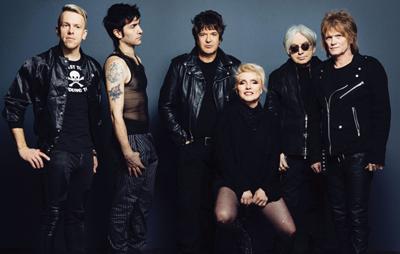
Something less grim happened in the city in June 1975. Rock critic Alan Betrock decided to try his hand at managing artsy musicians who were bubbling up from the Bowery. He produced the first demo recordings of an unlikely bunch of newcomers who went by the name Blondie. The singer, Debbie Harry, was a former folk musician who eventually tried her hand at rock ’n’ roll with The Stilettoes. She and her boyfriend, Stilettoes guitarist Chris Stein, quit and formed the group that would become Blondie. They recruited cover-band drummer Clem Burke, who stood out in this era of arena-sized excess with his simple early-’60s beats. Original bassist Fred Smith left to focus on his other band, Television; a poet Burke knew named Gary Valentine, who had no real musical experience, stepped in.
Five tracks from the Betrock-funded sessions are a small but vital part of Against the Odds: 1974-1982, a massive box set out Aug. 26 via revered archival label Numero Group. It includes Blondie’s first six studio albums as well as four discs of bonus material. To mark the occasion, Blondie is making their way across the U.S., with a stop at the Grand Ole Opry House on Aug. 24 supported by notorious Londoners The Damned.
Clem Burke, who grew up just across the New Jersey line, has the kind of accent that is both charming and intense, like a Goodfellas character. He was kind enough to give me some time to discuss the past 48 years of Blondie and their relationship to the city that birthed them.
“We were all hanging out in the same places in the mid-’70s, whether it was Max’s Kansas City or CBGB,” Burke says, citing two historic Manhattan dives. “And we were all big, big New York Dolls fans,” he says, adding his disbelief that the trash-glam legends were passed up by the Rock and Roll Hall of Fame. “But I think to this day we still carry the sound of New York with us.”
He cites the R&B street beat of “Rapture” and the Brill Building heartbeat of Blondie’s debut single “X Offender,” reeling off a laundry list of talented Brill songwriters who shaped so much American music over the ’50s and ’60s. “Kind of in that tradition, we were very much influenced by our surroundings as well, whether it be art, architecture, music, street life … I think it all comes together and assimilates to a sound that is particular to Blondie. And it’s kind of the sound of New York City, in a lot of ways.”
Unlike the Dolls, Blondie did find their way into the Rock Hall. But the band’s platinum path is eternally bonded to the gritty, subterranean scene that tested their mettle. “The last time we played in Nashville, we played the original Grand Ole Opry, but Cheetah Chrome of The Dead Boys came up with us and we played a song by The Misfits,” Burke says, recalling the band’s 2015 show at the Ryman. He notes the irony of three NYC punk bands, aligned 40 years later onstage at The Mother Church. “Back in the day, our peers were people like The Ramones and The Talking Heads and Patti Smith. I think we all influenced each other a bit. And I think that still carries on in the sound of Blondie today. It’s kind of innate. It’s kind of the DNA of the band — New York City is a prime influence.”
As Blondie developed, they took in everything that The Big Apple’s underground had to offer. That included music that punks or New Wavers might not have considered drawing on, like the insistent beats of Donna Summer and Kraftwerk.
“We did things like ‘Heart of Glass,’ which was a dance song,” Burke says. The 1978 single, which also appeared on their album Parallel Lines, was Blondie’s first No. 1 hit on the Billboard Hot 100. “Being in New York, Studio 54 — and before that the underground gay dance clubs that were going on — was kind of more subversive than what was going on at CBGB and Max’s. Disco music was always a big part of the soundtrack to New York City. So there’s a direct influence there.”
Noting that Wednesday’s show is at the Grand Ole Opry House, Burke mentions his appreciation for Robert’s Western World and his love of Waylon Jennings, Jimmie Rodgers and Hank Williams. Burke has some personal experience with Nashville music, as well. In 1980, Blondie performed “Ring of Fire” in the cult rock film Roadie. Years later, Carlene Carter introduced Burke to Johnny Cash, and Cash brought up Blondie’s recording of the song: “That was great for me to hear, that Johnny appreciated that.”



Post a comment as anonymous
Report
Watch this discussion.
(0) comments
Welcome to the discussion.
Log In
Welcome to the discussion.
Keep it clean. Please avoid obscene, vulgar, lewd, racist or otherwise abusive language. Comments featuring hate speech or threatening or violent content will not be tolerated.
PLEASE TURN OFF YOUR CAPS LOCK.
Be truthful. Don't knowingly lie or mislead.
Be proactive. Use the “report” link on any comment that violates our comment policy.
Share with us. We'd love to hear your feedback.