
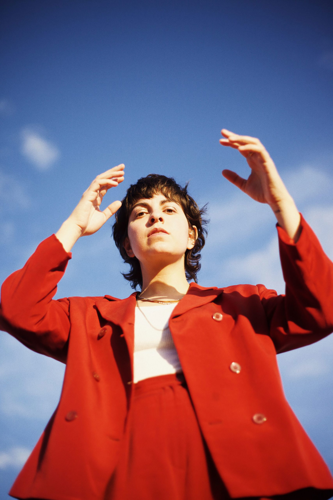
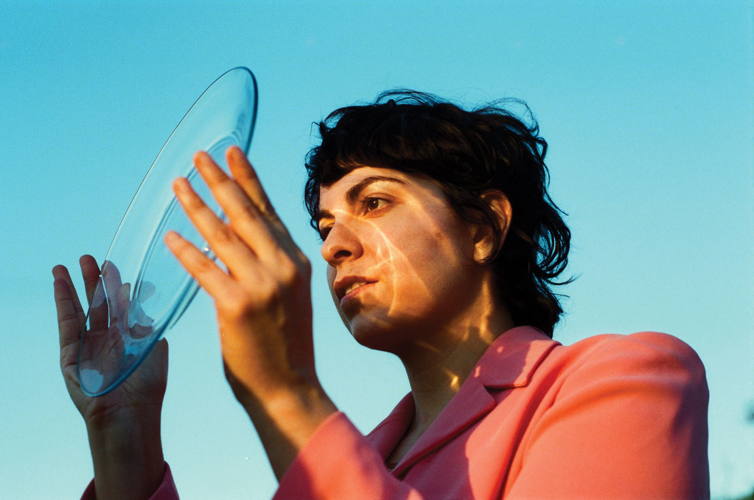


Artists often dream of a project that just pours out of them, as though they were mere conduits for a fully formed work. It doesn’t happen often, but when it does it feels like a gift from some higher artistic power. For Becca Mancari, writing the songs for her new album The Greatest Part was one of those rare experiences.
“It was so weird,” she tells the Scene, calling from her home in Nashville. “I couldn’t stop them from coming out. It was like they were being given to me. I would hear things in my sleep and have these melodies in my mind. I feel like this whole record was just given to me.”
The Greatest Part follows Mancari’s acclaimed 2017 solo debut Good Woman, which announced the longtime local singer-songwriter as an exciting new voice in roots and Americana music. Recorded with producer and musician Zac Farro (HalfNoise, Paramore), The Greatest Part deviates sonically from its predecessor but retains and even deepens the vulnerable songwriting that marked so much of Good Woman.
Mancari began writing The Greatest Part at the end of 2018, following two years of nearly nonstop touring in support of both Good Woman and the first singles from Bermuda Triangle, a trio consisting of Mancari, Jesse Lafser and Brittany Howard. Once Mancari settled back into home life, burnt out and exhausted, she felt past traumas — particularly her experience coming out as queer — begin to resurface.
“A lot of times, queer folk almost have to put the pain on the back burner to just survive, and just try to live,” she says. “So I think when I got home from that tour, I was so emotionally and physically at rock bottom that all of what I had tried to suppress just came to the surface. … It was very hard at times.”
Mancari took early incarnations of her songs to Farro, whom she counts as a longtime close friend and trusted collaborator. The pair began to write together, and it quickly became clear to Mancari that Farro would be a great partner in completing the album.
“It just so happened that Zac was also in this very powerful, energetic movement in his own life and his own music,” she explains. “And I felt that.”

Where Good Woman was earthy and understated, The Greatest Part is open and expansive, with a spacious production that allows breathing room for Mancari’s complex, often difficult stories to unfold at their own pace. “First Time” has a peppy arrangement that belies its difficult subject matter. Mancari wrote the song about coming out to her family, and it opens with the gut-wrenching lyric, “I remember the first time my dad didn’t hug me back.” By the time the line repeats at the end of the track, it takes on a quality of hard-earned empowerment.
“That was probably the hardest day for me,” Mancari says of writing “First Time,” one of the first singles to be released from the album. “I tried to take that line out. But it was only going to open the door for me to be free. So I felt like it needed to happen so that other people could be free as well. So I didn’t want to sugarcoat it. That was my experience. I’ll never forget that moment. I remember when my parents left that night. … This is heavy, but I don’t think it’s unfamiliar to my community. I thought I was going to kill myself that night. I didn’t know how to survive without my family.”
Mancari and her family are in a better place now, and she says she still feels protective of them — so much so that she found herself resisting writing about the bad times. While touring Good Woman, though, she met many queer fans who shared their own stories, and she felt compelled to write more vulnerably for them.
“I felt like it was important for people who I know have similar experiences,” she says. “And even for parents to listen to these songs — ‘First Time’ in particular — and to think, ‘I have the choice to hug my child back.’ ”
Like many artists, Mancari’s livelihood took a tough hit when COVID-19 began forcing the closures of live music venues and mass cancellation of tours. She and her band were 11 hours into driving to join Howard for a run of shows when they got the call that the dates had been postponed.
While she misses life on the road, Mancari has still found a number of reasons to be grateful for having extra time at home. For one, she’s been able to do things that remind her of why she wants to make music. She also feels fortunate to have more time to dedicate to activism, and has channeled her energy into helping anti-racist causes in the wake of the killing of George Floyd.
“I’m thankful for the opportunity to be home and to be active towards this moment. A lot of my friends right now are out of jobs, in a sense, so I think and I feel like we’re the prime candidates to be activists. So I’m thankful for that time.”



Post a comment as anonymous
Report
Watch this discussion.
(0) comments
Welcome to the discussion.
Log In
Welcome to the discussion.
Keep it clean. Please avoid obscene, vulgar, lewd, racist or otherwise abusive language. Comments featuring hate speech or threatening or violent content will not be tolerated.
PLEASE TURN OFF YOUR CAPS LOCK.
Be truthful. Don't knowingly lie or mislead.
Be proactive. Use the “report” link on any comment that violates our comment policy.
Share with us. We'd love to hear your feedback.