
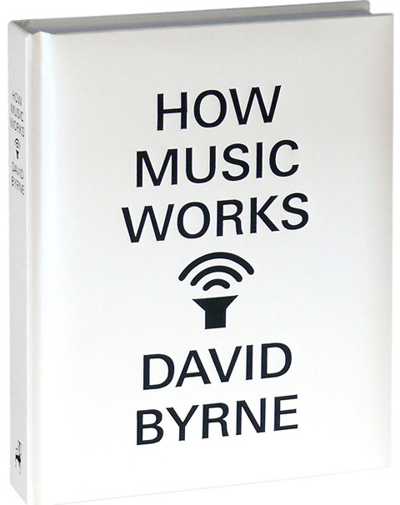


One of my professors at MTSU, Dr. Paul Fischer, once boiled down for the class what he learned in grad school: "Culture is messy." In his latest book, How Music Works (McSweeney's Press, 2012), former Talking Heads frontman David Byrne attempts to outline music's place in that big mess. As he explains in the preface, music's purpose and effect is always related to the bigger picture — to its context: "How music works, or doesn't work, is determined not just by what it is in isolation (if such a condition can ever be said to exist) but in large part by what surrounds it, where you hear it, and when you hear it."
There's no way a 350-page book could hope to be the definitive work on such a complicated subject, and the text is filtered through Byrne's own biases. However, by repeatedly developing concrete examples, often drawn from his work with Talking Heads and oblique strategist pal Brian Eno — and defining their place in larger social and historical contexts — Byrne creates starting points for the reader's own thinking. For my money, that's more valuable than another “aging rocker bio,” as Byrne calls the burgeoning genre.
As Nashville’s contemporary culture flirts with being canonized by the national media, one of the most relevant chapters to us may be "Making a Scene," featuring a set of eight hitherto unwritten rules that, in Byrne's view, kept New York's world-famous CBGB at the center of a vibrant creative community for many years. The "Business and Finances" chapter may not give you all of the details and analysis you'll get from a semester in Survey of the Recording Industry, but it breaks down two album cycles in enough detail that you might pass a mid-term if you’ve also read This Business of Music.



