

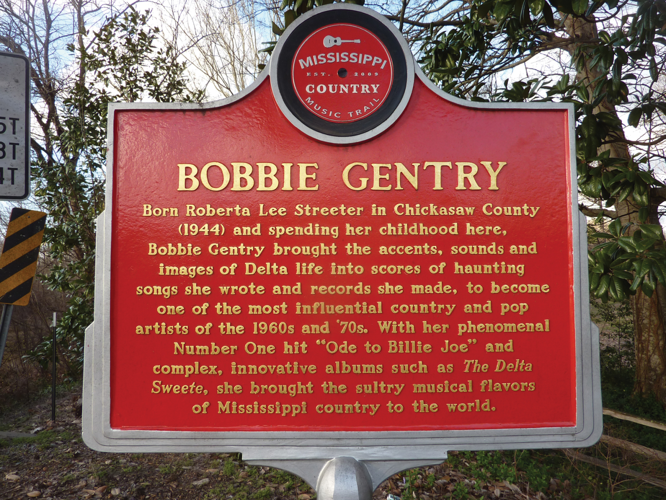


A most unusual historical marker stands just north of Greenwood, Miss. The red sign summarizing the career of onetime resident Bobbie Gentry is planted at the foot of the bridge with gray railings where Billie Joe McCallister threw something into the Tallahatchie River. It’s a curious approach to history, for McCallister was not a real person; he was the fictional creation of Gentry, who went to elementary school nearby. Gentry was a singer and songwriter so powerful that she could turn her imaginary characters into historical figures.
Gentry’s The Girl From Chickasaw County was voted the Best Reissue in the 19th annual Country Music Critics’ Poll. The box set includes all seven of her studio albums, plus 75 previously unreleased tracks, including 26 live performances for the BBC. It proves that there was a lot more to this artist than her best-known song, “Ode to Billie Joe.”
The set also comes with an 84-page book that makes it clear how much Gentry struggled in a male-dominated industry within a male-dominated society. “Ode to Billie Joe” was her only single (without Glen Campbell as a duet partner) to crack the top 25 of Billboard’s Hot Country Songs chart. Neither her dizzying love song “Sweete Peony” nor her remarkable feminist fable “Fancy” could crack that glass ceiling. Out of frustration with the situation, she retired from recording in 1978 (at age 36) and from live performing in 1981, eventually retreating from public life. It raises the question: How much more terrific music might she have created if she’d received more support from Music Row and the rest of the industry?
That’s important to think about, because most of the other categories in this year’s poll were dominated by women whose artistic triumphs, similarly, haven’t been matched by airplay on country radio. It seems incredible that talented women such as Kacey Musgraves, Miranda Lambert, Brandi Carlile, Lori McKenna, Rosanne Cash, Angaleena Presley, Ashley McBryde and Ashley Monroe face the same problems in 2018 that Gentry faced in 1978. But there it is. Are we going to lose more great songs as discouraged women drop out of the business?
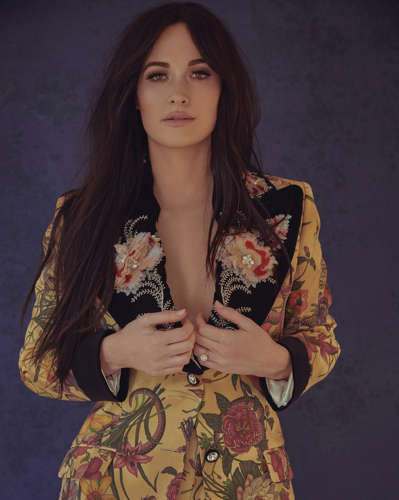
The dominating figure in this year’s poll is East Texas-born Musgraves, whose sense of style and rural upbringing in a Gulf Coast state are not so different from Gentry’s. The two women share an ability to evoke small-town Southern life via vivid storytelling spiced with equal measures of skepticism and affection. The young woman who narrates “Ode to Billie Joe” is not so different from the one who narrates “Merry Go ’Round.”

Kacey Musgraves
Musgraves topped five of the six categories she was eligible for in the poll: Best Album (Golden Hour), Best Single (“Space Cowboy”), Best Female Vocalist, Best Songwriter and Artist of the Year. (She missed on Best Live Act.) She won those five competitions by imposing margins. Most impressive was her showing in the Best Singles voting: She placed an unprecedented three singles in the top 10 — four in the top 20.
This showing echoed her triumph in 2013, when her debut album Same Trailer, Different Park was released. That year she won Best Album, Best Single, Best Female Vocalist, Best New Act and Artist of the Year. Her 2015 follow-up Pageant Material put her in the top five in most categories, but not on top. It contained some terrific songs but was perhaps a bit too similar to its predecessor. Her 2016 LP A Very Kacey Christmas was delightful but mostly ignored by the poll.
The newlywed Musgraves shifted gears with Golden Hour. She changed her co-producers from Shane McAnally and Luke Laird to Daniel Tashian and Ian Fitchuk, and her emphasis from knife-sharp social satire to understated lyrics and sumptuous sonics as she addressed romantic situations. Her poll-winning single “Space Cowboy” still boasts the clever wordplay (“You can have your space, cowboy”), but the verbal is subordinated to the musical, which conjures a thickened atmosphere of stoic resignation to lost love.
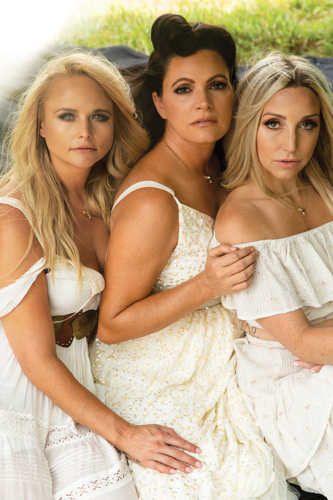
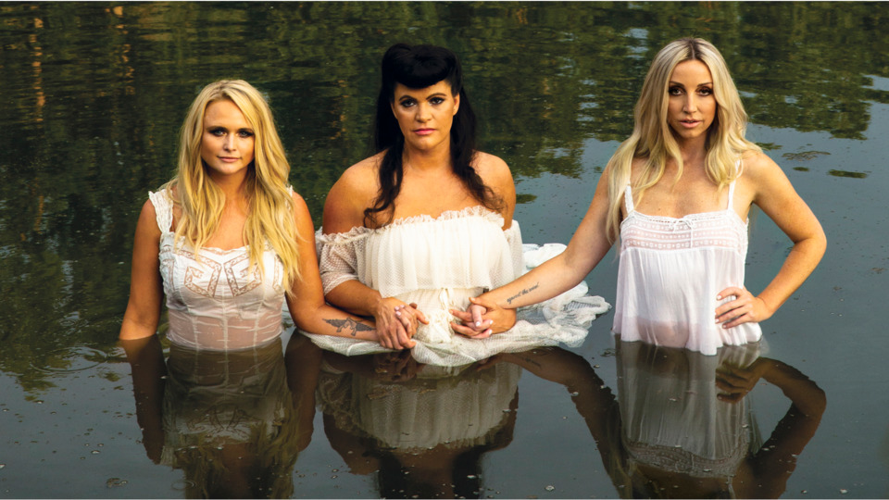
The Pistol Annies were runners-up to Musgraves in the three big categories: Best Album (Interstate Gospel), Best Single (“Got My Name Changed Back”) and Artist of the Year. Moreover, Annies member Miranda Lambert was the runner-up Best Female Vocalist and had the No. 4 single (her duet with Jason Aldean on “Drowns the Whiskey”). And Annies member Ashley Monroe, as a solo act, had the No. 7 Best Album (Sparrow) and the No. 6 Best Single (“Hands on You”). Monroe was also the No. 3 Best Female Vocalist and No. 4 Best Songwriter.
The Annies didn’t revamp their sound as dramatically as Musgraves did, but they broadened their scope in important ways. The poll’s No. 2 single, the aforementioned “Got My Name Changed Back,” is a feisty, nose-thumbing, uptempo number that would have easily fit on the trio’s first two albums. But the poll’s No. 20 single, “Best Years of My Life,” is a powerfully understated and melancholy portrait of a young housewife drugging and drinking away her unhappiness. It’s one of several songs on Interstate Gospel that prove the Annies can do poignant as capably as they do smart-ass.

Pistol Annies
Like Gentry and Musgraves, the Annies’ Lambert, Monroe and Presley — and this year’s Best New Artist, Ashley McBryde — all grew up in Southern states (Texas, Tennessee, Kentucky and Arkansas, respectively) and can parse small-town life with a similar blend of irreverence and sympathy. While that strategy of revealing all the warts beneath the cosmeticized facade of Southern life can generate great art, it isn’t particularly welcome on country radio.
Musgraves’ Golden Hour and the Annies’ Interstate Gospel both topped Billboard’s Top Country Albums chart, while McBryde’s Girl Going Nowhere reached No. 7. But none of the three albums yielded a top-25 single on Country Airplay. The difference between the two charts — one tracking sales and the other airplay — demonstrates the gap between public preference and radio programming.
Meanwhile, on Billboard’s year-end list of the Top Country Artists, the top 12 are all male, and only three women are in the top 40: Carrie Underwood (No. 13), Maren Morris (No. 24) and Kelsea Ballerini (No. 27). By contrast, only three male acts under the age of 70 appeared in the top 15 of this poll’s Best Album list: Eric Church, the Brothers Osborne and Dierks Bentley.
To be fair, six of the only seven male artists to ever win the poll’s Best Album and/or Artist of the Year categories did not release an album of new non-holiday compositions in 2018. Jason Isbell released a live album, and Rodney Crowell released a Christmas album and a disc of Acoustic Classics. Chris Stapleton and Brad Paisley released albums in 2017; Sturgill Simpson in 2016. Jamey Johnson — in one of this century’s most frustrating disappearing acts — hasn’t released an album of originals since 2010. Only Eric Church released an album of new material, and he scored the No. 5 album and No. 3 single. Stapleton did win Best Male Vocalist, while Isbell won Best Live Act.
Still, it was The Year of the Women in country music criticism, as it was in electoral politics. But this situation — in which female artists get a disproportionate share of critical acclaim while male artists get a disproportionate share of airplay — can’t be healthy for country music. Until male artists take more creative risks and female artists get more radio opportunities, however, it’s likely to get worse before it gets better.
If it does get worse, today’s women are in danger of having their careers foreshortened, the way Bobbie Gentry’s was in the 1980s. The music on her box set’s eight discs is proof that smart songwriting and sonic gambles can give birth to songs that still sound vital half a century later. But her career, as described in the accompanying book, is a cautionary tale of how conflicts with radio and a label can curtail creativity.
“Bobbie carved scenes in her songs in such stark relief,” says Rosanne Cash (who had the No. 11 album in this year’s poll) in a recent interview with the Scene. “Sometimes when I sing ‘Ode to Billie Joe,’ I see the scenes — the mother calling out to the kids to wipe their feet, the father passing the black-eyed peas, the brother recalling putting a frog down her back at the picture show, then the frozen shock of the girl — unfold like Walker Evans photographs. She was uncanny in her ability to capture really specific moments with a few well-chosen words — and not just in that song. Her authenticity is something to aspire to.”
“I started covering ‘Ode to Billie Joe’ when I was 19,” says McBryde in an interview (read more here). “That let me know at an early age that that less-polished sound, those grittier arrangements, are not just OK, but necessary at times.”



