
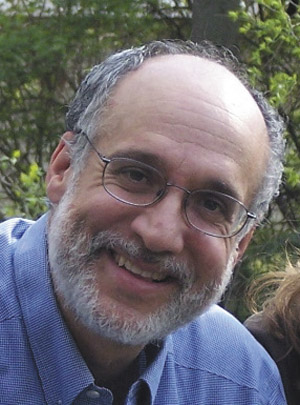
Urban pastoral. The term seems oxymoronic, like "jumbo shrimp" or "life insurance." Perhaps that's exactly why Nashville composer Michael Alec Rose asks, "What would it mean to create an urban pastoral, and how can you celebrate landscape when it is disappearing?"
From Renaissance madrigals depicting amorous Arcadian shepherds to Berlioz's orchestral invocation of rural alphorn tunes, the city-based language of Western art music has found ways to suggest idyllic visions of human life in harmony with the natural landscape. But what would Monteverdi's shepherds have sung if they'd faced not unspoiled countryside but industrial farming and global warming? How would Berlioz have imagined mountain tunes ringing out over a Wal-Mart superstore? If there's a cell phone in my pocket, are my dreams of a pastoral retreat just wishful thinking, merely empty nostalgia?
Rose answers with his Pastoral Concerto, which makes its premiere with the Vanderbilt Chamber Orchestra featuring Grammy-nominated violinist Peter Sheppard Skaerved. The composer wanted to reflect both his own love of the English countryside and the urban character of his London-born soloist, all while keeping a clear eye on the modern world's encroachment into his beloved landscape.
Rose's concept required that "a debt be paid to the familiar pastoral tradition in concert music—Beethoven's Sixth Symphony, much of Vaughan Williams." But he wanted these "fragile and vulnerable elements" to exist in tension with a defamiliarizing modern musical vocabulary. He found artistic models not only in the concert hall, but also in the work of painters like Richard Diebenkorn and Paul Nash, who he says "beautifully complicate the landscape tradition" by engaging it with more abstract styles and disorienting subject matter.
Such productive tensions are at the heart of Rose's music. Nashville concertgoers know his work—he's had three pieces commissioned by the Nashville Symphony and two each by the Nashville Ballet and the Nashville Chamber Orchestra, and he frequently shares his zeal for music as a Vanderbilt professor and a community lecturer. (His music has also been performed at the Lincoln Center, St. Paul's Cathedral, and as far afield as Mexico, Kosovo and the Czech Republic.) Exuberant imagination and a voracious intellectual appetite drive his richly expressive musical style.
In his spirit of adventure, he's well paired with Sheppard Skaerved, who takes his mastery beyond the conventional concert stage. The violinist is known for his collaborations with museums, and for projects presenting older music in historical context. An energetic champion of new music, he has had more than 150 works dedicated to him by such noted composers as Hans Werner Henze and Rose's mentor George Rochberg. Two years ago, Rose and Sheppard Skaerved started an ongoing exchange program between Vanderbilt's Blair School of Music and the Royal Academy of Music in London, bringing student composers and performers together to work in tandem.
Pastoral Concerto marks one fruition of this give-and-take. Rose, who has penned seven pieces for Sheppard Skaerved, calls the upcoming performance "a fulfillment of the exchange"—a demonstration of their creative bond, and a promise to broaden the circle of community the exchange aims to foster. He calls his friend and musical interpreter "a musician for whom the power of profound musical virtuosity, which he possesses in spades, and which is given to only a few, is superseded by turning that talent back into a catalyst for creating musical community." He wants the concerto "to honor Peter as the most remarkable violinist of our time."
Earlier this year, Michael Alec Rose participated in an event presenting renditions of Psalm 23's rich pastoral imagery from diverse musical and liturgical traditions, where he provided unifying commentary as well as his own musical setting of the text. As a composer as well as a teacher, Rose thrives on performance occasions that bring music and ideas together. It will no doubt be exciting to hear him reimagine pastoral music under today's city lights.
Up, up and away
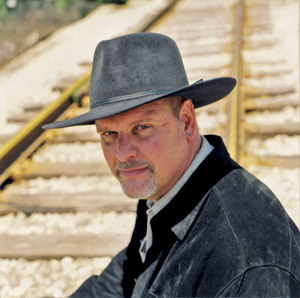
If you're in the mood for something more unequivocally urban—perhaps even more powerful than a locomotive?—try Michael Daugherty's Metropolis Symphony. This eclectic musical celebration of the myth of Superman (DC's, not Nietzsche's) brought the composer to international fame in the '90s, with the London Times declaring it nothing less than "a real Symphonie Fantastique for our times." The Nashville Symphony's program this weekend pairs Metropolis with Beethoven's Violin Concerto, the latter featuring 20-year-old prodigy Stefan Jackiw as soloist.
"I had no idea when I was composing Metropolis that it would become part of the standard orchestral repertory," says Daugherty, "but this season alone 20 orchestras are playing it, here and in Europe."
The concert follows up on last year's well-received performance of Daugherty's piano concerto Deus ex Machina, which the Nashville Symphony helped to commission. The symphony plans a CD release of both these Daugherty works on the Naxos label.
The red-caped hero is not the only familiar figure in Daugherty's portfolio. Much of the composer's work is inspired by American pop iconography—Elvis, J. Edgar Hoover, Niagara Falls, Route 66. He describes the pop imagery as "a springboard for me to try new musical ideas," but insists also that the music tells its own story independent of the icons that inspire it. His vigorous musical language marries the rigors of counterpoint and complex polyrhythms with elements of jazz, funk and rock. Though such cross-pollination was unusual in concert music when Daugherty began his career, he cites Ives and Mahler as precedents for his use of musical vernaculars to create a frame of reference.
Daugherty's eclecticism reflects his own musical history. He grew up playing rock and jazz keyboards, and his journeyman years included composition training with such avant-garde figures as Earle Brown and György Ligeti. He also won a Fulbright Fellowship to study the then-fledgling discipline of computer music; he even worked a stint with the great jazz arranger Gil Evans. His notable commissions include works for the Kronos Quartet, percussionist Evelyn Glennie and the Philadelphia and Detroit Orchestras.
What I've heard of Daugherty's music strikes me as lively, substantial and unpretentious. He manages to acknowledge a culture beyond the concert hall without watering down his musical language. If you don't mind feeling uncertain where the Stravinsky influence leaves off and the James Brown influence begins—and if you're coordinated enough to simultaneously furrow your brow and get on the good foot—definitely check this out.



